How Are Electoral Roll Observers Enhancing Voter List Revision in Kerala?
Synopsis
The Election Commission's appointment of four Electoral Roll Observers in Kerala marks a pivotal step towards a transparent voter list revision. This initiative aims to ensure that every eligible voter is accounted for and that grievances are effectively addressed during the electoral roll revision process.
Key Takeaways
Electoral Roll Observers appointed for transparency.
Initiative covers all 14 districts of Kerala.
Three visits planned to ensure effective revision.
Active participation of political parties encouraged.
Focus on addressing grievances and ensuring inclusivity.
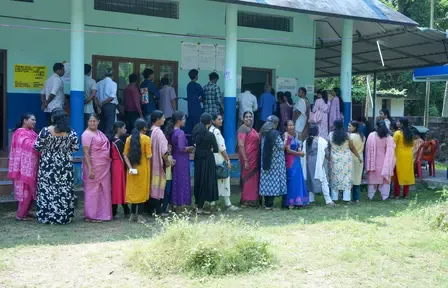
Thiruvananthapuram, Dec 24 (NationPress) In a significant effort to promote a clear and grievance-free revision of the voter list, the Election Commission has designated four Electoral Roll Observers to supervise the Intensive Electoral Roll Revision (IER) - 2026 across the 14 districts of Kerala, as announced by the Chief Electoral Officer (CEO), Dr. Rathan U. Kelkar, on Wednesday.
This initiative aims to guarantee that no eligible voter is overlooked and that any deficiencies are resolved prior to the final publication of the electoral rolls.
As per the CEO's statement, M.G. Rajamanikyam, IAS, will be responsible for overseeing Kozhikode, Wayanad, Kannur, and Kasaragod districts. K. Biju, IAS, will manage Thrissur, Palakkad, and Malappuram, while Tinku Biswal, IAS, will supervise Kottayam, Idukki, and Ernakulam districts. Dr. K. Vasuki, IAS, will oversee Thiruvananthapuram, Kollam, Pathanamthitta, and Alappuzha.
Dr. Kelkar highlighted that these observers will make three visits to their designated districts at various stages of the revision process. The first visit will occur during the notice period when the public can submit claims and objections.
The second visit will happen while Electoral Registration Officers (EROs) address the claims and objections. The third visit will align with the verification of the work done by Booth Level Officers (BLOs), the printing of supplements, and the finalization of the electoral rolls.
During the initial visit, meetings will be organized with Members of Parliament, Members of the Legislative Assembly, and representatives of recognized political parties to gather grievances and ensure their active participation in the process. Public meetings will also be arranged after prior notice.
The Electoral Roll Observers will analyze reports and explanations submitted by District Election Officers (DEOs) in constituencies where additions or deletions exceed the district average by over one percent, or surpass three percent in any Assembly segment.
Dr. Kelkar emphasized the commitment to transparency and accountability, stating that all necessary measures are being taken to ensure a trustworthy and inclusive voter list, completing the revision process without grievances and ensuring every eligible voter is included.
Point of View
The appointment of Electoral Roll Observers in Kerala is a commendable step towards enhancing electoral integrity. As the nation strives for a more inclusive democracy, initiatives like these are pivotal in ensuring that every eligible citizen’s voice is heard and represented. It reflects a commitment to transparency and accountability in the electoral process.
NationPress
29 Sept 2026
Frequently Asked Questions
What are Electoral Roll Observers?
Electoral Roll Observers are appointed by the Election Commission to oversee the voter list revision process, ensuring transparency and addressing grievances.
How many districts in Kerala are involved in this process?
The Intensive Electoral Roll Revision (IER) - 2026 involves all 14 districts of Kerala.
What is the purpose of the visits by the observers?
The observers will conduct visits to ensure that the revision process is conducted fairly, addressing public claims and objections effectively.
Who oversees the districts in Kerala?
Different IAS officers have been assigned to oversee specific districts, ensuring dedicated attention to each area.
What steps are being taken to ensure a grievance-free process?
The observers will meet with political representatives and the public to gather feedback and ensure active participation in the revision process.