Is Ethanol Blending in Petrol Reaching 19.97% a Significant Milestone?

Synopsis
The recent announcement about ethanol blending in petrol highlights India's commitment to renewable energy. With blending rates now at an impressive 19.97%, the government aims for a 20% target by 2025-26. This could revolutionize the energy sector and combat environmental challenges.
Key Takeaways
Ethanol blending has reached 19.97% in petrol.
Over 1,000 crore litres of ethanol blended in ESY 2024-25.
Target set for 20% blending by 2025-26 .
Government initiatives support sustainable fuel production.
Financial assistance under JI-VAN Yojana for projects.
New Delhi, Dec 18 (NationPress) Over 1,000 crore litres of ethanol have been successfully blended during the Ethanol Supply Year (ESY) 2024-25, achieving an average blending rate of 19.24% of ethanol in petrol. Notably, in October, a remarkable blending rate of 19.97% was reported, as informed to Parliament on Thursday.
The National Policy on Biofuels–2018, revised in 2022, has accelerated the goal of achieving 20% ethanol blending in petrol from the year 2030 to the Ethanol Supply Year 2025-26 (November 1, 2025, to October 31, 2026).
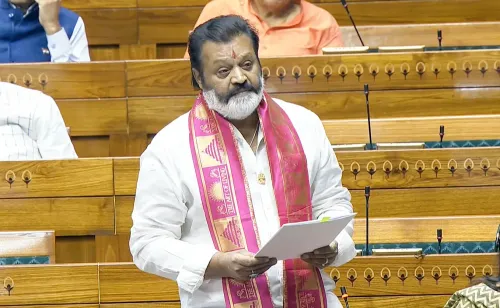
Union Minister of State for Petroleum and Natural Gas, Suresh Gopi, stated in a written reply to the Rajya Sabha that Public Sector Oil Marketing Companies (OMCs) achieved the target of 10% ethanol blending in petrol by June 2022, five months ahead of schedule during ESY 2021-22. The blending rates further improved to 12.06% in ESY 2022-23 and 14.60% in ESY 2023-24.
To ensure a steady supply of feedstock and infrastructure for ethanol production in the country, the government has implemented various initiatives. These include expanding feedstock sources for ethanol production, an administered price mechanism for ethanol procurement under the Ethanol Blended Petrol (EBP) programme, and lowering the GST rate to 5% for ethanol used in the EBP programme. Additionally, several Ethanol Interest Subvention Schemes (EISS) have been introduced.
Furthermore, the government has allocated 52 Lakh Metric Tonnes (LMT) of surplus rice from the Food Corporation of India (FCI) for ethanol production for both ESY 2024-25 and ESY 2025-26, in addition to diverting 40 LMT of sugar for ethanol production in ESY 2024-25. It also allows unrestricted ethanol production from sugarcane juice, sugar syrup, and B-Heavy and C-Heavy molasses for ESY 2025-26.
The government has implemented the Pradhan Mantri JI-VAN (Jaiv Indhan- Vatavaran Anukool fasal awashesh Nivaran) Yojana 2019, amended in 2024, aimed at fostering advanced biofuels, including Sustainable Aviation Fuel projects, using lignocellulosic biomass and other renewable feedstocks.
According to the minister, this scheme prescribes a maximum financial assistance of Rs 150 crore per project for commercial scale initiatives and Rs 15 crore for demonstration scale projects.
Point of View
It is crucial to recognize the potential impact of ethanol blending on India's energy independence and sustainability. The government's proactive measures in enhancing ethanol production not only pave the way for cleaner fuel options but also demonstrate a commitment to reducing reliance on fossil fuels. The future looks promising as we inch closer to our ambitious targets.
NationPress
27 Sept 2026
Frequently Asked Questions
What is the current ethanol blending percentage in petrol?
As of October 2024, the ethanol blending percentage in petrol has reached 19.97% .
What is the target year for achieving 20% ethanol blending?
The target for achieving 20% ethanol blending in petrol has been advanced to 2025-26 .
How much ethanol has been blended during the current supply year?
More than 1,000 crore litres of ethanol have been blended during the Ethanol Supply Year 2024-25.
What initiatives has the government taken to support ethanol production?
The government has implemented several initiatives, including expanding feedstock sources, lowering GST rates, and introducing interest subvention schemes.
What financial assistance is provided under the JI-VAN Yojana?
The JI-VAN Yojana offers financial assistance of up to Rs 150 crore for commercial projects and Rs 15 crore for demonstration projects.