Former Naxal commanders wed at Hazaribagh jail in Jharkhand rehabilitation push
Synopsis
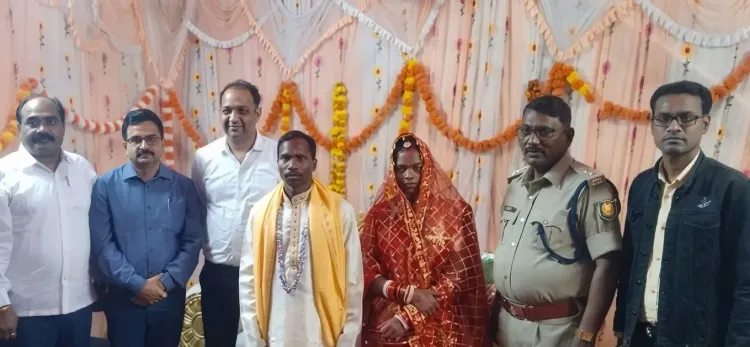
In an unusual rehabilitation milestone, two former Naxal commanders wed inside Hazaribagh Open Jail on 28 October, with police officers standing in as family and a marriage officer registering the union on the spot. The ceremony — organised entirely by the district administration — signals a shift toward social reintegration as a core pillar of Jharkhand's anti-Naxal strategy.
Key Takeaways
Suresh Singh Munda and Somwari Hembram , both former Naxalite commanders, married at Hazaribagh Open Jail on 28 October 2026 .
The wedding was organised by the Hazaribagh police and district administration as part of a rehabilitation initiative under Jharkhand's surrender policy.
District Marriage Officer Rajesh Ekka completed on-site marriage registration, giving the couple immediate legal recognition.
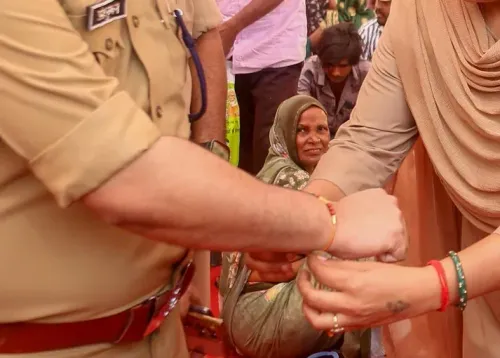
Police personnel and officials took on the roles of the bride's and groom's families, presenting gifts and conducting traditional customs.
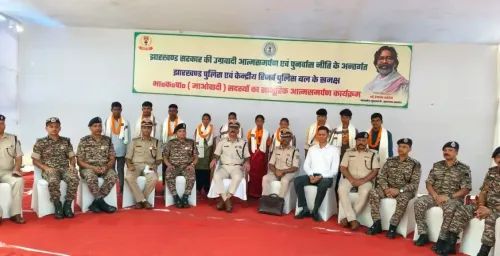
Fellow inmates at the open jail participated as members of the wedding procession, underscoring the community dimension of the event.
Two former Naxalite commanders, Suresh Singh Munda of Baruhatu, Bundu, Ranchi district, and Somwari Hembram of Arahanga, Tamar, were married on Wednesday, 28 October 2026 at the Hazaribagh Open Jail in Jharkhand — a ceremony organised by the Hazaribagh police and district administration as part of a structured rehabilitation initiative. Both had surrendered under the government's surrender policy and were serving their sentences at the open jail after abandoning armed extremism.
How the Wedding Came Together
The marriage was not a spontaneous event — it was deliberately facilitated by district officials who recognised that reintegration into mainstream society requires more than just renouncing violence. During the couple's rehabilitation period at the open jail, the administration and police took coordinated steps to arrange the ceremony, ensuring the occasion was marked with traditional rituals and community participation.
Other inmates residing at the open jail joined the wedding procession, offering blessings to the newlyweds and lending the event the warmth of a community celebration. Police personnel and administrative officials assumed the roles of both the bride's and groom's families, stepping in to fill the gap left by absent relatives and presenting the couple with gifts.
Legal Recognition on the Spot
Hazaribagh District Marriage Officer Rajesh Ekka completed the couple's marriage registration at the venue itself, providing immediate legal recognition alongside the social sanction of the ceremony. The on-site registration is notable — it removed a potential bureaucratic hurdle that could have delayed formal acknowledgement of the union for imprisoned individuals without family support.
Surrender Policy and the Rehabilitation Frame
Munda and Hembram were among those who responded to the government's ongoing surrender policy, which offers former Naxalites a structured path back into civilian life. Their placement at an open jail — a facility that allows greater autonomy compared to conventional prisons — reflects the administration's approach of gradually restoring normalcy for surrendered cadres.
This comes amid sustained counterinsurgency efforts across Jharkhand and neighbouring states, where security forces and civil administrations have together pushed a two-pronged strategy: operational pressure on active cadres alongside rehabilitation incentives for those willing to return to the mainstream. Notably, weddings and family-formation milestones have previously been facilitated in similar programmes in Chhattisgarh and Odisha, though the on-site marriage registration here adds a procedural dimension not always seen in such initiatives.
Broader Significance for Naxal-Affected Regions
The event underscores a growing administrative consensus that durable rehabilitation must address social and emotional needs — employment, family life, and community belonging — not just security compliance. Critics of blanket surrender schemes have long argued that without meaningful social reintegration, former cadres risk re-radicalisation or social marginalisation. Wednesday's ceremony, however modest, is being cited by officials as an example of what a more holistic rehabilitation model can look like.
With Jharkhand's anti-Naxal operations having intensified over the past two years, the coming months will test whether the administration can scale such individual-level rehabilitation gestures into a more systematic framework.
Point of View
But social outcomes for former cadres remain poorly tracked. Without systematic follow-through — employment, community acceptance, legal identity — even well-intentioned ceremonies risk being symbolic rather than transformative.
NationPress
28 Oct 2026
Frequently Asked Questions
Who got married at Hazaribagh jail?
Former Naxalite commanders Suresh Singh Munda, a resident of Baruhatu in Bundu, Ranchi district, and Somwari Hembram, from Arahanga in Tamar, were married at Hazaribagh Open Jail on 28 October 2026. Both had surrendered under Jharkhand's government surrender policy and were undergoing rehabilitation at the facility.
Why was the wedding held inside the jail?
The couple was serving sentences at Hazaribagh Open Jail after surrendering and abandoning Naxal activities. The Hazaribagh police and district administration organised the wedding there as part of a rehabilitation initiative, ensuring the couple could start a new chapter without waiting for release.
What role did the police and administration play in the ceremony?
Senior officials from the Hazaribagh police and district administration stood in for the absent family members of both the bride and groom, fulfilling traditional roles, presenting gifts, and welcoming the couple according to custom. District Marriage Officer Rajesh Ekka also completed the official marriage registration at the venue.
What is Jharkhand's surrender policy for Naxalites?
The government's surrender policy offers former Naxalites a structured path to return to mainstream society, including rehabilitation programmes at open jails and other support measures. It is designed to reduce active cadre strength while providing former extremists with opportunities for reintegration into civilian life.
What does this event signal for Naxal rehabilitation in India?
The Hazaribagh ceremony signals a shift toward addressing social and emotional needs — family formation, legal identity, community belonging — alongside security compliance in Naxal rehabilitation. Observers note that similar initiatives have previously been seen in Chhattisgarh and Odisha, though the on-site marriage registration here represents an additional procedural step in formalising reintegration.