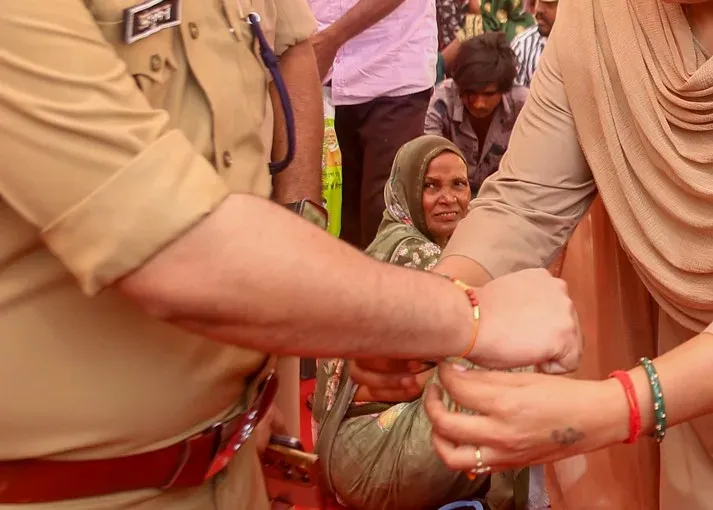
Surrendered Naxal women tie Rakhis to Chhattisgarh police on Raksha Bandhan
Synopsis
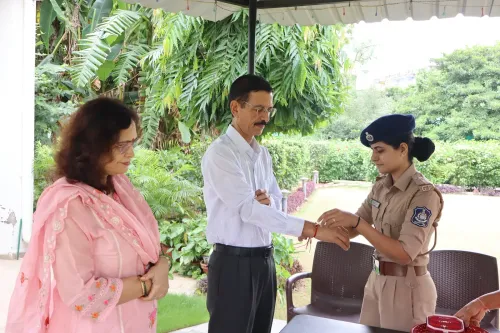
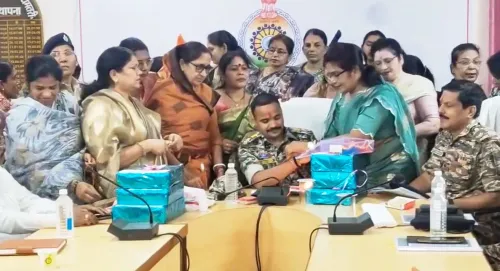
In Narayanpur — once synonymous with Naxal terror — surrendered female Maoists tied Rakhis on the wrists of police officers on Raksha Bandhan, turning a traditional festival into a public declaration of peace. The scene at the DRG campus captures, in one image, just how far the ground has shifted in Bastar.
Key Takeaways
Surrendered female Maoists tied Rakhis to DRG soldiers and officers at the Narayanpur police campus on 28 August .
SP Sandeep Kumar Patel and senior officers including ASPs Akshay Sabdra, Ajay Kumar , and Aishwarya Chandrakar received Rakhis.
The ceremony symbolises the ongoing rehabilitation of former Naxal cadres in Chhattisgarh's Bastar region.
SP Patel called it a 'symbol of trust, respect, and a pledge of security,' reaffirming the police's commitment to reintegration.
Female Maoist surrenders have risen in recent years alongside expanded rehabilitation schemes in Chhattisgarh .
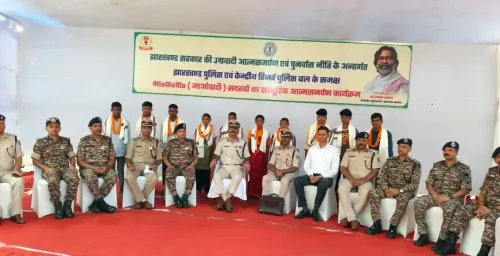
In a deeply symbolic gesture at the District Reserve Guard (DRG) campus in Narayanpur, Chhattisgarh, surrendered female Maoists who have returned to mainstream society tied Rakhis on the wrists of police officers and soldiers on Raksha Bandhan, marking a striking transformation in one of India's most conflict-scarred regions. The ceremony, held on 28 August, sent a powerful message of peace and reconciliation from the heart of Bastar.
The Ceremony at DRG Campus
The intimate and emotionally charged event brought together women who once lived under the shadow of armed Naxal violence and the police personnel who now stand as their protectors. Rakhis were tied on the wrists of Superintendent of Police Sandeep Kumar Patel, Additional Superintendents of Police Akshay Sabdra, Ajay Kumar, and Aishwarya Chandrakar, as well as Deputy Superintendents of Police Ajay Singh, Avinash Kanwar, Manoj Mandavi, and Ashish Netam, Reserve Inspector Mohsin Khan, and Station House Officer Narayanpur Vineet Dubey.
The occasion was marked by warmth and affinity, with officers extending wishes for a safe, respectful, and bright future to the women who participated.
What the Officers Said
SP Sandeep Kumar Patel described the festival as far more than a ritual. 'Raksha Bandhan is not just a festival, but a symbol of trust, respect, and a pledge of security,' he said. He added that providing dignity and a sense of belonging to those who have re-entered mainstream life is 'our collective responsibility' and that Narayanpur Police is 'continuously working to strengthen the environment of trust and brotherhood in society, along with ensuring security.'
A Changing Bastar
Narayanpur district, long identified as a stronghold of Left-Wing Extremism (LWE), has in recent years seen a steady stream of Maoist surrenders as security forces intensified operations and rehabilitation programmes expanded. The sight of former combatants celebrating a festival of familial love with the very officers who represent the state underscores how dramatically ground realities have shifted in parts of Bastar.
This comes amid sustained counter-Naxal operations across Chhattisgarh, with the state government and security forces reporting a significant decline in Maoist-influenced zones over the past two years. Notably, female cadres — who formed a significant portion of Maoist ranks — have increasingly opted for surrender under rehabilitation schemes that promise legal assistance, education, and livelihood support.
Significance of the Gesture
Raksha Bandhan, traditionally a festival where sisters tie a protective thread on brothers' wrists in exchange for a pledge of safety, carried an added resonance at the DRG campus. For the surrendered women, the act of tying a Rakhi on a soldier's wrist represents not just cultural participation but a public affirmation of their break from armed ideology. For the police, accepting the Rakhi signals an institutional commitment to rehabilitation over retribution.
As Chhattisgarh continues its push to bring remaining Maoist cadres into the mainstream, ceremonies like this one are increasingly being used to signal that the door to reintegration remains open.
Point of View
Not just military attrition. By framing surrendered women as 'sisters' and publicly accepting their Rakhis, the police are signalling to fence-sitters still in the jungle that reintegration is real and dignified. The harder question — whether rehabilitation schemes are delivering on livelihood and legal promises beyond the photo-op — remains less visible in official narratives.
NationPress
13 Oct 2026
Frequently Asked Questions
What happened at the Narayanpur DRG campus on Raksha Bandhan?
Surrendered female Maoists tied Rakhis on the wrists of police officers and DRG soldiers at the District Reserve Guard campus in Narayanpur, Chhattisgarh, on 28 August, in a ceremony marking peace and their return to mainstream society.
Who are the surrendered female Naxalites who participated?
They are former Maoist cadres from the Bastar region of Chhattisgarh who renounced armed violence and surrendered to authorities, subsequently enrolling in state rehabilitation programmes that offer legal aid, education, and livelihood support.
Which officers received Rakhis at the ceremony?
SP Sandeep Kumar Patel, ASPs Akshay Sabdra, Ajay Kumar, and Aishwarya Chandrakar, DSPs Ajay Singh, Avinash Kanwar, Manoj Mandavi, and Ashish Netam, Reserve Inspector Mohsin Khan, and SHO Vineet Dubey all received Rakhis from the surrendered women.
Why is this event significant for Chhattisgarh?
Narayanpur is part of the Bastar region, historically one of India's most Naxal-affected areas. The ceremony signals a tangible shift in ground realities and highlights the growing success of surrender-and-rehabilitation efforts in reducing Left-Wing Extremism in the state.
What did SP Sandeep Kumar Patel say about the event?
SP Patel described Raksha Bandhan as 'a symbol of trust, respect, and a pledge of security,' and said it is the collective responsibility of the police to provide dignity and belonging to those who have returned to mainstream society.