Will the Final Arguments in the Sajjan Kumar Case Change the Course of Justice for the 1984 Anti-Sikh Riots?
Synopsis
The ongoing legal proceedings against Sajjan Kumar in the Rouse Avenue Court highlight the long struggle for justice related to the tragic 1984 anti-Sikh riots. As final arguments approach, will this case pave the way for accountability?
Key Takeaways
Sajjan Kumar is accused of inciting violence during the 1984 anti-Sikh riots .
The Rouse Avenue Court will hear final arguments on Wednesday.
Over 3,000 Sikhs were killed during the riots.
The Delhi High Court previously convicted Kumar and sentenced him to life imprisonment.
The Nanavati Commission reported significant failures in prosecuting those involved.
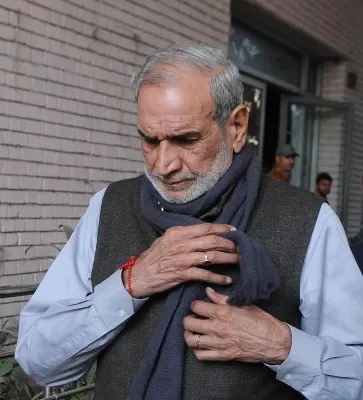
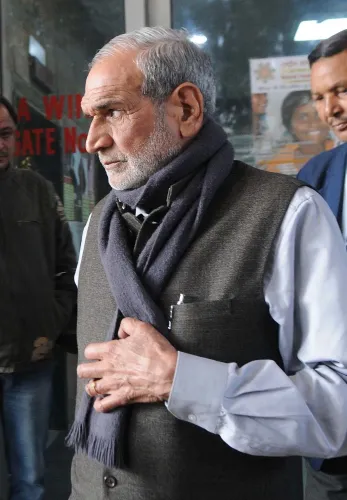
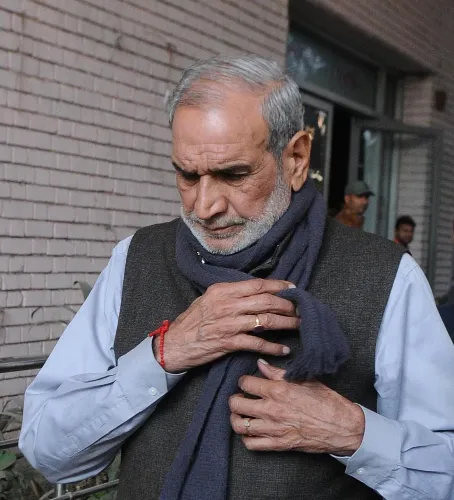
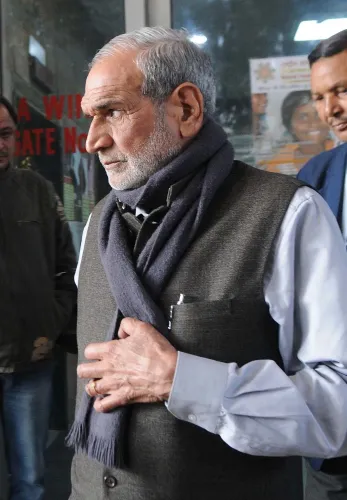
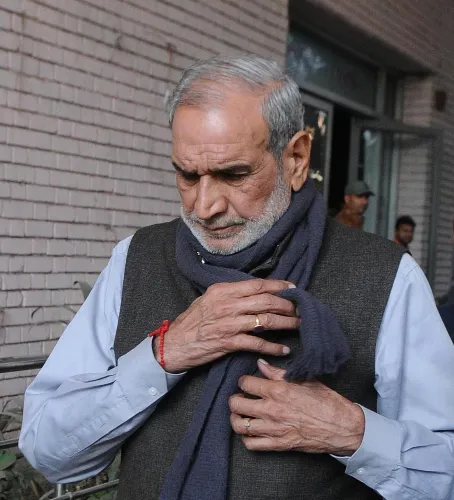
New Delhi, Oct 29 (NationPress) The Rouse Avenue Court in Delhi has wrapped up the trial concerning Sajjan Kumar, who is implicated in the violent incidents of Janakpuri and Vikaspuri connected to the 1984 anti-Sikh riots. The court has set a date for Wednesday to hear the concluding arguments from both parties.
On July 7, Sajjan Kumar proclaimed his innocence, claiming he could never have participated in such heinous acts “even in his wildest dreams” and asserted that there is no evidence against him. Earlier, on November 9, 2023, the victim, Manjeet Kaur, provided her testimony in court.
At the time of the riots, Sajjan Kumar was a sitting Member of Parliament and has been accused of inciting mobs to attack members of the Sikh community. Previously, the Delhi High Court issued a harsh ruling, emphasizing that the accused had eluded justice for years due to “political patronage.”
The 1984 anti-Sikh riots erupted after the assassination of former Prime Minister Indira Gandhi by her Sikh bodyguards.
This assassination was fueled by widespread resentment against Indira Gandhi's decision to deploy the Indian Army into the Golden Temple earlier that year to eliminate terrorists hiding there.
Following her assassination, violent mobs targeted and killed Sikhs, especially in Delhi, where rampant arson and murders took place.
The nationwide violence resulted in over 3,000 Sikh deaths, with the most severe occurrences happening in the national capital, where more than 2,700 individuals lost their lives.
For over three decades, numerous prominent politicians accused of complicity in the riots escaped conviction. This changed when Sajjan Kumar was sentenced to life imprisonment by the Delhi High Court. His lawyer announced that Kumar intends to appeal the ruling before the Supreme Court.
Multiple cases against Kumar pertain to the 1984 riots, including one concerning the murder of a family of five in Delhi. In the current case, Kumar faces allegations regarding the murders of Sohan Singh and his son-in-law Avtar Singh in Janakpuri, along with another incident in Vikaspuri, where Gurcharan Singh was reportedly set on fire.
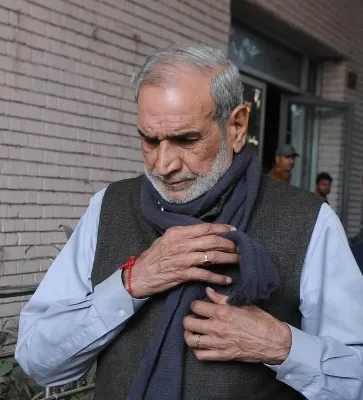
While testifying before Special Judge Digvijay Singh of the Rouse Avenue Courts, the 77-year-old Kumar insisted that he has been falsely implicated and that the charges are politically motivated.
According to the Nanavati Commission report, which was established to investigate the violence, a total of 587 FIRs were registered in Delhi concerning the riots, leading to the deaths of 2,733 people. Approximately 240 FIRs were closed as “untraced” by police, and 250 cases concluded in acquittals. Only 28 cases resulted in convictions, involving around 400 individuals, among whom about 50 were convicted for murder, including Sajjan Kumar.
Kumar, a senior Congress leader and MP during the riots, was also convicted in another case linked to the murder of five people in Delhi’s Palam Colony on November 1 and 2, 1984. The Delhi High Court sentenced him to life imprisonment, with his appeal against the sentence currently pending before the Supreme Court.
Point of View
It is imperative to approach the ongoing trial with an emphasis on justice and accountability. The 1984 anti-Sikh riots marked a dark chapter in Indian history, and the proceedings against Sajjan Kumar offer a crucial opportunity to address long-standing grievances and ensure that the victims' voices are heard.
NationPress
19 Sept 2026
Frequently Asked Questions
What are the charges against Sajjan Kumar?
Sajjan Kumar faces charges related to inciting violence and murder during the 1984 anti-Sikh riots, particularly in the Janakpuri and Vikaspuri areas.
When is the next court hearing for Sajjan Kumar?
The final arguments in the case against Sajjan Kumar are scheduled to be heard on Wednesday.
What was the outcome of previous trials related to the 1984 riots?
Historically, many politicians accused of involvement in the riots evaded justice. However, Kumar was recently convicted and sentenced to life imprisonment by the Delhi High Court.
How many people died during the 1984 anti-Sikh riots?
The violence during the 1984 riots resulted in the deaths of over 3,000 Sikhs, with more than 2,700 fatalities occurring in Delhi alone.
What is the significance of the Nanavati Commission report?
The Nanavati Commission report investigated the 1984 riots and revealed that out of 587 FIRs filed, only 28 cases led to convictions, highlighting the challenges in delivering justice.