Flooding Claims 12 Lives and Injures 11 in Afghanistan?
Synopsis
In a tragic turn of events, heavy rainfall and snowfall have led to catastrophic flash floods in Afghanistan, resulting in 12 deaths and numerous injuries. With extensive property damage and livestock losses, the humanitarian crisis deepens as aid efforts ramp up. Discover how this disaster impacts millions and the ongoing response by authorities.
Key Takeaways
12 fatalities and 11 injuries reported from flooding.
Severe flash floods affected multiple provinces including Kapisa and Kandahar .
Emergency aid distribution is in progress.
UN plans to allocate $1.71 billion for humanitarian needs in 2026.
Over 21.9 million people expected to need assistance.
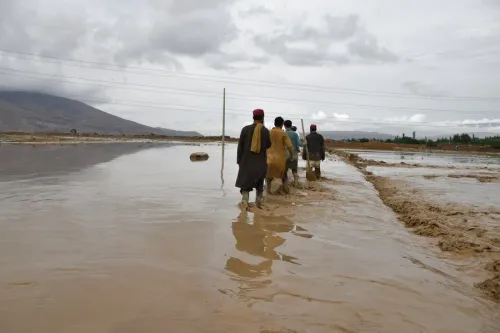
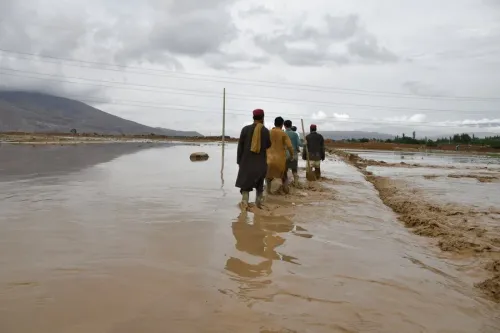
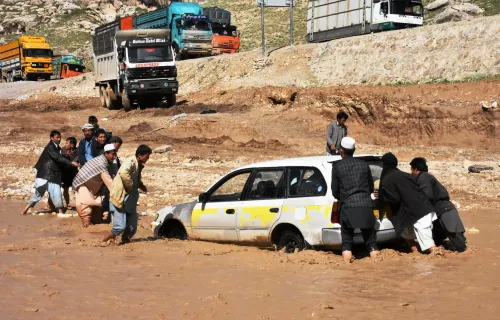
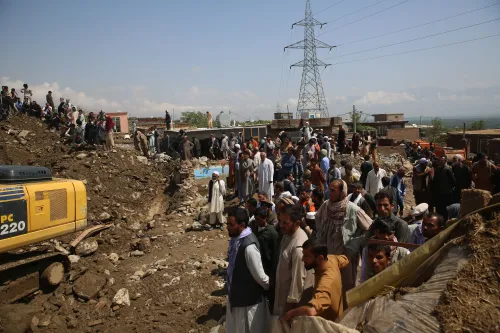
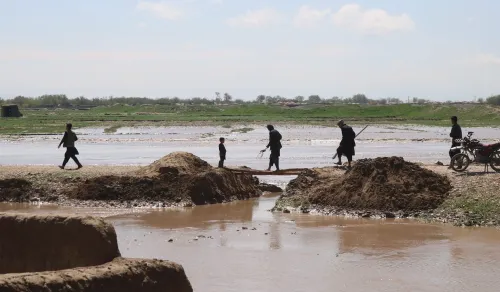
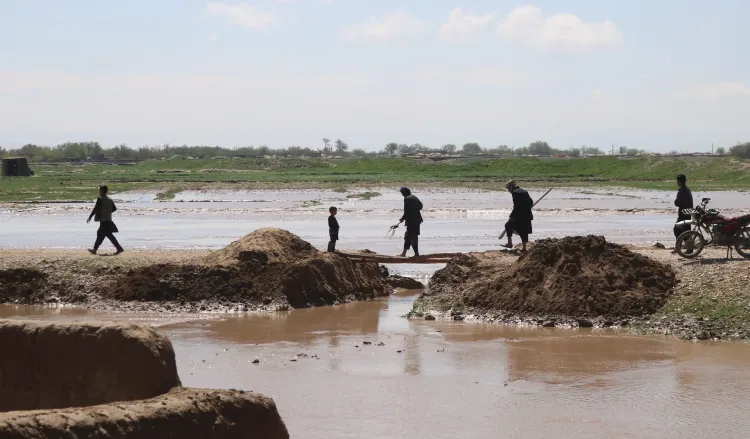
Kabul, Jan 1 (NationPress) A devastating series of flash floods, triggered by intense rainfall and snowfall, has resulted in the loss of at least 12 lives and left 11 individuals injured across several provinces in Afghanistan over the last three days, according to a spokesperson from the National Disaster Management Authority.
Hafiz Mohammad Yusuf Hammad, the authority's spokesperson, reported that the calamity affected the provinces of Kapisa, Parwan, Daykundi, Uruzgan, Kandahar, Helmand, Badghis, Faryab, Badakhshan, Herat, and Farah.
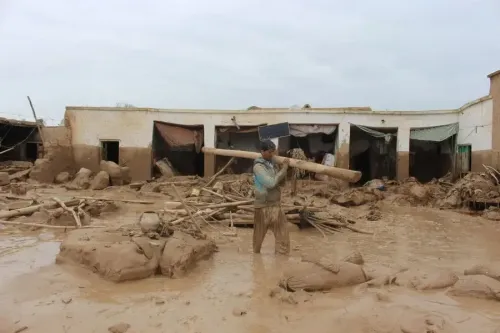
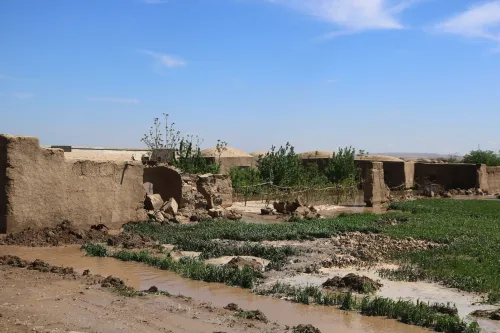
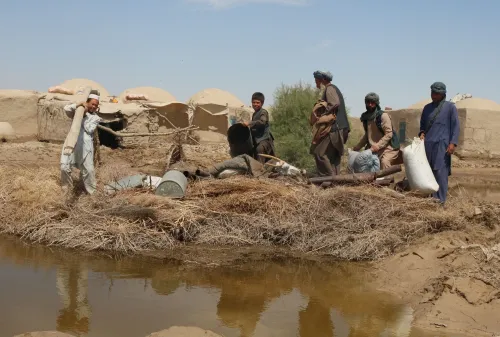
This disaster has caused significant destruction, with 1,859 homes either destroyed or partially damaged, alongside 209 km of rural roads being washed away, as reported by Hammad to Xinhua news agency.
Moreover, around 1,200 livestock have died, and 13,941 acres of farmland have been flooded or ruined.
Rescue and relief operations are currently underway, with teams dispatched to the affected regions to provide assistance to victims, while emergency aid distribution is ongoing and damage evaluations continue, Hammad stated.
The UN Office for the Coordination of Humanitarian Affairs (OCHA) announced on Tuesday a 1.71 billion US dollar humanitarian response plan for Afghanistan in 2026, which is anticipated to be one of the largest humanitarian crises globally this year.
According to OCHA, an estimated 21.9 million people will need humanitarian aid in 2026, representing a 4% decline from 2025, with 17.4 million facing acute food insecurity, including 4.7 million in IPC Phase 4 (Emergency).
The office indicated that UN humanitarian partners aim to prioritize 17.5 million individuals for assistance in 2026, which is approximately 80% of those in need, through a coordinated effort costing 1.71 billion dollars. The focus will be on life-saving and protective measures, including food, shelter, healthcare, nutrition, safe drinking water, hygiene, and multipurpose cash support.
Humanitarian conditions in Afghanistan remain dire, driven by profound structural vulnerabilities, escalating food insecurity, and recurring shocks, including climate-induced droughts, large-scale returnee influxes, frequent earthquakes and floods, multiple disease outbreaks, and severe protection risks, particularly for women and girls, the office added.
Additionally, the mass return of Afghans has exacerbated needs, with over 2.61 million Afghans returning from Iran and Pakistan in 2025 alone, placing immense pressure on host communities, essential services, and livelihoods, according to OCHA.
Point of View
It is imperative to acknowledge the profound impact of the recent floods across Afghanistan. The loss of lives and the extensive damage inflicted upon communities underscore the urgent need for humanitarian assistance. Our nation stands in solidarity with those affected, and it is our responsibility to ensure their struggles are recognized and addressed with compassion and urgency.
NationPress
20 Sept 2026
Frequently Asked Questions
What caused the flooding in Afghanistan?
The flooding was caused by intense rainfall and snowfall over several days, leading to severe flash floods across multiple provinces.
How many people have been affected by the floods?
At least 12 people have died and 11 others have been injured due to the flooding.
What is the humanitarian response plan for Afghanistan?
The UN has launched a $1.71 billion humanitarian response plan for 2026 to assist 17.5 million people in need across Afghanistan.
What kind of aid is being provided to the victims?
Aid includes food, shelter, healthcare, nutrition, safe water, hygiene, and cash support to help those affected by the floods.
How many homes and roads were damaged?
The floods have destroyed or partially damaged 1,859 homes and washed away 209 km of rural roads.