Indian Army Apolitical, Always Will Be: Gen Naravane's Strong Warning
Synopsis
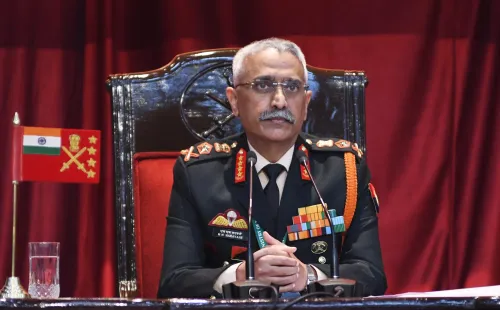
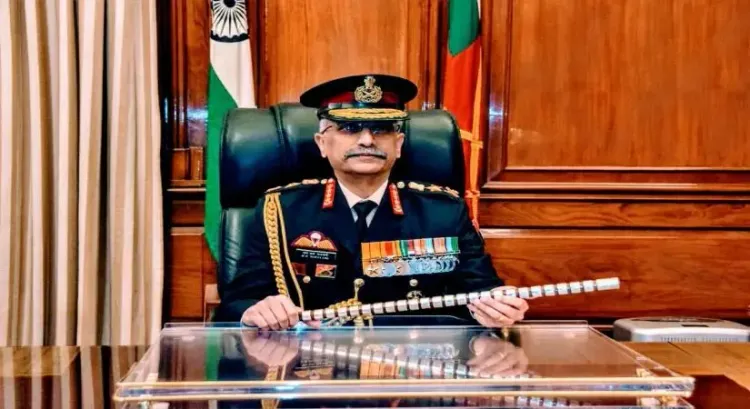
Former Indian Army Chief Gen Manoj Mukund Naravane has issued a powerful warning: attempts to drag the military into politics are dangerous for India. Citing Pakistan as a cautionary example, he reaffirmed the Army's apolitical identity — and said no political narrative will shake its institutional confidence.
Key Takeaways
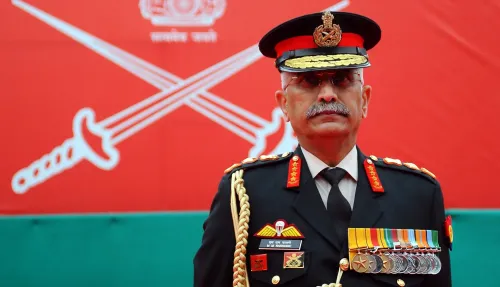
General Manoj Mukund Naravane , former Chief of Army Staff (December 2019 – April 2022) , has firmly stated the Indian Army is completely apolitical.
He drew a clear distinction between following the Defence Minister's orders — a constitutional obligation — and the Army becoming politically motivated.
General Naravane warned that attempts to drag the military into politics are "bad for the country" and threaten India's democratic progress.
He cited neighbouring countries — widely understood as a reference to Pakistan — as examples of how military-political entanglement stunts national development.
The former Army Chief expressed strong institutional confidence, saying the Army will not be "trapped in that web" regardless of external political narratives.
His remarks come amid growing public debate over civil-military relations in India and references to the armed forces in political rhetoric.
New Delhi, April 25 — Retired General Manoj Mukund Naravane, former Chief of the Indian Army, has issued a firm and unambiguous statement asserting that the armed forces are completely apolitical and will continue to remain so, sharply criticising mounting attempts to draw the military into the country's political discourse.
Gen Naravane's Clear Stand on Army and Politics
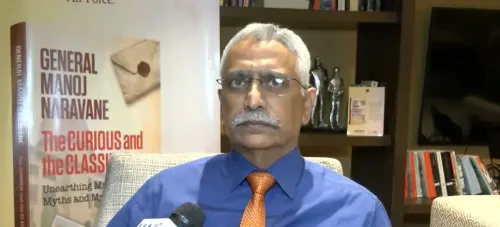
Speaking in an exclusive interview with IANS, General Naravane drew a sharp distinction between following the constitutional chain of command and being politically influenced. He stressed that compliance with orders from elected political leadership is a matter of institutional discipline — not political alignment.
"The Indian Army and armed forces are totally apolitical in every direction," he stated categorically. "However, following the orders of the political leadership does not mean you have become political. There is a difference between these two things."
The former Army Chief used a straightforward hierarchy analogy to drive the point home: just as a junior soldier must follow orders from a senior officer, the Army Chief is bound to follow directives from the Defence Minister — and this institutional obedience has nothing to do with political partisanship.
Chain of Command vs Political Allegiance
General Naravane explained, "If I pass an order to my junior, it is his duty to follow my order. So, as an Army Chief, who is my senior? The Defence Minister. If the Defence Minister passes an order, the Army has to follow it. This doesn't mean the Army has become political."
He reinforced this by adding: "The Army is apolitical, but there is a chain of command, and giving respect to that chain of command is the right course of action."
This distinction is critical in a constitutional democracy like India, where civilian supremacy over the military is a foundational principle — and where that principle must not be confused with political co-option of the armed forces.
Why Dragging the Army Into Politics Is Dangerous for India
General Naravane went further, warning that attempts to politicise the military pose a genuine threat to India's national progress. He pointedly referenced the situation in neighbouring countries — widely understood to be a reference to Pakistan, where the military has historically wielded direct political power — as a cautionary example.
"Understand the difference — we are an apolitical Army, and we will remain apolitical. And the attempts being made to drag the military into politics are bad for the country," he said. "If we are to move forward, the Army must remain apolitical because you have seen what happens in our neighbouring countries and how far ahead of them we have progressed."
His remarks carry significant weight given India's consistent democratic stability compared to Pakistan, which has experienced multiple military coups and prolonged periods of direct military rule since independence in 1947. Analysts have long credited India's civilian-military separation as a cornerstone of its democratic resilience.
Army's Institutional Confidence and Self-Belief
Despite acknowledging that politically motivated narratives about the Indian Army exist, General Naravane expressed confidence that the institution possesses the internal strength to resist such pressures.
"People can make an issue out of anything; that is their choice. But we have so much self-confidence among ourselves that no matter what anyone says, we are not going to get trapped or caught in that web," he said.
He revealed that during his tenure as Army Chief, he consistently urged soldiers to maintain unwavering faith in themselves and their institution. "Believe in yourself. Believe that we are a very good Army, a good organisation, and whatever actions we take will be for the betterment of the country," he added.
Broader Context and What This Means Going Forward
This statement comes at a time when civil-military relations in India are under heightened public scrutiny, with political parties on multiple occasions making references to the armed forces in electoral rhetoric. General Naravane served as the 28th Chief of Army Staff from December 2019 to April 2022, overseeing critical operations including the Galwan Valley clash with China in June 2020.
His remarks are also significant in the context of the ongoing debate about the Agnipath scheme, theatre commands restructuring, and broader defence reforms — all areas where the line between military policy and political decision-making has been publicly contested.
As India heads into a period of continued geopolitical challenges on its borders and evolving internal political dynamics, the former Army Chief's unequivocal assertion of institutional apolitical identity is likely to set the tone for how the armed forces position themselves in public discourse in the months ahead.
Point of View
A former Army Chief publicly drawing the line between institutional obedience and political co-option is both timely and necessary. The Pakistan comparison is deliberate and devastating — it reminds Indians that their democratic edge over their neighbour is not accidental but the direct product of keeping the military out of political power games. The real question this raises: why are such clarifications needed at all in 2025, and which political actors are making the Army feel compelled to defend its apolitical identity?
NationPress
19 Sept 2026
Frequently Asked Questions
What did General Naravane say about the Indian Army and politics?
General Naravane stated that the Indian Army is completely apolitical and will remain so. He clarified that following orders from the Defence Minister is part of the constitutional chain of command and does not make the Army political.
Why does General Naravane say the Army following government orders is not political?
He explained that the Army operates within a chain of command where the Defence Minister is the Army Chief's superior. Obeying that hierarchy is institutional duty, not political alignment — just as a junior soldier must follow orders from a senior officer.
How does General Naravane compare India to Pakistan on military-politics relations?
General Naravane pointed to neighbouring countries — widely interpreted as a reference to Pakistan — to argue that India's progress over them is directly linked to keeping its military apolitical. Pakistan has experienced multiple military coups since 1947.
Who is General Manoj Mukund Naravane?
General Manoj Mukund Naravane is a retired Indian Army officer who served as the 28th Chief of Army Staff from December 2019 to April 2022. He oversaw critical events including the Galwan Valley clash with China in June 2020.
Why is the Indian Army's apolitical stance important for national security?
An apolitical military ensures that the armed forces serve the nation rather than any political party, preserving democratic stability. General Naravane warned that dragging the military into politics is harmful to India's long-term progress and institutional integrity.