Are Elections in Pak-Occupied Gilgit-Baltistan Meaningless Without a Provisional Constitution?
Synopsis
As Pakistan prepares for Assembly elections in Gilgit-Baltistan, a report reveals that these polls will lack significance without a provisional constitution. Nationalists demand legislative autonomy and cultural preservation while challenging Pakistan's authority. Discover the intricacies of this geopolitical issue and the ongoing fight for rights in the region.
Key Takeaways
Gilgit-Baltistan's elections will be ineffective without a provisional constitution.
Nationalists advocate for legislative autonomy and cultural rights.
Pakistan's occupation has led to local resource exploitation.
UN resolutions call for the withdrawal of Pakistani nationals.
Military support influences local governance dynamics.
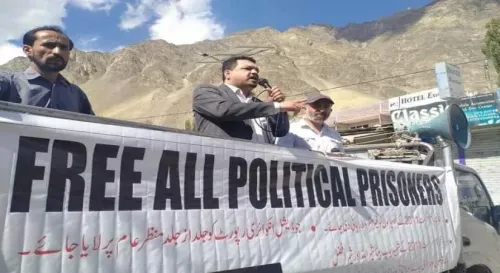
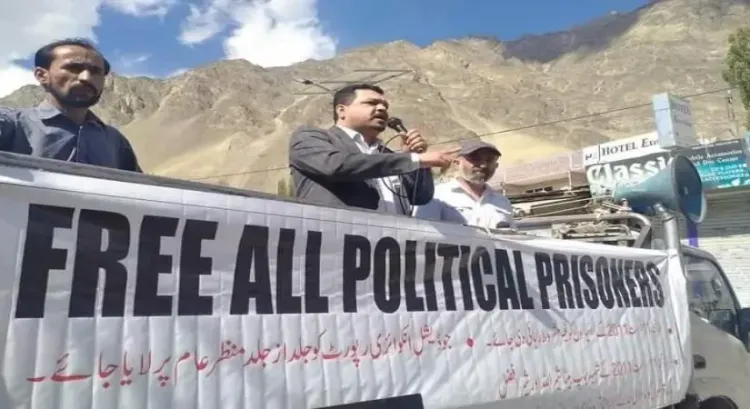
Islamabad, Dec 28 (NationPress) Despite its historical legal accession to India in 1947, Pakistan maintains its occupation of Gilgit-Baltistan. In the coming months, Pakistan plans to conduct Assembly elections in the occupied territory; however, these elections will hold no significance unless the region is granted its own provisional constitution and the Assembly receives the authority to legislate over local resources, according to a report.
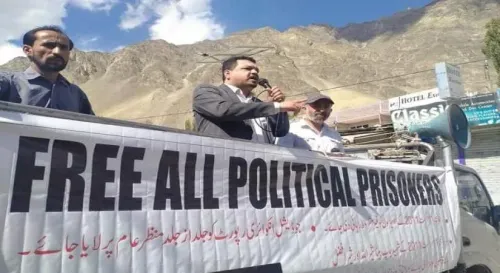
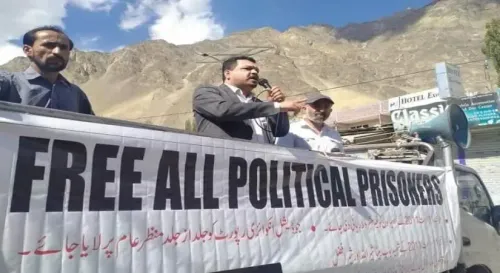
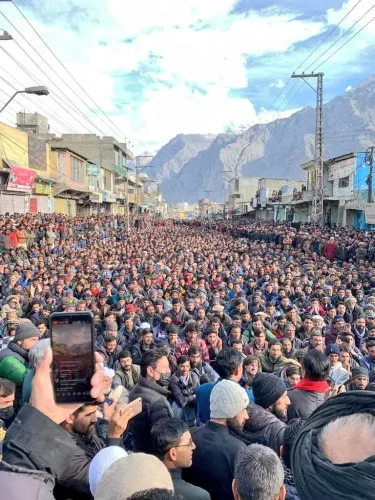
Nationalist groups have called for the re-establishment of state subject rule, legislative autonomy, and a reunification with India to ensure cultural preservation, control over resources, and genuine democratic self-determination. Residents continue to remind Pakistan of the United Nations Security Council resolution that mandates the withdrawal of all Pakistani nationals from Gilgit-Baltistan to resolve the ongoing dispute with India. Senge Sering, the founder of the Institute for Gilgit Baltistan Studies based in the United States, highlighted these issues in a report published by the International Centre for Peace Studies.
The Pakistani authorities have disregarded these concerns, seizing local lands and placing their own bureaucratic representatives in charge to conduct what many consider to be sham elections for the residents.
The report further noted, "Historically, nationalists have abstained from participating in elections in Gilgit-Baltistan because the local electoral commission mandates that all candidates pledge allegiance to Pakistan. Nationalists argue that since Gilgit-Baltistan is not legally a part of Pakistan, forcing residents to express loyalty to a foreign nation is not only unethical but also unconstitutional and violates Islamic principles.
This time, however, the nationalist coalition intends to field candidates in every constituency. They aim to engage in the electoral process to challenge the Pakistani puppets who are positioned to fill the political void, manage funds, and distort the true national identity. The military establishment has traditionally supported Pakistani parties like the Muslim League, Tehrik-i-Insaf, and the People’s Party, allowing them to dominate the local political landscape and form governments that serve as a launchpad for illegal settlements by Pakistani Pashtuns, Hindkowal, and Punjabis in the occupied region," it added.
Pakistan's motivation for occupying Gilgit was not to uphold or protect Islam; rather, it has exploited Islam for the purpose of resource extraction, inciting terrorism, and targeting indigenous Shia populations, thereby harming the land and its social structure. After enduring deprivation and oppression for 78 years, many locals have become victims of Pakistan's schemes, often severing their own roots without realizing that the Shia and Sunni settlers from Pakistan possess no loyalty to Gilgit-Baltistan.
The report advises that instead of relying on Pakistani Shias and Sunnis for their livelihoods, locals should unite to compel Pakistan to comply with the UNCIP resolutions and withdraw from Pakistan-occupied Jammu and Kashmir (POJK). Nationalists are advocating for the restoration of state subject rule (SSR) in Gilgit-Baltistan.
The upcoming Assembly elections will be futile until Gilgit-Baltistan possesses its own provisional constitution, granting the Assembly the authority to legislate on resources, production means, and to collect tolls and taxes, the author stated in the report.
Senge Sering remarked, "Pakistan will likely never permit the residents of Gilgit to gain control over their territory and exercise legislative freedom, as this would necessitate Islamabad to seek local approval for resource profits and tax collection related to transit to China. Islamabad appears to prefer its strategy of demographic manipulation and illegal settlements, employing divide-and-rule tactics to maintain absolute control over the area while simultaneously encouraging foreign businesses from China, America, and Europe to unlawfully exploit local resources, complicating and diluting stakeholder claims and interests."
Point of View
It is essential to recognize the plight of Gilgit-Baltistan's residents. Their call for autonomy and recognition must be acknowledged within the broader context of international law and human rights. The struggle for self-determination is a fundamental aspect of their identity, and we stand united in advocating for their rights.
NationPress
19 Sept 2026
Frequently Asked Questions
Why are the elections in Gilgit-Baltistan considered meaningless?
The elections are deemed meaningless because the region lacks a provisional constitution, hindering the Assembly's authority to legislate on local resources.
What do nationalists in Gilgit-Baltistan demand?
Nationalists demand the reinstatement of state subject rule, legislative autonomy, and a reunification with India for cultural preservation and self-determination.
What is the significance of the United Nations resolution regarding Gilgit-Baltistan?
The United Nations Security Council resolution calls for the withdrawal of all Pakistani nationals from Gilgit-Baltistan to address the territorial dispute with India.
How has Pakistan's occupation affected the local population?
The occupation has led to the exploitation of resources, suppression of local voices, and a cultural crisis among the indigenous population.
What role does the military establishment play in Pakistani politics in Gilgit-Baltistan?
The military establishment supports Pakistani political parties, allowing them to dominate local governance and influence settlement patterns in the region.