Escalating Unrest in Gilgit-Baltistan Following Khamenei's Passing: Curfew Enforced
Synopsis
Intense protests erupt in Pakistan-occupied Gilgit-Baltistan over Ayatollah Khamenei's death, leading to violence, fatalities, and a curfew. Discover how the situation escalates and the implications for regional stability.
Key Takeaways
Protests have escalated in Gilgit-Baltistan over Khamenei's death.
Curfew imposed to control violence and prevent further unrest.
Over 23 fatalities reported in protests across Pakistan.
UN offices targeted amid the unrest.
Military assistance requested by local authorities.
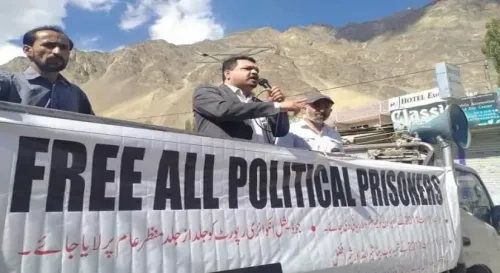
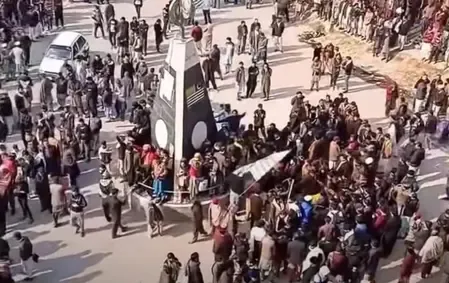
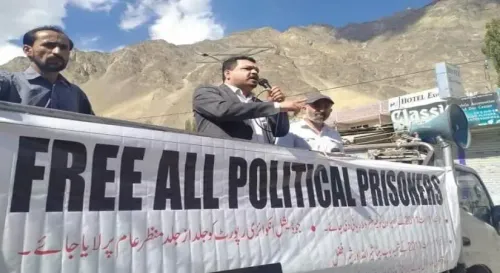
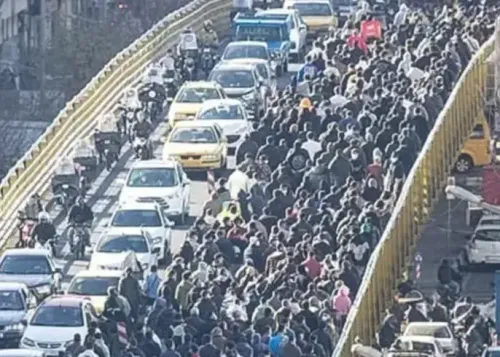
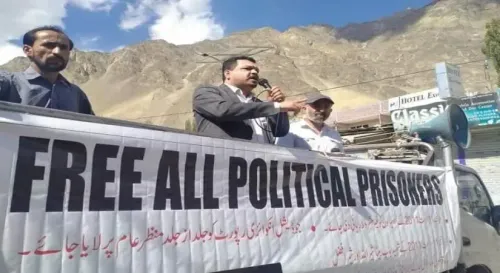
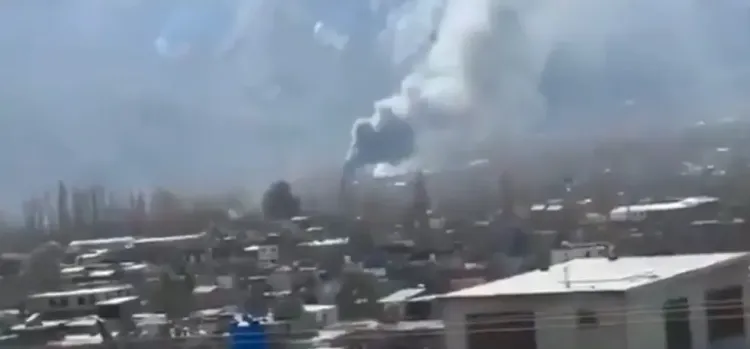
Islamabad, March 2 (NationPress) Protests in Pakistan-occupied Gilgit-Baltistan (PoGB) surrounding the passing of Iranian Supreme Leader Ayatollah Ali Khamenei have escalated into their second day on Monday, with demonstrators engaging in significant unrest, including arson and violence throughout the region.
At least 11 individuals have lost their lives in the Skardu district of PoGB after security forces opened fire on protesters who were vandalizing and setting fire to a UN office.
In response to the turmoil, the local government has enforced a curfew and requested military intervention following extensive unrest across the area.
Reports from local media indicate that in Gilgit and Skardu, outraged crowds ignited fires at the offices of the United Nations Military Observer Group in India and Pakistan (UNMOGIP).
During the chaos, numerous buildings, including government offices, a school, and the office of the Superintendent of Police, as well as the Agha Khan Rural Support Programme (AKRSP) office, suffered damage, as reported by the leading publication Ary News.
To address the growing tensions, Ghulam Hasan, an official from the PoGB administration, released a notification announcing the curfew and the need for military support. The notification expressed concerns about the fragile law and order situation following the large-scale protests triggered by the assassination of Ayatollah Ali Khamenei, highlighting fears that unrest could escalate, particularly in the Gilgit and Skardu districts.
"Hence, a request has been made for the deployment of Pakistan Army troops in District Gilgit and Skardu, and an immediate curfew for an initial period of three days (March 2, 3, and 4) is imperative to prevent any untoward events and safeguard human lives and property in the affected districts," the notification detailed.
Inspector General of Police Gilgit-Baltistan, Akbar Nasir, stated in a video message that alongside the army, police, Rangers, and Frontier Corps (FC) personnel will remain stationed in the impacted areas.
He noted that the curfew would only be relaxed for funeral prayers and burials on humanitarian grounds.
The IGP further specified that only local residents of Gilgit would be allowed to attend funerals, while individuals from outside the city or other districts would be prohibited from participating.
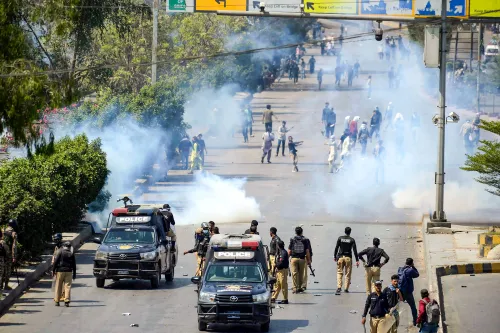
Violent protests also erupted outside the US Consulate General in Karachi and Lahore, with calls for demonstrations at the US Embassy in Islamabad and the Consulate General in Peshawar occurring on Sunday.
The US Embassy has cautioned American citizens in Pakistan to stay updated with local news and to employ good personal security practices.
Meanwhile, at least 23 protesters were reported killed in clashes across Pakistan, including 10 outside the US consulate in Karachi and 11 in the Skardu district of PoGB, with two fatalities reported in Islamabad, according to the prominent Pakistani daily, The Express Tribune.
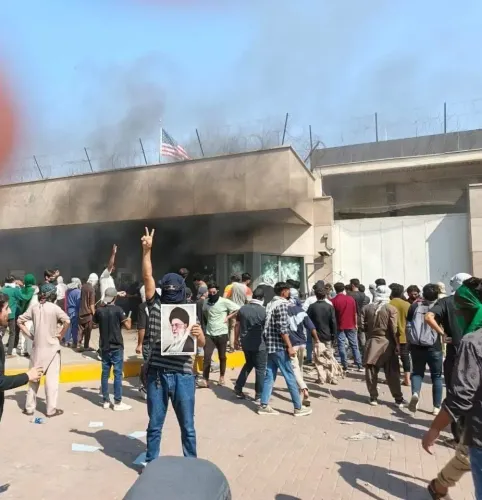
Visual footage circulating on social media depicted shattered doors and windows at the US Consulate in Karachi, alongside chaotic scenes of demonstrators damaging property and clashing with law enforcement.
Protesters were observed breaking windows and attacking the guard area with sticks, which resulted in a strong response from law enforcement agencies.
Point of View
It is crucial to understand the underlying causes of the unrest. The protests reflect deep-seated grievances and the complexities of regional politics. A measured approach is needed to restore peace and address the concerns of the local population.
NationPress
19 Sept 2026
Frequently Asked Questions
What triggered the protests in Gilgit-Baltistan?
The protests were triggered by the death of Iranian Supreme Leader Ayatollah Ali Khamenei, leading to widespread unrest and violence among the local population.
How many fatalities have been reported due to the protests?
At least 23 fatalities have been reported across Pakistan, with 11 deaths occurring in the Skardu district of PoGB.
What measures have been taken by the local administration?
The local administration has imposed a curfew and requested military support to restore order in the region.
Are there any restrictions during the curfew?
Yes, the curfew will only be relaxed for local residents to attend funeral prayers and burial rites.
What advice has the US Embassy given to its citizens in Pakistan?
The US Embassy has advised American citizens to monitor local news and maintain good personal security practices.