Is the World Fragile While Parliaments Remain Resilient? IPU Chief Speaks Out on Trust Erosion at CSPOC
Synopsis
In a world increasingly defined by uncertainty, IPU President Dr. Tulia Ackson warns of the fragility of global trust during the 28th CSPOC in New Delhi. This pivotal gathering highlights the need for resilience in parliamentary democracy amidst rising challenges. Discover how leaders navigate these turbulent waters and preserve democratic values.
Key Takeaways
Multilateralism is under scrutiny due to demands for immediate results.
The role of parliamentary diplomacy is vital in addressing global challenges.
Resilience in democratic institutions is essential for maintaining public trust.
Collaboration among Commonwealth nations can lead to shared solutions.
AI and social media present both challenges and opportunities for parliamentary functions .
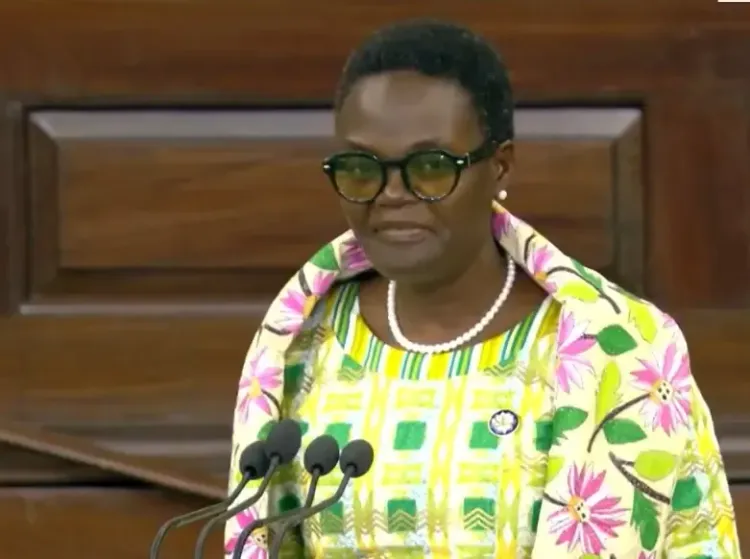
New Delhi, Jan 15 (NationPress) The President of the Inter-Parliamentary Union (IPU), Dr. Tulia Ackson from the United Republic of Tanzania, has articulated her concerns regarding the unsettling developments marking the beginning of the year 2026, highlighting how fragile and unpredictable the global landscape has become.
She noted that, on a worldwide scale, the effectiveness of multilateralism is increasingly assessed not by the core values it represents, but rather by the promptness of its responses and the visibility of its initiatives.
Long-term cooperation, patience, and compromise often find it challenging to compete with the urgent demands for immediate results. In a world that frequently favors action and spectacle, the processes of quiet diplomacy, careful negotiation, and consensus-building can seem sluggish. As frustration increases and trust diminishes, the fundamental pillars of democratic life start to feel precarious, she remarked during her address at the 28th Conference of Speakers and Presiding Officers of the Commonwealth (CSPOC).
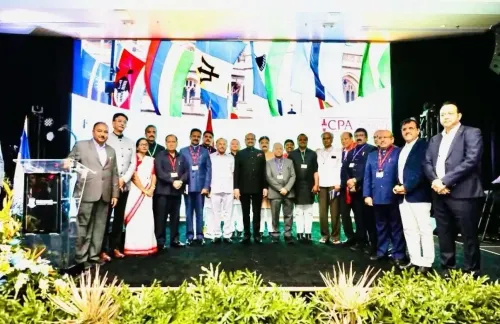
The 28th CSPOC commenced in New Delhi on January 14 and was officially inaugurated on Thursday by Prime Minister Narendra Modi at the historic Central Hall of Samvidhan Sadan within the Parliament House Complex.
This three-day event (January 14-16) marks the largest assembly in the forum's history, with participation from 61 Speakers and Presiding Officers across 42 Commonwealth nations, alongside delegates from four semi-autonomous parliaments, exceeding previous events in scale and highlighting the forum's increasing global significance.
Dr. Ackson expressed her delight at the substantial turnout and recognized familiar faces, including colleagues she encountered at the World Conference of Speakers of Parliament in Geneva last July.
Representing the global organization of parliaments, which has over 130 years of commitment to parliamentary diplomacy, she reiterated the IPU's longstanding pledge to foster peace, democracy, sustainable development, and other crucial concerns.
She extended her heartfelt thanks to the hosts for organizing this vital assembly during such a critical juncture in history. She pointed out that these pressures are interlinked and reflect one another.
Dr. Ackson remarked that skepticism regarding multilateralism on the global stage mirrors the rising worries about democracy domestically. She emphasized that in both contexts, institutions are expected to operate more swiftly, be more visible, and provide immediate solutions.
However, she highlighted that the essential, more subtle work of dialogue, procedural processes, and compromise is frequently misperceived as a weakness. This is precisely why gatherings like this one are now more crucial than ever.
"As Speakers and Presiding Officers, you operate at the vital junction where domestic democracy intersects with international cooperation. You face the same forces that challenge both multilateralism and democracy: polarization, technological disruption, and escalating expectations from your constituents. Over many years, IPU assemblies have united parliaments from every region and tradition -- now including 183 member parliaments and still expanding -- proving that while contexts may differ, challenges are increasingly shared," she stated.
Dr. Ackson went on to say that this common reality enhances the significance of forums like the CSPOC, providing a platform to listen to one another, exchange experiences, understand how others navigate challenging times, reflect on the growing responsibilities of parliamentary leadership, and pursue shared solutions to common issues.
"The subjects to be discussed in the coming days -- the role of artificial intelligence in parliamentary operations, the influence of social media, citizen engagement beyond voting, and the health and safety of both parliament members and staff -- are critically important. They compel us to ponder: How can democratic institutions sustain their strength and trust in an increasingly rapid world?" she added.
This question, she stressed, transcends national borders and directly addresses the international order we all contribute to shaping.
As the conference commenced, Dr. Ackson expressed her hope that it would yield not only reflection but also a clear path forward amidst the challenges facing the world at the start of the year. She eagerly anticipates the forthcoming discussions and the collective insights that will influence the broader parliamentary community.
In his remarks, Commonwealth Parliamentary Association (CPA) Chairperson Dr. Christopher Kalila -- a Zambian MP and backbencher -- expressed his deep appreciation to Prime Minister Modi for the warm hospitality.
Describing Delhi as a "historic city" central to democratic dialogue and tradition, he referenced esteemed texts such as Erskine May's 'Parliamentary Practice and Procedure' (on the House of Commons) alongside its Lok Sabha counterpart.
"It is a privilege to be in India, the largest democracy in the world," Kalila proclaimed, underscoring the essential role of Speakers and Presiding Officers in upholding constitutional order, parliamentary autonomy, and institutional efficacy amid swift political, social, and technological changes.
Kalila addressed the pressing challenges facing Commonwealth parliaments, such as declining public trust, the balance of technological advancements (including AI) against associated risks, and the safeguarding of the security, health, and well-being of MPs and their staff.
He commended legislators' resilience and creativity, including digital outreach for public engagement, stronger committee oversight, and reforms that promote transparency, inclusion, and accountability.
"These adaptations exemplify how Commonwealth parliaments continue to evolve while remaining firmly anchored in core democratic principles," he observed.
Representing over 17,000 parliamentarians, he thanked presiding officers for their mentorship, stewardship, and support in sustaining the CPA, urging continued unity.
Rajya Sabha Deputy Chairman Harivansh Narayan Singh offered a warm welcome, describing the event as a "confluence of parliamentary democracy" within the iconic Central Hall -- a living symbol of India's constitutional journey and values. He expressed gratitude to Prime Minister Modi for his presence, reflecting India's deep commitment to parliamentary ideals.
Grounded in India's enduring traditions of dialogue, debate, and dissent, he emphasized the forum's significance in sharing best practices, enhancing legislative oversight, promoting inclusivity, and addressing contemporary democratic challenges.
Discussions will explore the evolving role of presiding officers in strengthening institutions, the integration of AI in parliamentary functions, the impact of social media on MPs, innovative approaches to enhance citizen understanding and participation beyond elections, and improved security and well-being measures.
Chaired by Lok Sabha Speaker Om Birla, who took on the role following the 27th CSPOC hosted by Uganda in January 2024, the conference functions as an independent platform established in 1969 by Canada's then-Speaker Lucien Lamoureux.
It encourages impartiality, experience-sharing, and the reinforcement of parliamentary institutions across the Commonwealth's 2.6 billion inhabitants -- nearly half of whom reside in India, often referred to as the 'Mother of Democracy'. India has previously held the event in 1970-71, 1986, and 2010, further contributing to its legacy of parliamentary leadership.
Point of View
It's crucial to remain aligned with the core values of democracy and parliamentary integrity. The discussions at the CSPOC reflect the interconnected nature of global governance and local democratic practices. With growing skepticism towards multilateralism, the imperative for dialogue and cooperation has never been clearer. We must advocate for solutions that enhance trust and resilience in our institutions.
NationPress
19 Sept 2026
Frequently Asked Questions
What is the focus of the 28th CSPOC?
The 28th CSPOC focuses on enhancing parliamentary dialogue, addressing challenges facing democracy, and promoting cooperation among Commonwealth nations.
Who inaugurated the CSPOC event?
The event was inaugurated by Prime Minister Narendra Modi at the Central Hall of Samvidhan Sadan.
How many countries are represented at the CSPOC?
The CSPOC features participation from 61 Speakers and Presiding Officers across 42 Commonwealth countries.
What role does the IPU play in global governance?
The IPU promotes peace, democracy, and sustainable development among its member parliaments, facilitating dialogue and cooperation.
What are some key issues discussed at the conference?
Key issues include AI's role in parliamentary operations, social media's impact, and enhancing citizen participation beyond voting.