Great Nicobar Project vital for maritime security, cutting foreign port reliance: Maj Gen Bhatia

Synopsis
Retired Major General Arvind Bhatia argues the Great Nicobar Project is not just infrastructure — it's India's most consequential strategic bet in the Indo-Pacific. With 75% of India's container traffic routed through foreign ports and China's trade flowing through the Strait of Malacca, the project's 1.62 million TEU terminal and military enclaves could reshape regional power dynamics.
Key Takeaways
Retired Major General Arvind Bhatia backed the Great Nicobar Project on 1 May , calling it critical for India's maritime security.
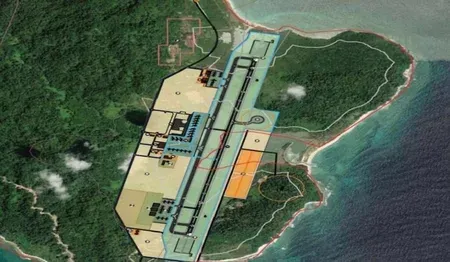
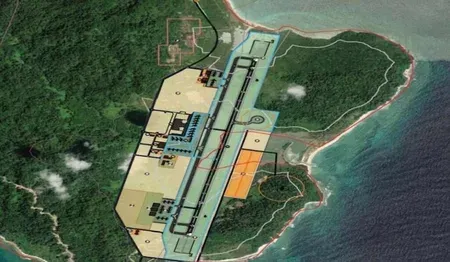
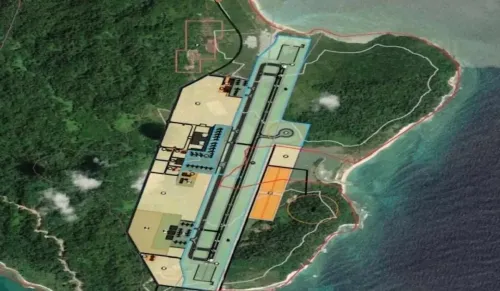
The project includes an international transshipment terminal with a capacity of 1.62 million TEUs , a greenfield airport , and naval and air force enclaves .
Nearly 75 per cent of India's container traffic currently passes through foreign ports; the project aims to cut this dependence significantly.
About 30 per cent of global trade — including a significant share of China's — transits the Strait of Malacca , near which Great Nicobar Island is strategically located.
PM Modi directed comprehensive surveys of the islands by the Indian Navy in 2018 , laying the groundwork for the current initiative.
Bhatia urged bipartisan political support, cautioning against opposing national security projects for political gain.
Retired Major General Arvind Bhatia on Friday, 1 May made a strong case for the Great Nicobar Project, asserting that the ambitious infrastructure initiative in the Andaman and Nicobar Islands will significantly bolster India's maritime capabilities, reduce dependence on foreign ports, and sharpen surveillance over critical global shipping lanes — particularly those used by China.
Strategic Positioning Near the Strait of Malacca
Speaking to IANS, Major General (Retd.) Bhatia highlighted India's geographical advantage, noting that the Great Nicobar Island sits in close proximity to the Strait of Malacca — one of the world's busiest maritime chokepoints, through which nearly 30 per cent of global trade passes.
"China is a major factor here. Any ship moving from the Pacific Ocean into the Indian Ocean comes through routes like the Sunda Strait, Lombok Strait, or the Strait of Malacca. The Malacca Strait is the busiest among them. If India is positioned closer to this route, it enhances the effectiveness of our naval forces, Coast Guard, and surveillance systems," he said.
Bhatia added that a significant portion of China's own trade transits this route, making India's enhanced presence there a meaningful strategic lever in the Indo-Pacific.
Military and Economic Infrastructure at the Core
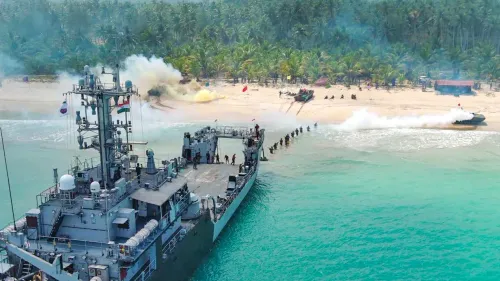
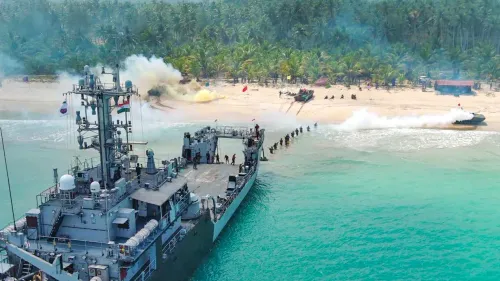
According to Bhatia, the project encompasses an international transshipment container terminal, a greenfield airport, and dedicated military enclaves for the Indian Navy and Air Force. The military infrastructure, he noted, will enable fighter aircraft deployment and significantly improve India's rapid-response capabilities in the region.
On the economic front, the transshipment terminal is expected to handle approximately 1.62 million Twenty-foot Equivalent Units (TEUs), positioning it among the largest such facilities in the region. "Currently, nearly 75 per cent of India's container traffic is dependent on foreign ports. This project will significantly reduce that dependence and boost domestic capacity," Bhatia said.
Historical Roots and PM Modi's 2018 Directive
Bhatia noted that the strategic relevance of the Andaman and Nicobar Islands gained renewed institutional focus after 2018, when Prime Minister Narendra Modi directed comprehensive mapping and surveys of the islands by the Indian Navy. The renaming of key islands — including Ross Island to Netaji Subhas Chandra Bose Island, and Havelock and Neil Islands to Swaraj and Shaheed Islands — was cited by him as reflecting their historical and strategic significance.
Drawing parallels with other global chokepoints such as the Strait of Hormuz, Bhatia underlined that maritime routes have become indispensable to global trade and national security alike.
Political Opposition and Call for Bipartisan Support
Addressing criticism of the project — including remarks attributed to Congress leader Rahul Gandhi — Bhatia urged political consensus on national security matters. "Whenever such strategic assets are developed, there should be bipartisan support. National interest must remain supreme, and such projects should not be opposed merely for political reasons," he asserted.
He drew comparisons with past controversies, saying, "On issues like the Rafale deal, the Galwan Valley clash and remarks related to military matters, questions have been raised for political reasons by the Opposition. Such questions should not be asked for brownie points. National interest is supreme, and on projects like the Great Nicobar Island development, the Opposition should extend full support rather than oppose it."
Bhatia also raised pointed questions about the source of opposition, saying that if domestic parties were aligning with China's interests on such matters, that itself warranted scrutiny — though he stopped short of making a direct accusation.
Environmental Balance and Urban Development
Bhatia emphasised that the project also envisages the creation of a new urban settlement for the local population, while ensuring that forest use remains limited and regulated. He maintained that the initiative strikes a balance between development imperatives, environmental considerations, and national security goals.
The Great Nicobar Project is widely seen as a transformative initiative combining economic growth, infrastructure expansion, and strategic military preparedness — one that could decisively position India as a key player in the Indo-Pacific in the years ahead.
Point of View
But it also faces legitimate environmental concerns that mainstream coverage has consistently underplayed. Framing all criticism as anti-national conflates two distinct debates: one about India's Indo-Pacific posture, which enjoys broad consensus, and another about ecological costs, which deserves rigorous, independent assessment. A project of this scale warrants both strategic ambition and institutional accountability.
NationPress
17 Sept 2026
Frequently Asked Questions
What is the Great Nicobar Project?
The Great Nicobar Project is a large-scale infrastructure and strategic development initiative on Great Nicobar Island in the Andaman and Nicobar archipelago. It includes an international transshipment container terminal, a greenfield airport, and military enclaves for the Indian Navy and Air Force, aimed at boosting India's maritime capabilities and Indo-Pacific presence.
Why is the Great Nicobar Project strategically important?
The island's proximity to the Strait of Malacca — through which nearly 30 per cent of global trade passes — gives India a significant vantage point to monitor maritime movements, including China's trade routes. Military infrastructure planned under the project will also enable fighter aircraft deployment and rapid-response operations.
How will the project reduce India's dependence on foreign ports?
Currently, approximately 75 per cent of India's container traffic is routed through foreign ports. The project's transshipment terminal, with a planned capacity of 1.62 million TEUs, is designed to handle a substantial portion of this traffic domestically, reducing logistical and strategic dependence on overseas facilities.
What has been the political response to the Great Nicobar Project?
Congress leader Rahul Gandhi and other Opposition figures have raised concerns about the project. Retired Major General Arvind Bhatia has urged bipartisan support, arguing that national security initiatives should not be opposed for political reasons, and drew comparisons with past controversies over the Rafale deal and the Galwan Valley clash.
When did the strategic focus on the Andaman and Nicobar Islands intensify?
Strategic attention on the islands was formally renewed in 2018, when Prime Minister Narendra Modi directed the Indian Navy to conduct comprehensive mapping and surveys of the archipelago. Key islands were also renamed to reflect their historical and national significance.