Gujarat logs 6.99 crore digital-enabled bank accounts as UPI hits 85% of India's payments
Synopsis
Gujarat's 6.99 crore digitally-enabled bank accounts are a local data point in a far larger national transformation: UPI has scaled 12,000-fold in under a decade, now processing 66 crore transactions a day and accounting for 85% of India's entire digital payments ecosystem — with 703 banks on board and an international footprint across eight countries.
Key Takeaways
Gujarat has 6.99 crore savings accounts enabled with at least one digital banking facility, per SLBC data as of 31 March .
79.20% of Gujarat account holders use Aadhaar-enabled banking ; 63.19% use UPI, mobile banking, or USSD services.
Gujarat has 1,98,52,734 PMJDY beneficiaries and 1,51,79,955 RuPay cards issued.
National UPI transactions reached 24,162 crore in 2025-26 , up from near-zero in 2016-17 — a 12,000-fold increase .
UPI transaction value rose from ₹0.07 lakh crore to ₹314 lakh crore — a 4,000-fold increase — over the same period.
Banks on the UPI network grew from 21 in 2016 to 703 by March 2026 ; UPI is now accepted in 8 international markets .
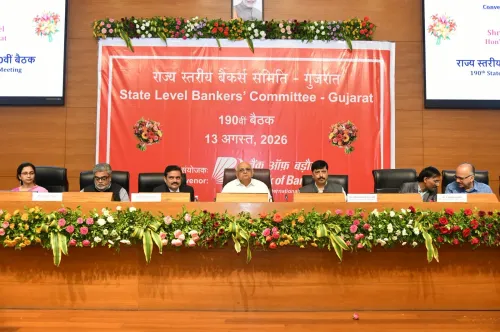
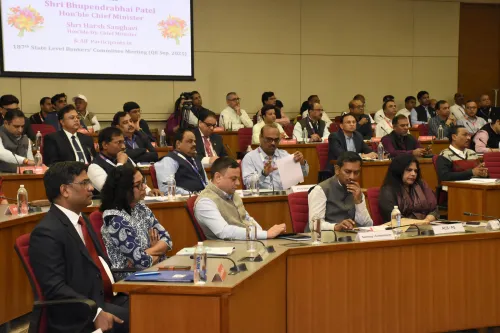
Gujarat has recorded a sharp rise in digital banking penetration, with 6.99 crore savings accounts now enabled with at least one digital banking facility, according to the latest figures from the State Level Bankers' Committee (SLBC) as of 31 March. The data, released from Gandhinagar, reflects sustained progress in financial inclusion across the state, underpinned by expanded infrastructure and policy-driven digital outreach.
Key Figures from SLBC Data
Among Gujarat's total savings account holders, 70.49 per cent hold debit cards, while 63.19 per cent actively use digital banking channels — including UPI, mobile banking, and USSD-based services that enable transactions without internet access. A further 79.20 per cent of account holders use Aadhaar-enabled banking services, highlighting the central role of identity-linked financial access in broadening outreach to underserved populations.
Under government-backed financial inclusion programmes, Gujarat currently has 1,98,52,734 beneficiaries enrolled under the Pradhan Mantri Jan Dhan Yojana (PMJDY), with 1,51,79,955 RuPay cards issued across the state.
UPI's Nationwide Surge
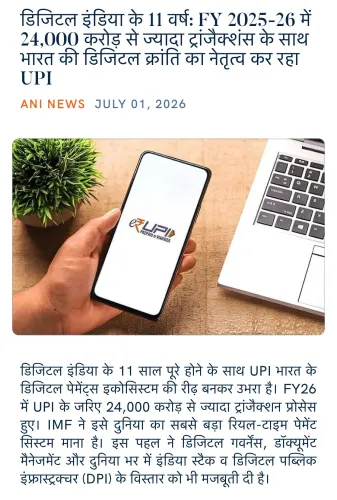
The Gujarat figures sit within a broader national story of digital payments growth. The Unified Payments Interface (UPI), launched by the National Payments Corporation of India (NPCI) in 2016, has scaled from a nascent system to the backbone of India's retail payments. According to official data, UPI transactions grew from a negligible base in 2016-17 to 24,162 crore transactions in 2025-26 — a roughly 12,000-fold increase.
Transaction value has risen from ₹0.07 lakh crore in 2016 to ₹314 lakh crore in 2025-26, representing a 4,000-fold increase in a decade. India now processes an average of approximately 66 crore UPI transactions per day, with a daily transaction value of around ₹0.86 lakh crore, according to officials familiar with the digital payments ecosystem.
The number of banks integrated into the UPI network has grown from 21 at launch in 2016 to 703 by March 2026. UPI now accounts for approximately 85 per cent of India's digital payments ecosystem and has extended its reach internationally to markets including the United Arab Emirates, Singapore, France, Bhutan, Nepal, Sri Lanka, Mauritius, and Qatar.
Digital Infrastructure: The Foundation
The payments boom has been enabled by a parallel expansion in digital infrastructure. Internet users in India have grown from around 25 crore a decade ago to more than 100 crore at present. The BharatNet programme, which aims to deliver broadband connectivity to rural local bodies, has extended from 546 gram panchayats a decade ago to approximately 2.14 lakh gram panchayats today, according to official figures.
What This Means for Financial Inclusion
Officials noted that the combined growth in digital banking access, payment systems, and online service delivery has materially improved financial inclusion — enabling citizens, particularly in rural and semi-urban areas, to access banking and government services with fewer barriers. Gujarat's indicators, in this context, are consistent with the national trend rather than an outlier. This comes amid continued Centre-level emphasis on a 'less-cash economy', with UPI adoption now cited as a key metric in financial inclusion reviews. The next phase of growth, analysts suggest, will depend on deepening usage frequency among existing account holders rather than adding new ones.
Point of View
But the more significant signal is the national UPI trajectory: a 12,000-fold transaction volume increase in under a decade is a structural shift, not incremental progress. What the data does not yet resolve is depth of usage — having a UPI-linked account is not the same as using it regularly, and financial inclusion metrics that count enablement rather than activity can overstate real access. The BharatNet rollout to 2.14 lakh gram panchayats is the infrastructure bet that will determine whether the next 100 crore internet users translate into active digital economy participants or remain on the periphery.
NationPress
16 Sept 2026
Frequently Asked Questions
How many digital-enabled bank accounts does Gujarat have?
Gujarat has 6.99 crore savings accounts enabled with at least one digital banking facility, according to SLBC data as of 31 March. This includes access to UPI, mobile banking, USSD services, debit cards, and Aadhaar-enabled banking.
What is the current scale of UPI transactions in India?
India processed 24,162 crore UPI transactions in 2025-26, up from a negligible base in 2016-17 — a roughly 12,000-fold increase. The total transaction value reached ₹314 lakh crore , compared to ₹0.07 lakh crore in 2016.
How many banks are part of the UPI network?
As of March 2026, 703 banks are integrated into the UPI network, up from just 21 at its launch in 2016. UPI now accounts for approximately 85% of India's digital payments ecosystem.
Which countries accept UPI payments internationally?
UPI is accepted in eight international markets : the United Arab Emirates, Singapore, France, Bhutan, Nepal, Sri Lanka, Mauritius, and Qatar. This international rollout is part of India's broader push to position UPI as a global payments standard.
How many Jan Dhan Yojana beneficiaries are there in Gujarat?
Gujarat has 1,98,52,734 beneficiaries under the Pradhan Mantri Jan Dhan Yojana (PMJDY) , with 1,51,79,955 RuPay cards issued in the state, according to SLBC figures.