How Did Harmanpreet Kaur Transition From Moga to Padma Shri?
Synopsis
Discover how Harmanpreet Kaur, the captain of the Indian women's cricket team, overcame challenges to become a Padma Shri awardee, inspiring a generation and reshaping women's cricket in India.
Key Takeaways
Harmanpreet Kaur is a symbol of resilience and transformation in women's cricket.
Her achievements inspire young girls to pursue careers in sports.
She has redefined the perception of Indian women's cricket .
Leadership under her tenure has led to historic victories.
The Padma Shri award highlights her significant contributions to the sport.
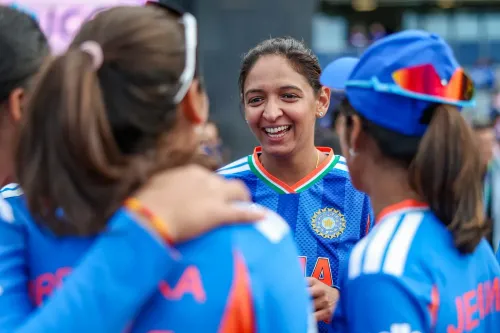
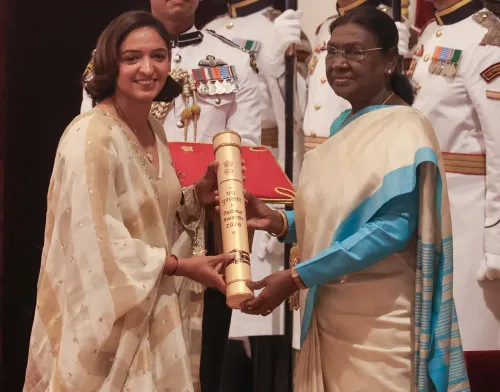
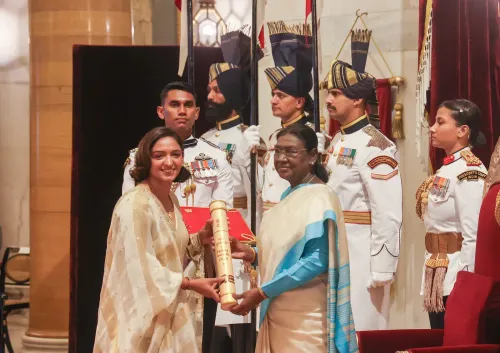
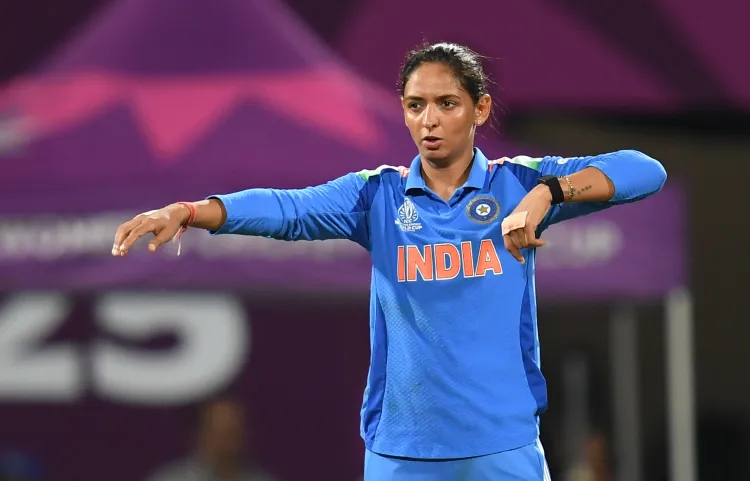
New Delhi, Jan 26 (NationPress) Harmanpreet Kaur, the captain of the Indian women’s cricket team, has been recognized as a Padma Shri awardee on Sunday, joining eight other current and former sports figures on the esteemed 2026 Padma Awards list. This distinguished list features five Padma Vibhushan, 13 Padma Bhushan, and 113 Padma Shri honorees.
Her accolade celebrates a career that has reshaped Indian women’s cricket and transformed the sport's image and execution within the nation. The 36-year-old’s cricketing journey symbolizes bravery, determination, and an unyielding spirit to challenge societal norms.
Harmanpreet was born on March 8, 1989, in Moga, Punjab, where she grew up in a cricket-centric atmosphere that offered limited prospects for women. Her father, a former volleyball and basketball player, was her initial coach, and she began her training at a young age, often practicing with boys to hone her skills and endurance.
Her early talent earned her a spot in India’s domestic cricket scene, where her consistent play quickly attracted national attention. Harmanpreet made her international debut in 2009, but like many women cricketers of her era, her recognition came slowly.
With opportunities being few, exposure limited, and financial support lacking, she persevered, driven by a bold batting style that set her apart in a predominantly conservative environment.
The pivotal moment in her career occurred during the 2017 Women’s ODI World Cup, where she scored an unbeaten 171 against Australia in the semi-finals, revolutionizing the perception of Indian women’s cricket.
This innings marked more than just a personal milestone; it was a cultural landmark showcasing strength, resolve, and self-assurance on the global stage. From that moment, Harmanpreet became the emblem of a new, more assertive Indian women’s cricket team.
Leadership came naturally to her. As captain across all formats, Harmanpreet guided India through a transformative phase, emphasizing aggression, fitness, and self-belief.
In the 2023/24 season, India made history in the most challenging format of the game under her captaincy, achieving resounding Test victories against England and Australia at home, thereby asserting the team’s dominance in red-ball cricket.
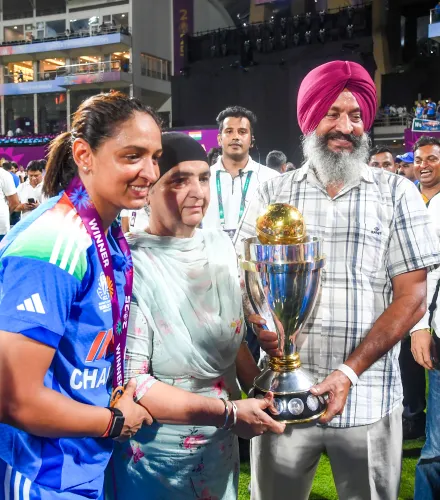
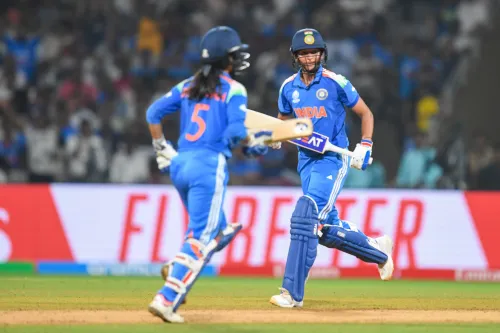
She led India to several ICC finals and ultimately secured their first ICC trophy by winning the ODI World Cup on home soil, defeating South Africa by 52 runs at the DY Patil Stadium in Navi Mumbai. This historic triumph solidified her legacy, ending a long wait for the coveted trophy.
Apart from statistics and accolades, Harmanpreet’s influence is evident in how she changed perceptions. She motivated a generation of young women to view cricket as a viable career option rather than a rarity. Her journey from a small town in Punjab to lifting the World Cup symbolizes the evolution of women’s cricket in India—resilient, courageous, and unapologetically ambitious.
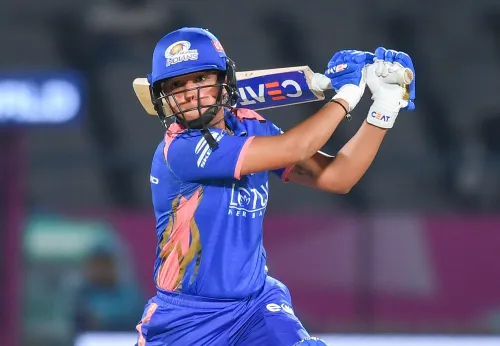
She inspired countless girls to pursue the sport, especially following the launch of the Women’s Premier League in 2023. Her captaincy prowess was prominently displayed when she led the Mumbai Indians to two championship titles in the first three seasons.
The Padma Shri also acknowledges Harmanpreet’s contributions as a trailblazer off the pitch. From advocating for professionalism to navigating the growing expectations that come with greater visibility, she has become a standard-bearer for the sport in India. Her rise from a small-town girl in Punjab to the pinnacle of international cricket reflects the broader evolution of women’s sports in the country.
By honoring Harmanpreet, the Padma Awards celebrate a legacy defined not just by success but also by transformation—a career that broadened horizons and redefined what Indian women’s cricket can aspire to achieve.
Point of View
Harmanpreet Kaur's journey is a testament to the evolving landscape of women's sports in India. Her achievements not only highlight individual excellence but also reflect a broader societal shift towards recognizing and empowering women in athletics. This narrative aligns with our commitment to championing stories that inspire and resonate with the aspirations of our readers.
NationPress
1 Oct 2026
Frequently Asked Questions
What is the significance of the Padma Shri award?
The Padma Shri is one of India's highest civilian honors, recognizing individuals for their exceptional contributions in various fields, including arts, education, social service, and sports.
How did Harmanpreet Kaur impact women's cricket in India?
Harmanpreet Kaur has played a crucial role in elevating the status of women's cricket in India, inspiring young athletes and leading the national team to historic victories, including the ODI World Cup.
When did Harmanpreet Kaur make her international debut?
Harmanpreet Kaur made her international debut in 2009.
What was Harmanpreet's memorable performance in the 2017 ODI World Cup?
In the 2017 Women's ODI World Cup, Harmanpreet scored an unbeaten 171 against Australia in the semi-finals, a performance that significantly changed perceptions of Indian women's cricket.
What are some of Harmanpreet's achievements as captain?
Harmanpreet has led India to multiple ICC finals and secured their first ICC title by winning the ODI World Cup on home soil.