Operation Epic Fury: Hegseth Outlines U.S. Strategy Against Iran
Synopsis
U.S. Secretary of War Pete Hegseth declares Operation Epic Fury will not be a brief campaign, aiming to dismantle Iran's military capabilities while ensuring they do not acquire nuclear weapons. This strategic military operation reflects a decisive stance against escalating threats.
Key Takeaways
Operation Epic Fury aims to dismantle Iran's military capabilities.
There will be no deployment of U.S. ground troops at this stage.
Military objectives are set to be achieved over an extended period.
The campaign is designed to prevent Iran from acquiring nuclear weapons .
U.S. officials emphasize the importance of strategic clarity and operational secrecy.
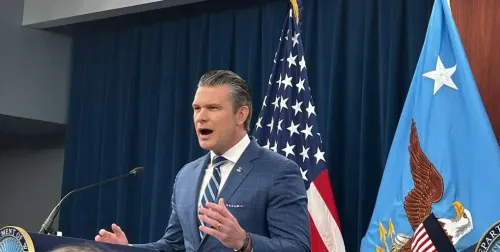
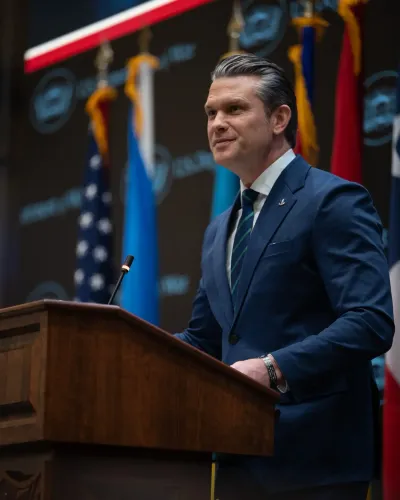
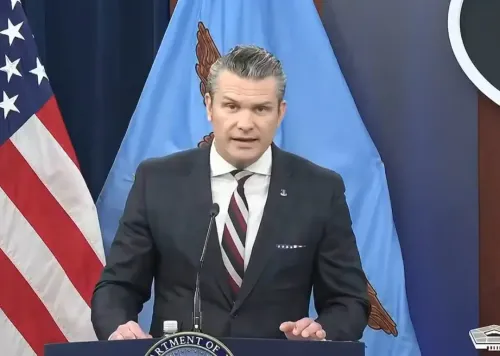
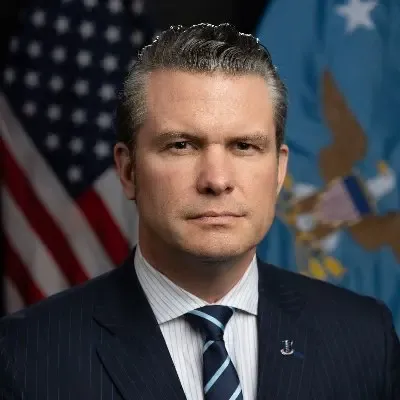
On March 2 in Washington, U.S. Secretary of War Pete Hegseth announced that Operation Epic Fury is set to extend beyond a brief campaign while currently ruling out the deployment of American ground troops. He emphasized that Iran will not be permitted to develop nuclear weapons, detailing what he termed a limited yet decisive military aim.
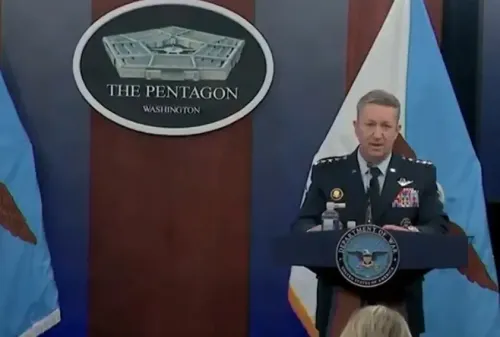
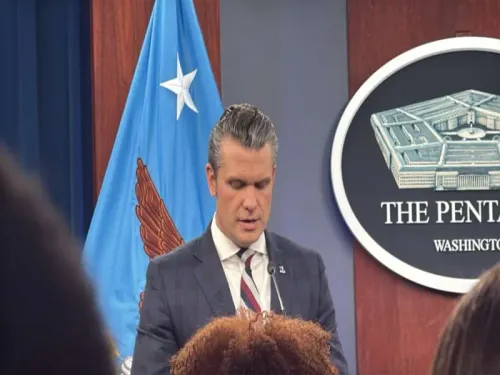
During a Pentagon news briefing when asked about the presence of American forces on the ground, Hegseth responded, “No, but we’re not going to delve into what we will or won’t do.”
He articulated the mission's goals: “to eliminate Iranian offensive missiles, dismantle their missile production facilities, neutralize their Navy and other security infrastructures, ensuring they will never possess nuclear armament.”
Chairman of the Joint Chiefs of Staff, Air Force General Dan Caine, added, “To clarify, as the Secretary mentioned, this is not a quick overnight operation.”
Caine warned that the campaign will be prolonged. “The military objectives set by CENTCOM and the Joint Force will require time to accomplish and may involve challenging and gritty efforts,” he stated. “We anticipate further losses, and we will always strive to minimize U.S. casualties. However, as the Secretary pointed out, this represents major combat operations.”
Hegseth did not specify a timeline, stating, “I would never ascribe a timeframe from our perspective. The commander-in-chief dictates the operational tempo of this fight.”
He dismissed proposals for Washington to publicly outline the operation's limitations. “Why would we disclose to the enemy or anyone what we will or won’t do while pursuing our objectives?” he asserted. “Our goal is victory.”
The Secretary framed the mission as crucial to countering Iran’s growing military capabilities. “Iran possesses the capacity to project power against us and our allies in ways we cannot tolerate,” he remarked, referencing their ballistic missiles, drones, and naval assets.
He directly connected these military capabilities to nuclear threats. “No radical Islamist should wield a nuclear bomb against the world,” emphasized Hegseth, noting that prior diplomatic engagements had failed. “We provided them every opportunity; then we precisely took it away.”
While distancing the current campaign from previous U.S. engagements in the region, Hegseth reassured, “This isn’t Iraq. This is not an endless conflict.” He stated, “We don’t need to deploy 200,000 troops and remain for 20 years.”
Caine indicated that assessments of battle damage are ongoing even amidst continuing strikes. “He’s executing offensive actions and assessments concurrently,” he said, referring to the theater commander. “It will require time for us to conduct a thorough battle damage assessment.”
Officials confirmed that the focus remains on diminishing Iran’s capability to project force and averting what Hegseth described as a “conventional umbrella to blackmail nuclear ambitions.”
Point of View
Prioritizing national security and regional stability. This approach emphasizes the importance of a firm response to threats while avoiding the pitfalls of prolonged military involvement.
NationPress
27 Sept 2026
Frequently Asked Questions
What are the main objectives of Operation Epic Fury?
The primary goals include destroying Iranian offensive missiles, missile production facilities, naval capabilities, and ensuring Iran does not acquire nuclear weapons.
Are U.S. ground troops being deployed in Iran?
Currently, U.S. Secretary of War Pete Hegseth has ruled out the deployment of American ground troops for this operation.
How long is Operation Epic Fury expected to last?
Hegseth did not provide a specific timeline, emphasizing that the operational tempo is determined by the commander-in-chief.
Why is the U.S. focusing on Iran's military capabilities?
The U.S. views Iran's expanding military capabilities as a direct threat to national and allied security, necessitating a strong military response.
How does this operation differ from past U.S. military engagements?
Hegseth clarified that this operation is not intended to replicate the prolonged nature of conflicts like Iraq, aiming instead for a more focused and decisive approach.