Himachal Pradesh Government Implements Temporary Salary Deferral for Public Representatives
Synopsis
In a bid to address financial strains, the Himachal Pradesh government has enacted a temporary salary deferral for its public representatives, including the Chief Minister and lawmakers. This crucial decision is aimed at ensuring fiscal responsibility while maintaining transparency.
Key Takeaways
Temporary salary deferment for public representatives in Himachal Pradesh.
Deferrals range from 20% to 50% based on the position.
Transparency measures include detailed e-salary reports.
Not a permanent salary cut; funds will be reimbursed when finances stabilize.
Special provisions for those with housing or vehicle advances.
Shimla, April 18 (NationPress) In response to ongoing financial difficulties, the Congress-led government in Himachal Pradesh has made the decision to temporarily suspend part of the salaries for its public representatives, including the Chief Minister, ministers, and lawmakers, for a duration of six months. This action received the green light from the Governor, followed by a formal notification from the Chief Secretary.
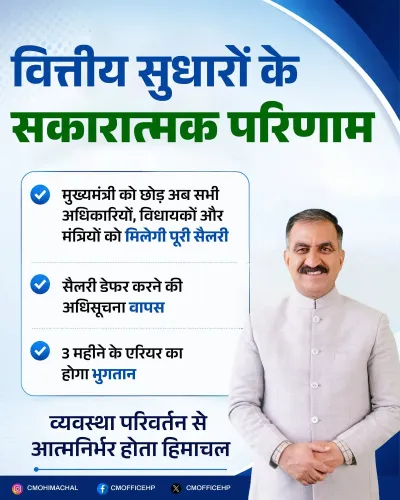
According to this notification, 50% of the Chief Minister's salary, 30% of the salaries of the Deputy Chief Minister, Ministers, Speaker, and Deputy Speaker of the Legislative Assembly, and 20% of the salaries of all Members of the Legislative Assembly will be deferred for the next half-year.
This measure is in accordance with Articles 162 and 166 of the Constitution.
The government has emphasized that this is not a permanent salary cut but merely a temporary deferment. The withheld amounts are set to be reimbursed to the public representatives when the state’s financial situation stabilizes.
Transparency is a priority for the government, and as such, the e-salary system will reflect both the full salary and the deferred portion distinctly. This will also be noted on salary slips, ensuring that all employees and public representatives have clear access to this information.
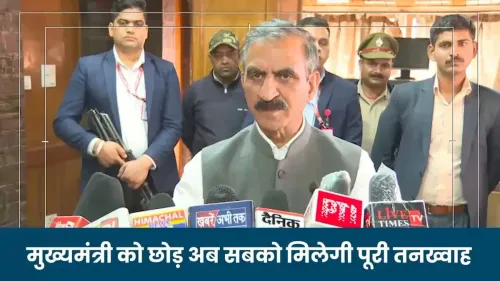
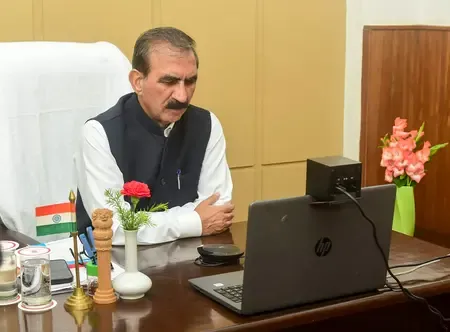
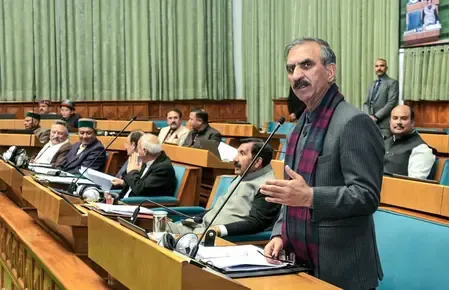
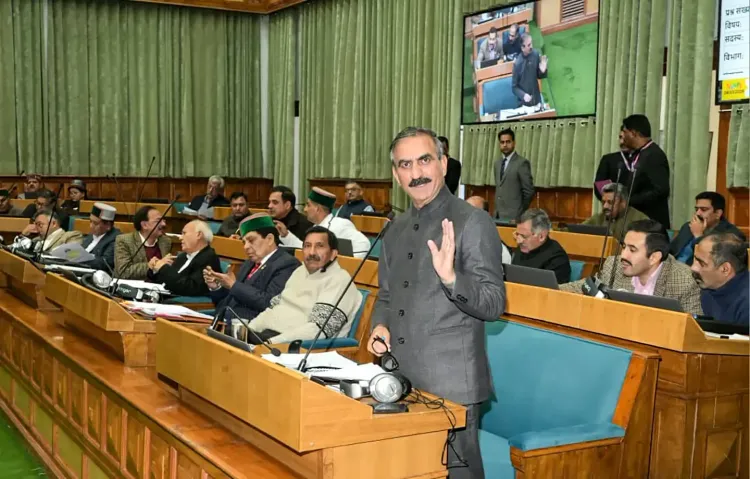
Chief Minister Sukhvinder Sukhu addressed the salary reduction during his Budget speech for the fiscal year 2026–27.
During this speech, he also mentioned that the salaries of senior officials (Class 1 and Class 2) would face deferment; however, that decision was retracted on Himachal Day, which fell on April 15.
The notification issued by Chief Secretary Sanjay Gupta specifically pertains to the deferment of salaries for public representatives.
It also clarifies that all statutory deductions, including income tax, will be applicable to the entire salary. The deferred amounts will be calculated based on the net amount remaining after taxes and other deductions to prevent any potential accounting or tax complications in the future.
Additionally, special provisions have been established for public representatives who have availed themselves of housing or vehicle purchase advances.
Point of View
It's essential to recognize the Himachal Pradesh government's proactive approach to fiscal management amid financial hardships. The temporary salary deferment reflects a commitment to transparency and accountability, which can contribute to restoring public trust in governance.
NationPress
19 Sept 2026
Frequently Asked Questions
What percentage of salaries will be deferred?
The Chief Minister's salary will see a 50% deferment, while the Deputy Chief Minister, Ministers, Speaker, and Deputy Speaker will face a 30% deferment. All other Members of the Legislative Assembly will have 20% of their salaries deferred.
Is this salary cut permanent?
No, the salary deferment is temporary. The withheld amounts will be reimbursed when the state's financial situation improves.
How will the deferment be communicated to public representatives?
The e-salary system will display both the full salary and the deferred amount separately, ensuring transparency.
What is the reason behind this decision?
The government is facing financial challenges and has chosen to implement a temporary salary deferment as a measure to address these issues.
Are there any special provisions for those with advances?
Yes, special provisions have been made for public representatives who have taken a house-building advance or motor-car advance.