RSS Chief Hosabale Proudly Affirms Modi's Deep Sangh Roots at Hudson Institute
Synopsis
RSS General Secretary Dattatreya Hosabale publicly called the BJP-RSS bond 'umbilical' and 'unbreakable' at Washington's Hudson Institute, openly declaring pride in PM Modi's RSS roots — a rare, candid articulation of the ideological architecture powering India's ruling establishment, delivered on a global strategic stage.
Key Takeaways
Dattatreya Hosabale , RSS General Secretary , publicly expressed pride in PM Narendra Modi 's lifelong association with the RSS at the Hudson Institute on April 24, 2025 .
Hosabale described the BJP-RSS relationship as "umbilical" — foundational and impossible to sever — tracing it to the party's founding in 1980 .
He confirmed that a majority of individuals in India's government carry an RSS background , while maintaining the RSS does not directly intervene in governance.
The RSS , founded in 1925 , has grown from a small group into one of the world's largest volunteer organisations with a vast affiliate network across India .
The remarks were made at the Hudson Institute's New India Conference in Washington , signalling a deliberate effort to present the RSS's role to an international strategic audience.
PM Modi began his public life as an RSS pracharak and has led the BJP government since 2014 , drawing significant organisational strength from RSS-trained cadres.
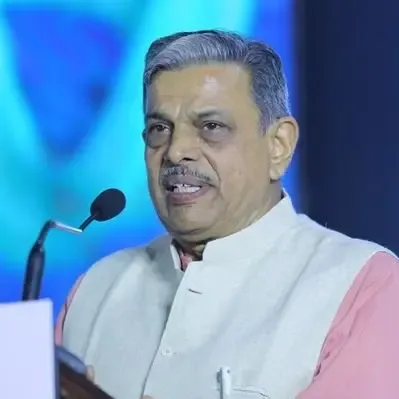
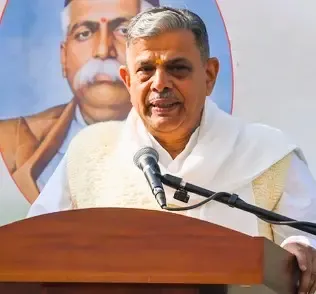
Washington, April 24 — Rashtriya Swayamsevak Sangh (RSS) General Secretary Dattatreya Hosabale openly expressed pride in Prime Minister Narendra Modi's deep-rooted association with the organisation during a high-profile appearance at the Hudson Institute in Washington, reaffirming the ideological and structural bonds that continue to link the RSS with India's political leadership.
Hosabale Affirms Modi's RSS Identity
Speaking at a fireside chat during the Hudson Institute's New India Conference, Hosabale addressed a question about PM Modi's formative background in the RSS with unmistakable pride. "That is true, he's also brought up it, and we are also proud of you very much so," he said, confirming what has long been a defining feature of the Prime Minister's public identity.
Modi, who began his public life as an RSS pracharak (full-time volunteer), has consistently acknowledged the organisation's influence on his political philosophy and leadership style. The Prime Minister has been at the helm of the Bharatiya Janata Party (BJP) since it came to power in 2014, and the party continues to draw deep organisational strength from RSS-trained cadres across the country.
The Unbreakable BJP-RSS Bond
Hosabale elaborated on the structural relationship between the RSS and the BJP, tracing its origins to the party's founding in 1980. He described the connection as inherently foundational — one that the BJP's founders consciously chose to preserve. "The founders of the BJP… wanted to retain the relations… that umbilical… relations cannot be severed," he stated.
This framing is significant. The use of the word "umbilical" suggests not just an alliance of convenience but a biological-level dependency — one that predates electoral politics and will outlast any single government. Hosabale also acknowledged that a large number of individuals currently in positions of political authority carry an RSS background, saying plainly, "Because the people who are in the government are from the RSS background."
This comes amid growing global interest in understanding the ideological architecture of India's ruling establishment, particularly as New Delhi deepens its strategic and economic partnerships with Western democracies. The Hudson Institute event brought together policymakers, scholars, and strategic thinkers to examine India's rise and its evolving global partnerships.
RSS Influence Without Direct Intervention
While affirming the ideological alignment, Hosabale was careful to draw a distinction between cultural influence and direct political interference. "RSS doesn't get into this politics of the government of India," he said, positioning the organisation as a long-term social and civilisational force rather than a day-to-day policy actor.
He described the RSS's primary mission as building a volunteer-driven ecosystem rooted in service, discipline, and social cohesion — goals he argued are aligned with national interest but operate independently of electoral politics. This nuanced positioning allows the RSS to simultaneously claim credit for shaping India's leadership while maintaining institutional distance from governmental decisions.
Notably, critics and political analysts have long argued that this distinction is more rhetorical than real — pointing to instances where RSS affiliates and leaders have weighed in on policy matters ranging from education curricula to economic nationalism. Hosabale's remarks at the Hudson Institute do not resolve this debate but add an authoritative articulation of the RSS's self-defined role.
A Century of Growth: From Handful to Global Influence
The conversation also covered the RSS's remarkable institutional journey — from its founding in 1925 with a handful of volunteers in Nagpur to what is now widely regarded as one of the largest volunteer organisations in the world. The moderator noted that the RSS has effectively shaped political leadership in the world's most populous democracy.
Hosabale responded with characteristic restraint, invoking humility as a guiding organisational principle. "We are not complete brothers… we will not be… with the strength the humility comes," he said, suggesting that the RSS views its growing influence not as an occasion for dominance but for deeper responsibility.
He reiterated the organisation's core commitment to producing "selfless volunteers" dedicated to society and humanity, while urging India to embrace modernisation without abandoning its cultural foundations — a message that resonates strongly with the RSS's long-standing civilisational worldview.
Strategic Significance of the Washington Platform
The choice of the Hudson Institute — a prominent Washington-based think tank with significant influence over US foreign policy discourse — as the venue for these remarks is itself notable. By articulating the RSS-BJP-government relationship openly before an American strategic audience, Hosabale appears to be making a deliberate effort to normalise and contextualise the RSS's role for Western policymakers who may view the organisation with suspicion.
This comes at a time when India-US relations are at a historic high, and as the BJP government seeks to position India as a reliable democratic partner in a multipolar world. The RSS's visibility on such platforms signals a broader confidence within the Sangh Parivar about its place in India's global narrative.
As India prepares for upcoming state elections and continues to navigate complex geopolitical alignments, the ideological coherence between the RSS, the BJP, and the government — as articulated by Hosabale in Washington — will remain a central factor in understanding the direction of Indian politics and governance in the years ahead.
Point of View
Confident that its moment has arrived. For decades, the RSS-BJP relationship was either downplayed or denied in international forums; now it is being proudly proclaimed on Washington's most influential think-tank stage. The deeper irony is that while Hosabale insists the RSS stays out of government politics, he simultaneously confirms that the government is staffed by RSS alumni — a distinction that is constitutionally important but operationally thin. What this signals is a new phase of RSS self-assertion: not just shaping India from within, but defining India's identity for the world.
NationPress
18 Sept 2026
Frequently Asked Questions
What did RSS General Secretary Dattatreya Hosabale say about PM Modi at the Hudson Institute?
Hosabale expressed visible pride in PM Modi's long association with the RSS, saying 'we are also proud of you very much so.' He confirmed that Modi's RSS roots remain a defining part of his leadership identity and public life.
What is the relationship between the RSS and the BJP?
The RSS and the BJP share what Hosabale described as an 'umbilical' relationship that cannot be severed. The BJP was founded in 1980 by leaders who consciously chose to retain organisational and ideological ties with the RSS.
Does the RSS interfere in the Indian government's decisions?
Hosabale stated that 'RSS doesn't get into this politics of the government of India,' positioning the organisation as a social and cultural force rather than a direct political actor. However, he acknowledged that most government members come from RSS backgrounds.
When was the RSS founded and how large is it today?
The RSS was founded in 1925 in Nagpur and has grown into one of the largest volunteer organisations in the world. It has a vast network of affiliates and plays a significant role in India's socio-political landscape.
Why did Hosabale speak about the RSS at the Hudson Institute in Washington?
Hosabale was participating in the Hudson Institute's New India Conference, which brought together policymakers, scholars, and strategic thinkers to examine India's global rise. His remarks appear designed to contextualise the RSS's role for an international audience.