IAF Chief Ashutosh Dixit outlines 'VAYU' vision, vows combat readiness as 29th Air Chief
Synopsis
India's new Air Chief Marshal Ashutosh Dixit didn't just take charge — he set a strategic compass. His 'VAYU' framework prioritises restoring the IAF's depleted combat strength to sanctioned levels, fast-tracking the Tejas and AMCA, and fully integrating air power into joint theatre operations. The explicit reference to Operation Sindoor as a benchmark signals an IAF that sees decisive precision strikes as its defining identity going forward.
Key Takeaways
Air Chief Marshal Ashutosh Dixit assumed charge as the 29th Chief of the Air Staff on 1 November 2026 , succeeding Air Chief Marshal A.P.
Dixit unveiled a five-point strategic vision under the acronym 'VAYU' — Vigilance/Victory/Readiness, Aatmanirbharta, Yukti, and Unity of Effort.
Restoring IAF combat strength to its sanctioned level was identified as the foremost immediate task.
Indigenous platforms — Tejas Mk1A , Tejas Mk II , and the AMCA — were named 'highest priorities' under the Aatmanirbharta pillar.
Dixit cited Operation Sindoor as a benchmark for precise, decisive air power under his predecessor's tenure.
Welfare of Agniveervayu personnel, veterans, and Veer Naris was cited as a personal commitment.
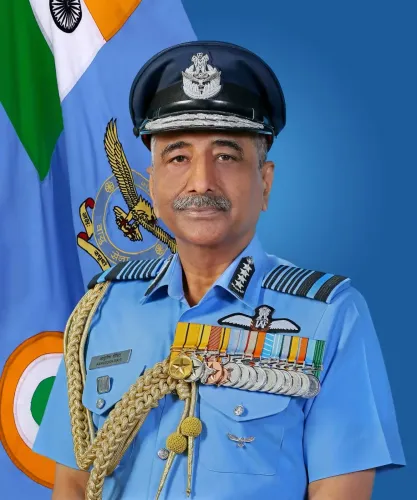
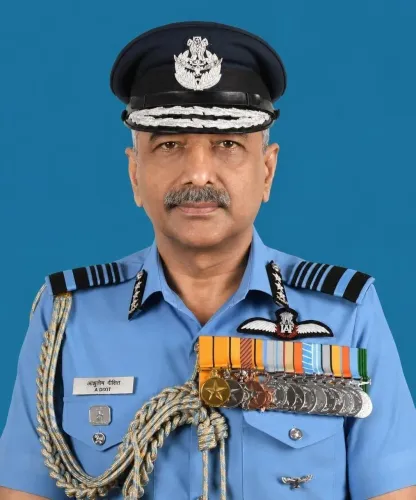
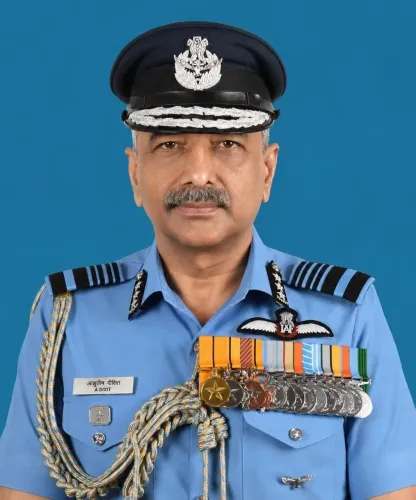
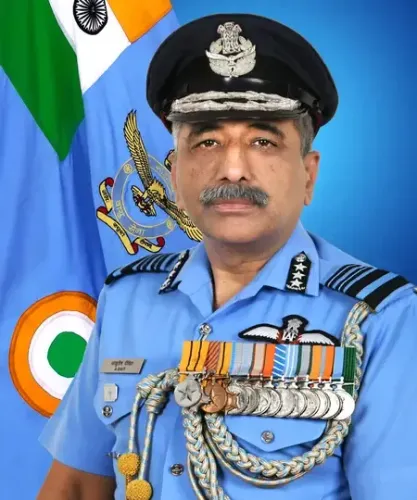
Air Chief Marshal Ashutosh Dixit on Sunday, 1 November 2026, assumed charge as the 29th Chief of the Air Staff of the Indian Air Force (IAF), pledging to keep the force vigilant, accelerate its transformation, and ensure it remains prepared to respond whenever the nation calls. In his first address after the ceremonial handover in New Delhi, Dixit laid out a five-point strategic vision encapsulated in the acronym 'VAYU', covering readiness, indigenous capability, innovation, and joint operations.
Ceremonial Takeover and Tribute
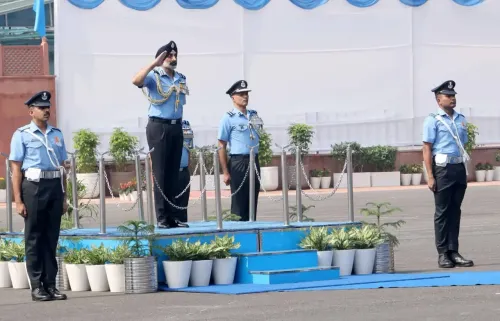
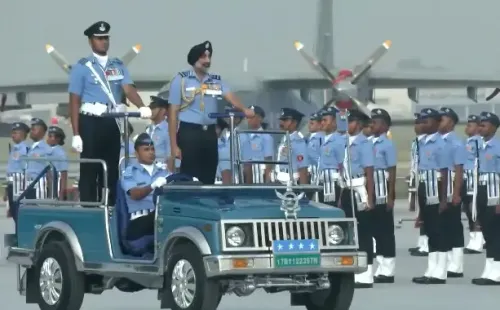
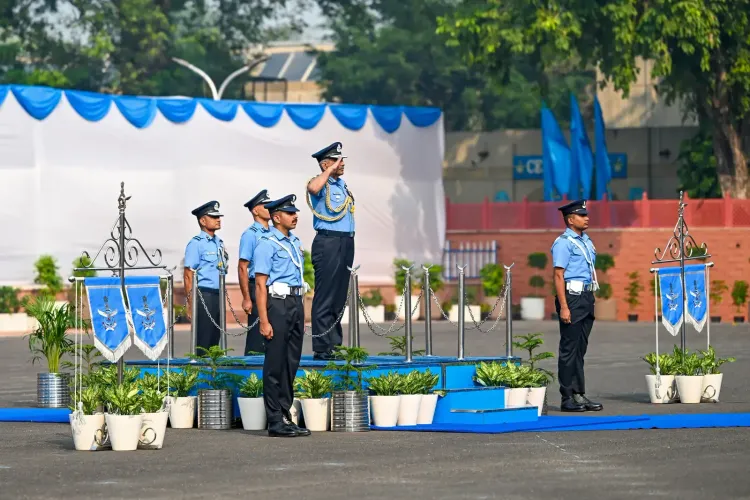
Air Chief Marshal Dixit was accorded a ceremonial Guard of Honour at the Parade Ground of the Air Force Station, arriving in an electric vehicle (EV) — a symbolic nod to the force's modernisation agenda. He subsequently paid homage at the National War Memorial, honouring personnel who died in service. 'Their courage is the standard against which we will measure ourselves,' he said.
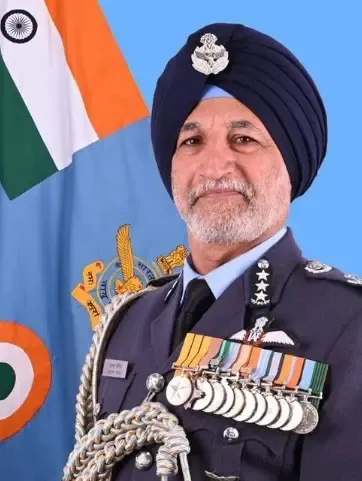
Dixit succeeds Air Chief Marshal A.P. Singh, who retired on Saturday after completing 42 years of service. Acknowledging his predecessor, Dixit noted: 'Under his leadership, in Operation Sindoor, the Air Force displayed what precise and decisive air power can achieve. I thank him for handing over a force in a high state of readiness.'
The VAYU Framework: Five Priorities Decoded
The new IAF chief organised his priorities under the acronym VAYU, with each letter representing a distinct operational focus area.
'V' — Vigilance, Victory and Readiness: Every squadron, radar, and air defence unit must be ready to respond at a moment's notice, Dixit said, adding that restoring the IAF's combat strength towards its sanctioned level would be his foremost task.
'A' — Aatmanirbharta (Self-Reliance): Dixit identified the Tejas Mk1A, Tejas Mk II, and the Advanced Medium Combat Aircraft (AMCA), along with indigenous sensors and weapons, as 'highest priorities'. 'We will fight with Indian solutions, and we will hold them in numbers that meet sustainment and operational demands,' he said.
'Y' — Yukti (Ingenuity and Innovation): This pillar covers AI-enabled command and control, layered counter-drone defence, resilient maintenance frameworks, and the use of near-space as an operational domain.
'U' — Unity of Effort: Emphasising tri-service integration, Dixit said the IAF would 'plan and fight as one' alongside the Army, Navy, and national agencies, aligned with the broader JAI (Jointness, Aatmanirbharta and Innovation) vision. 'Air power delivers most when it is integrated from the very first plan,' he stated.
Security Environment and Technology Shifts
Dixit stressed that India's security environment remains 'demanding', citing the emergence of drones, long-range precision weapons, space, cyber capabilities, artificial intelligence, and the electromagnetic spectrum as forces reshaping the character of modern warfare. 'The Air Force, while transforming into the force that India will need in the next decade, must always be ready to fight and win,' he said.
This comes amid heightened regional security concerns following Operation Sindoor, which demonstrated the IAF's precision strike capability and underscored the importance of sustained combat readiness. The reference to restoring strength to sanctioned levels signals an ongoing gap in fighter squadron numbers — a challenge successive air chiefs have flagged.
Welfare of Air Warriors a Personal Commitment
Dixit concluded his remarks by placing the welfare of Air Warriors, Agniveervayu personnel, civilian staff, veterans, Veer Naris, and their families at the centre of his priorities. 'Their training, professional excellence, safety, welfare and dignity will have my personal attention,' he said. He also directly addressed citizens: 'Trust that your Air Force is vigilant, ready and resolute. Our commitment is clear: to remain ready, keep transforming and delivering whenever the nation calls.'
With a strategic roadmap set and a force described as being in 'a high state of readiness', Air Chief Marshal Dixit's early priorities will be watched closely — particularly the pace of indigenous aircraft induction and progress on joint theatre commands.
Point of View
Framing the IAF's identity around precision deterrence rather than sheer numbers. The Aatmanirbharta pillar will face its real test in the Tejas Mk1A delivery timeline, which has already slipped repeatedly; a new chief's emphasis alone will not accelerate HAL's production capacity without systemic manufacturing reform. The 'Unity of Effort' plank also bears watching — tri-service integration has been a policy priority since the Kargil Review, yet theatre command implementation remains incomplete.
NationPress
1 Nov 2026
Frequently Asked Questions
Who is the new Chief of the Indian Air Force?
Air Chief Marshal Ashutosh Dixit is the new Chief of the Indian Air Force, having assumed charge as the 29th Chief of the Air Staff on 1 November 2026. He succeeds Air Chief Marshal A.P. Singh, who retired after 42 years of service.
What is the 'VAYU' framework announced by IAF Chief Dixit?
'VAYU' is a five-point strategic acronym outlined by Air Chief Marshal Dixit to define the IAF's priorities: V for Vigilance, Victory and Readiness; A for Aatmanirbharta (self-reliance); Y for Yukti (ingenuity and innovation); and U for Unity of Effort. It covers everything from restoring combat strength to tri-service integration and AI-enabled warfare.
What is Dixit's top immediate priority for the IAF?
Restoring the IAF's combat strength towards its sanctioned level is Dixit's foremost stated task. He also flagged the induction of indigenous platforms — Tejas Mk1A, Tejas Mk II, and the Advanced Medium Combat Aircraft (AMCA) — as 'highest priorities' under the Aatmanirbharta pillar.
Why did Dixit mention Operation Sindoor in his first address?
Dixit cited Operation Sindoor as evidence of what 'precise and decisive air power can achieve,' crediting his predecessor Air Chief Marshal A.P. Singh with delivering a force in a high state of readiness. The reference sets operational precision as the benchmark for his own tenure.
What technologies did the new IAF chief highlight as reshaping warfare?
Dixit identified drones, long-range precision weapons, space, cyber capabilities, artificial intelligence, and the electromagnetic spectrum as forces reshaping the character of modern conflict. He stressed that the IAF must be ready to fight and win even as it transforms to meet these emerging threats.