IBSA Fund: A Catalyst for Women's Empowerment in Development
Synopsis
Discover how the India-Brazil-South Africa (IBSA) Fund is transforming women's empowerment through development initiatives. This powerful collaboration among nations showcases the importance of South-South cooperation in driving sustainable change.
Key Takeaways
IBSA Fund fosters women's empowerment through collaborative initiatives.
Supported over 50 projects across nearly 40 countries since 2004.
Focuses on South-South cooperation and gender equality.
Operates on a demand-driven basis for partner countries.
Empowering women is essential for sustainable development.
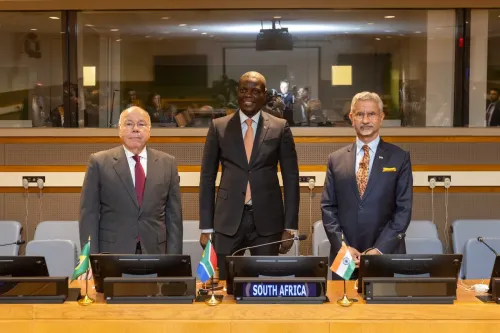
The United Nations reported on March 13 (NationPress) that the India-Brazil-South Africa (IBSA) Fund is a robust instrument for fostering South-South cooperation aimed at enhancing women’s empowerment through development, as highlighted by officials from the three countries.
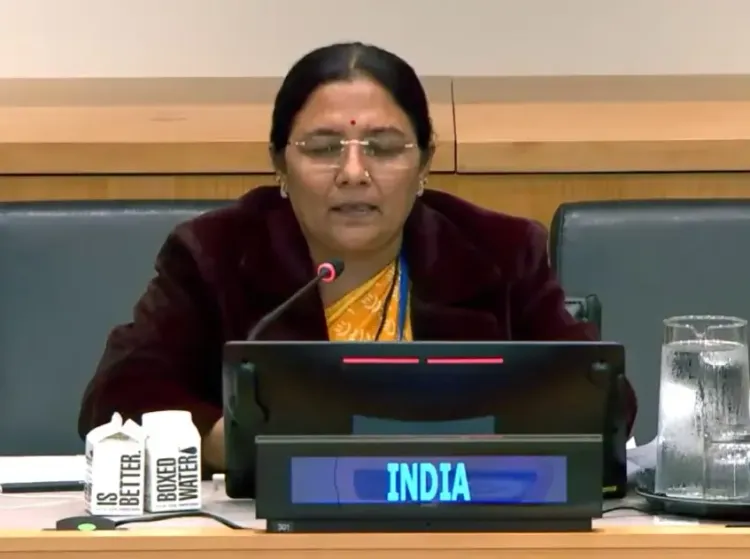
According to Savitri Thakur, India’s Minister of State for Women and Child Development, the Fund is a “visionary collaborative initiative among the governments of India, Brazil, and South Africa, which has effectively supported more than 50 development assistance projects in nearly 40 nations since its inception in 2004.”
“We have actively backed numerous projects focused on women’s development,” she emphasized during an event celebrating the achievements of Women-Led Development and South-South Cooperation.
“The significance of South-South cooperation lies in its strong commitment to gender equality and the empowerment of women and girls,” stated Sindisiwe Chikunga, South Africa’s Minister for Women, Youth, and Persons with Disabilities.
She remarked that “in times when multilateralism faces challenges and development financing becomes more conditional and contentious,” the role of the IBSA Fund is crucial.
“Indeed,” she noted, “the IBSA Fund symbolizes a chance for the voices of emerging and developing nations to be equally heard and accountable to their populations.”
Chikunga further explained that the IBSA initiative is a testament to a development model that prioritizes Southern agency, rejects dependency, and illustrates that nations that have experienced post-colonial recovery must lead sustainable development efforts.
P. Harish, India’s Permanent Representative, commented, “The empowerment of women to effectively contribute to our productive economies acts as a force multiplier.”
“In a world where traditional aid frameworks are strained and development assistance is increasingly fragmented, the IBSA Fund provides a reliable model showcasing the strength of South-South collaboration,” he added.
What distinguishes it is that “the Fund operates based on demand, allowing partner countries to identify their own needs, which reflects the fundamental principle of South-South cooperation,” he further explained.
Thalia Barbosa Rodrigues Neves, Brazil's Vice Minister for Women, stated, “There can be no truly sustainable or democratic development without the full involvement of women.”
“When women gain access to resources such as income, education, land, credit, technology, and social protection, and participate in decision-making, society as a whole progresses,” she asserted.
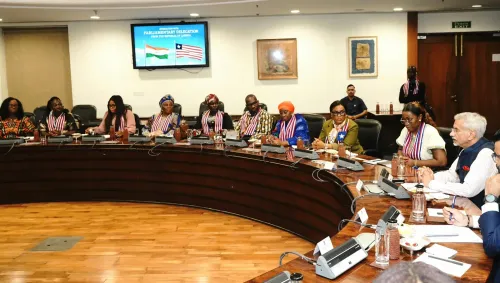
She highlighted the IBSA Fund's support for women in Uganda to enhance their agricultural output, Fijian women learning health-improving technologies, and female legislators in Liberia strengthening their governance roles.
“These examples demonstrate that women-led development is not just a powerful social agenda, but also a tangible strategy for achieving sustainable development,” she concluded.
Point of View
Focusing on empowering women as key drivers of sustainable development. By prioritizing the needs identified by partner nations, the Fund demonstrates a commitment to authentic collaboration and shared progress.
NationPress
1 Oct 2026
Frequently Asked Questions
What is the IBSA Fund?
The IBSA Fund is a collaborative initiative among India, Brazil, and South Africa aimed at promoting development assistance projects, particularly focusing on women's empowerment.
How many projects has the IBSA Fund supported?
Since its establishment in 2004, the IBSA Fund has supported over 50 development assistance projects across nearly 40 countries.
Why is South-South cooperation important?
South-South cooperation is crucial for fostering gender equality and empowering women and girls, allowing emerging economies to share resources and knowledge effectively.
What makes the IBSA Fund unique?
The IBSA Fund operates on a demand-driven basis, allowing partner countries to identify their own needs, which aligns with the core principles of South-South cooperation.
What impact does women's empowerment have on society?
Empowering women leads to greater societal progress, as it enhances their participation in decision-making and access to resources, ultimately benefiting entire communities.