Could PM Modi's Proposal for an IBSA Fund Transform Climate Resilient Agriculture?
Synopsis
Prime Minister Modi has proposed the creation of an IBSA Fund dedicated to Climate Resilient Agriculture, emphasizing South-South cooperation. This initiative aims to not only enhance agricultural practices but also strengthen ties between India, Brazil, and South Africa. The proposal highlights the potential for collaborative development and sustainable growth in a rapidly changing global environment.
Key Takeaways
IBSA Fund proposed for climate-resilient agriculture.
Focus on South-South cooperation across developing nations.
Collaboration in areas like green energy and natural farming .
Emphasis on reforming global governance institutions.
Potential for an IBSA Digital Innovation Alliance .
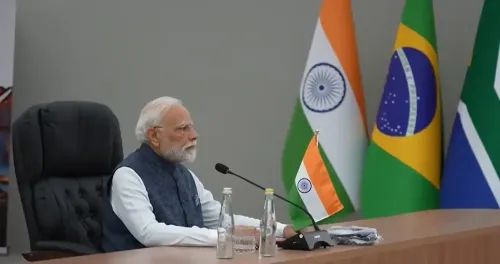
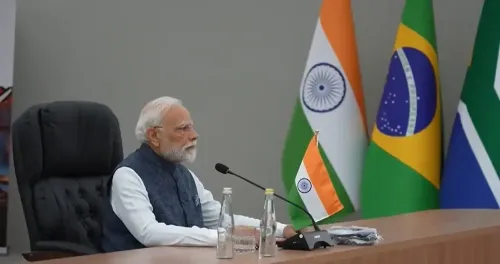
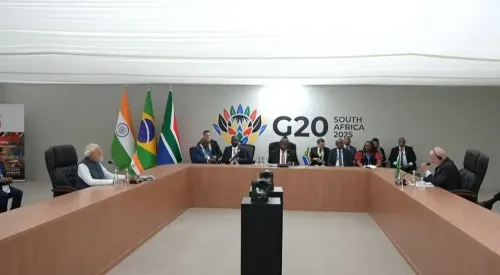
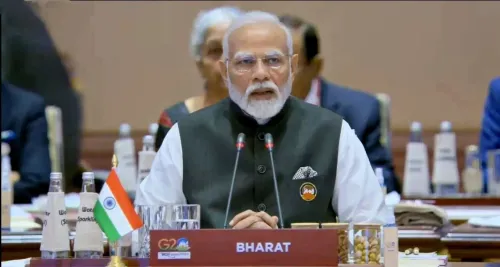
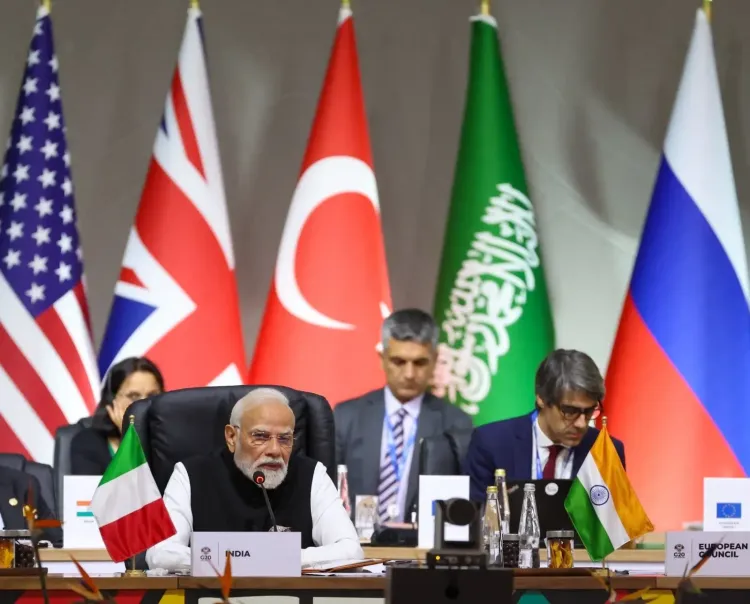
Johannesburg, Nov 23 (NationPress) On Sunday, Prime Minister Narendra Modi proposed the establishment of an IBSA (India, Brazil, South Africa) Fund aimed at promoting Climate Resilient Agriculture to enhance South-South cooperation. In his speech during the IBSA leaders' gathering, he commended the Fund's contributions in executing projects across forty nations in vital areas, including education, health, women's empowerment, and solar energy.
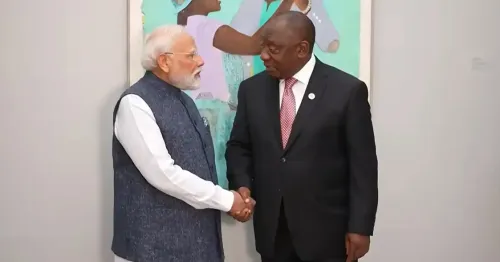
The event was presided over by South African President Cyril Ramaphosa and included participation from Brazil's President Luiz Inacio Lula da Silva.
Describing the gathering as timely, PM Modi noted its alignment with the inaugural G20 Summit on African soil, marking a significant milestone following four consecutive G20 presidencies held by Global South nations, three of which were led by the IBSA countries. He pointed out that this succession has led to numerous key initiatives aimed at fostering human-centric development, reforming multilateral institutions, and promoting sustainable growth.
Prime Minister Modi highlighted that IBSA transcends being merely a trio of nations; it serves as a crucial platform linking three continents, major democratic states, and significant economies.
He articulated that IBSA can mutually enhance development and set an example for sustainable progress. He underscored cooperation potential in sectors such as millets, natural farming, disaster resilience, green energy, traditional medicines, and health security.
Additionally, he stressed IBSA's capacity to shape safe, reliable, and human-focused AI standards. He extended an invitation to IBSA leaders for the forthcoming AI Impact Summit scheduled in India next year.
PM Modi urged that global governance bodies are disconnected from the realities of the 21st century. He called on IBSA to communicate a strong message that reforming global governance entities, especially the UN Security Council, is not merely an option but a necessity.
Highlighting the pivotal role of technology in facilitating human-centric growth, he proposed creating an IBSA Digital Innovation Alliance to enable the sharing of Digital Public Infrastructure, such as UPI, health platforms like CoWIN, cybersecurity frameworks, and initiatives led by women in technology among the three nations.
The IBSA forum, comprising India, Brazil, and South Africa, was formalized in 2003 to address shared challenges and collaborate on developmental initiatives, promoting South-South cooperation and fostering a more inclusive global governance framework.
Point of View
It is evident that Prime Minister Modi's proposal for the IBSA Fund represents a crucial step towards enhancing cooperation among developing nations. It not only addresses the pressing issue of climate resilience in agriculture but also highlights the importance of forming strategic alliances to tackle global challenges. Supporting this initiative aligns with the nation's commitment to sustainable development and global governance reforms.
NationPress
30 Sept 2026
Frequently Asked Questions
What is the IBSA Fund?
The IBSA Fund is designed to promote South-South cooperation by supporting projects in various sectors, including education, health, and agriculture, among India, Brazil, and South Africa.
Why is the IBSA Fund important?
It facilitates collaboration among three major developing economies to address common challenges and enhance sustainable development.
What areas will the IBSA Fund focus on?
The fund will focus on climate-resilient agriculture, natural farming, disaster resilience, green energy, and health security.
How can technology contribute to IBSA's goals?
Technology can enhance human-centric development by sharing digital public infrastructure and enabling better collaboration in various sectors.
What was Modi's message regarding global governance?
PM Modi emphasized the need for reforming global governance institutions, particularly the UN Security Council, to better reflect 21st-century realities.