Is Russia Ready to Enhance Trade and Investment in Its Far East and Arctic Regions with India?

Synopsis
India and Russia are set to deepen their economic ties in the Far East and Arctic regions. Following a pivotal meeting, both nations are focusing on sectors like agriculture and energy, aiming to achieve a trade target of $100 billion by 2030. Discover the strategic initiatives discussed that could reshape bilateral relations.
Key Takeaways
Enhanced trade and investment cooperation between India and Russia.
Focus on sectors like agriculture , energy , and maritime transport .
Regular bilateral consultations on Arctic issues .
Goal of achieving $100 billion trade by 2030 .
Importance of addressing tariff and non-tariff barriers .
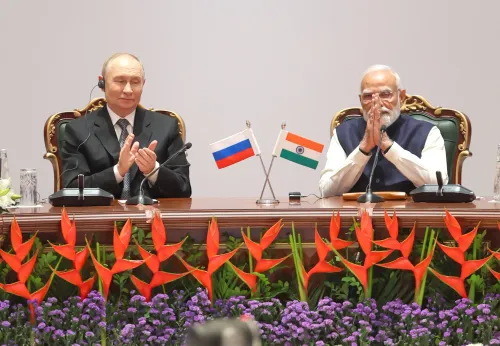
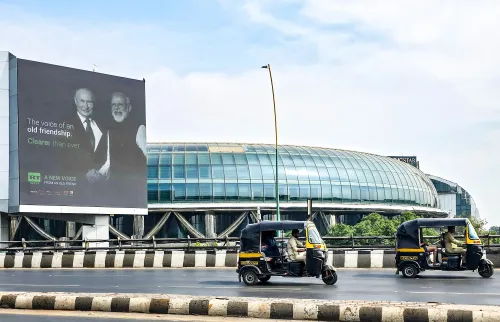
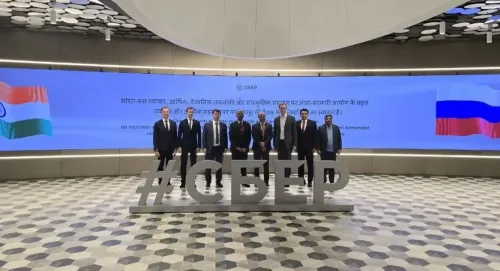
New Delhi, Dec 5 (NationPress) India and Russia have reaffirmed their commitment to enhance trade and investment collaboration in the Far East and the Arctic region of the Russian Federation. This declaration was made following a meeting between Prime Minister Narendra Modi and President Vladimir Putin, as detailed in a joint statement released on Friday.
The India-Russia Cooperation Program in the spheres of trade, economy, and investment for the period of 2024-2029 lays down a comprehensive framework for advancing cooperation, particularly focusing on sectors such as agriculture, energy, mining, manpower, diamonds, pharmaceuticals, and maritime transport.
Both nations emphasized the significance of regular bilateral discussions on Arctic issues and expressed satisfaction with the progress achieved in their multifaceted collaboration regarding the Northern Sea Route.
The Russian government acknowledged the presence of the Indian delegation at the 6th International Arctic Forum held in Murmansk in March 2025. The Indian government reiterated its willingness to actively participate as an Observer in the Arctic Council.
Furthermore, both parties agreed to enhance cooperation in establishing efficient transport corridors, concentrating on developing logistics networks that improve connectivity and bolster infrastructure capabilities for the International North-South Transport Corridor (INSTC), the Chennai–Vladivostok Corridor, and the Northern Sea Route. They acknowledged the signing of a Memorandum of Understanding focusing on the training of specialists for ships operating in polar waters.
The fruitful collaboration between the railways of India and Russia was also noted, aimed at fostering partnerships in mutually beneficial technology exchanges.
Additionally, both nations underscored the necessity of a transparent, inclusive, and non-discriminatory multilateral trade system, with the World Trade Organization at its core.
Both sides highlighted the need to tackle tariff and non-tariff barriers, eliminate logistic bottlenecks, enhance connectivity, secure smooth payment systems, devise acceptable solutions for insurance and reinsurance issues, and maintain regular interactions between businesses from both countries. These elements are crucial for achieving the revised bilateral trade target of $100 billion by 2030, the joint statement concluded.
Point of View
It is essential to recognize the strategic implications of India and Russia's renewed focus on enhancing trade and investment in the Far East and Arctic regions. This cooperation not only reflects the two nations' commitment to strengthening bilateral ties but also presents opportunities for robust economic growth in sectors critical to both countries. The emphasis on transparency and inclusiveness in trade aligns with global standards, ensuring a balanced approach that benefits both sides.
NationPress
27 Sept 2026
Frequently Asked Questions
What sectors will India and Russia focus on for cooperation?
The cooperation will focus on agriculture, energy, mining, manpower, diamonds, pharmaceuticals, and maritime transport.
What is the trade target set for India and Russia by 2030?
The revised bilateral trade target is set at $100 billion by 2030.
What role will India play in the Arctic Council?
India expressed its readiness to take an active role as an Observer in the Arctic Council.
What is the significance of the International North-South Transport Corridor?
It aims to enhance connectivity and logistics links between India and Russia, improving trade efficiency.
What was noted about the cooperation between the railways of both nations?
Both countries noted fruitful cooperation aimed at establishing partnerships in mutually beneficial technology exchange.