How Will India-Russia Trade Relations Transform the Automotive, Electronics, and Manufacturing Sectors?
Synopsis
India's trade ties with Russia are set to unlock significant opportunities across multiple sectors, including automobiles, electronics, and manufacturing. With a target to elevate trade to $100 billion by 2030, the collaboration promises mutual benefits driven by India's skilled workforce and innovative ecosystem.
Key Takeaways
India-Russia trade is approaching $70 billion.
Target to exceed $100 billion by 2030.
Significant opportunities in automobiles, electronics, and textiles.
India's skilled workforce can address Russia's talent shortfall.
Focus on innovation and high-growth sectors for future growth.
New Delhi, Dec 5 (NationPress) The Indian government has identified promising opportunities for collaboration with Russia in sectors such as consumer goods, food and agriculture, pharmaceuticals, medical supplies, telecom, electronics, industrial components, and the mobility of skilled talent.
Trade between India and Russia has achieved remarkable progress, approaching $70 billion, yet there is still a vast reservoir of potential to explore.
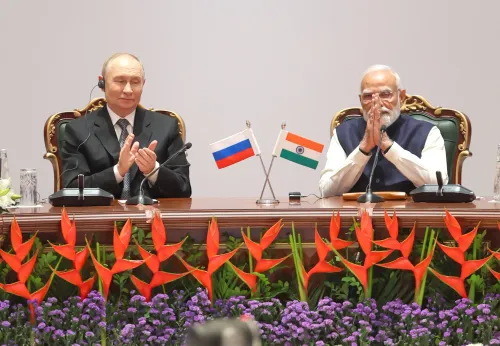
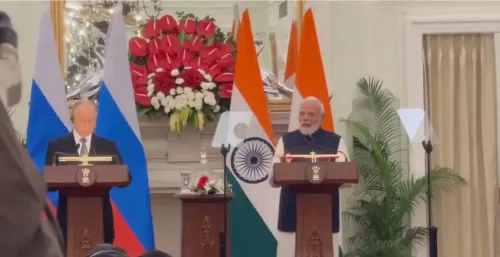
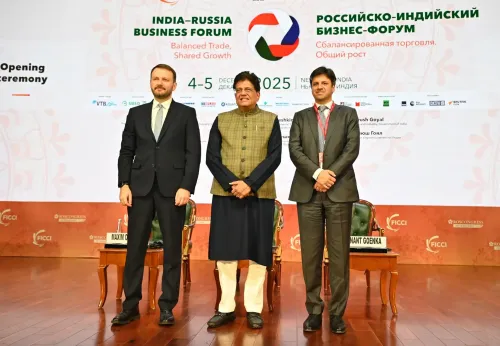
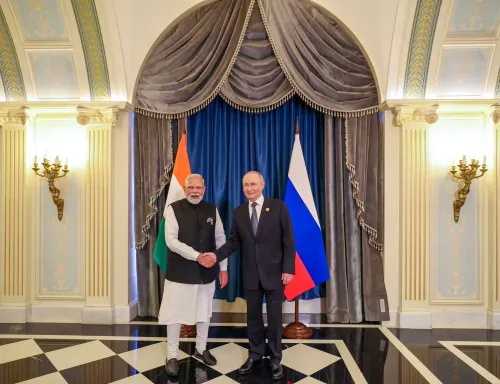
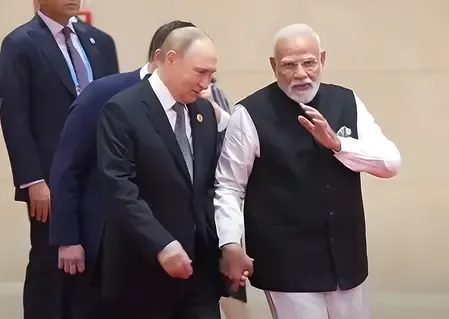
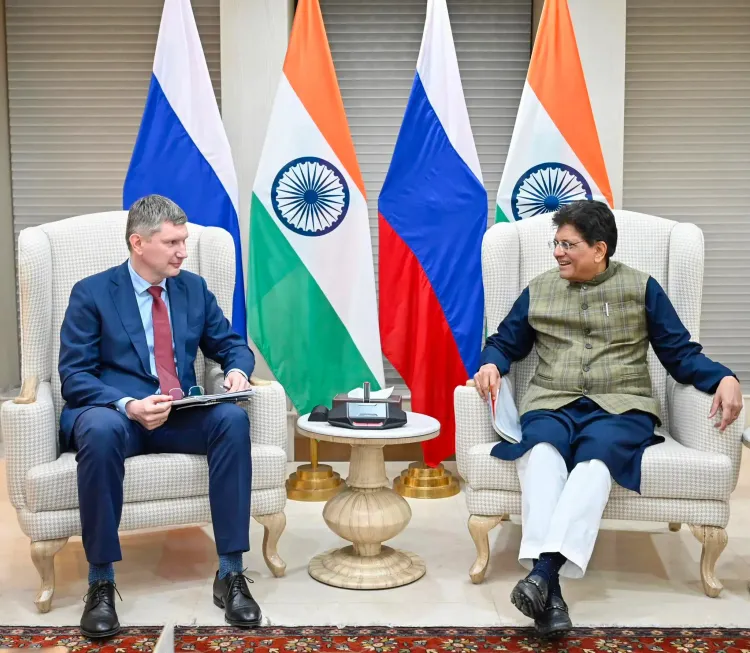
As Russian President Vladimir Putin embarked on a significant visit to India, Commerce and Industry Minister Piyush Goyal stated during an event that the mutual objective is to cultivate a more balanced and rewarding trade relationship, targeting an increase to $100 billion by 2030, enhanced by robust Indian exports. While reaching the $70 billion mark is commendable, Goyal emphasized the need for a more equitable trade balance.
The minister highlighted the extensive range of products India can offer to fulfill Russian demands, just as there are numerous areas where India can harness Russian strengths.
India is set to expand from a $4 trillion economy to between $30–35 trillion by 2047, coinciding with the nation's centenary of independence.
The demand for various industrial and consumer products in Russia opens up significant opportunities for Indian enterprises.
According to Goyal, several sectors demonstrate clear potential, including automobiles, tractors, heavy commercial vehicles, electronics, smartphones, data-processing equipment, heavy machinery, industrial components, textiles, and food products.
These categories highlight areas where India can substantially enhance its footprint in the Russian market.
Goyal also underscored the strength of India’s entrepreneurial ecosystem, noting that the country has nurtured the world’s third-largest startup ecosystem. He mentioned that India's young, skilled, and dedicated workforce could help address Russia’s anticipated shortfall of three million skilled professionals.
He asserted that macroeconomic stability and robust fundamentals have been bolstered by transformative measures such as the Goods and Services Tax, simplified compliance processes, reduced tax rates, and ongoing enhancements in the ease of doing business. Goyal emphasized that India produces the highest number of STEM graduates globally—2.4 million each year—and their expertise in fields like design, analytics, and research could significantly boost Russia’s global competitiveness.
Anant Goenka, President of FICCI, remarked that the future of the India–Russia partnership lies in high-growth, innovative sectors such as digital transformation, AI, emerging technologies, green energy, mobility, advanced manufacturing, financial innovation, and startups.
Point of View
It's imperative to recognize the strategic importance of India-Russia trade relations. This partnership not only stands to benefit both economies but also reinforces India's position on the global stage. By leveraging India's unique strengths and addressing market demands, this collaboration could lead to sustainable growth and innovation, ultimately benefiting the nation.
NationPress
19 Sept 2026
Frequently Asked Questions
What sectors are expected to benefit from India-Russia trade?
The sectors expected to benefit include automobiles, electronics, pharmaceuticals, and agricultural products, among others.
What is the current trade volume between India and Russia?
The current trade volume between India and Russia is nearing $70 billion.
What is the target trade volume by 2030?
The target trade volume is set to exceed $100 billion by 2030.
How many STEM graduates does India produce annually?
India produces around 2.4 million STEM graduates each year.
What opportunities exist for Indian businesses in Russia?
There are substantial opportunities for Indian businesses in various industrial goods and consumer products, especially in high-growth sectors.