INDIA bloc rally at Ramlila Maidan: Tejashwi invokes Mahabharata, Left slams protest crackdown
Synopsis
The INDIA bloc turned Ramlila Maidan into a political theatre on 1 November, with Tejashwi Yadav casting the fight against the Special Intensive Revision as a modern Mahabharata and demanding a treason case against CEC Gyanesh Kumar. With Left leaders invoking colonial-era crackdowns to describe the treatment of street protesters, the rally signals a sharpening opposition strategy ahead of upcoming state elections.
Key Takeaways
The INDIA bloc held a large rally at Delhi's Ramlila Maidan on 1 November 2026 against the Special Intensive Revision (SIR) of electoral rolls.
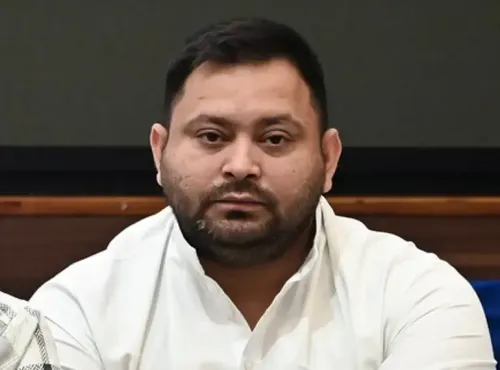
RJD Working President Tejashwi Yadav invoked the Mahabharata and the character of Shakuni to allege electoral dishonesty by the ruling establishment.
Yadav demanded a treason case against CEC Gyanesh Kumar , calling him a 'puppet' of Prime Minister Narendra Modi .
AISA President Neha Bora accused the BJP government of using police force — beatings and arrests — against citizens protesting with the national flag.
Left leaders condemned the government's alleged 'shrinking' of democratic freedoms and drew parallels with British-era suppression of freedom fighters.
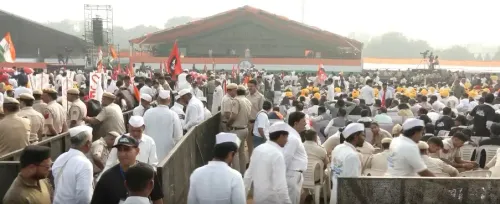
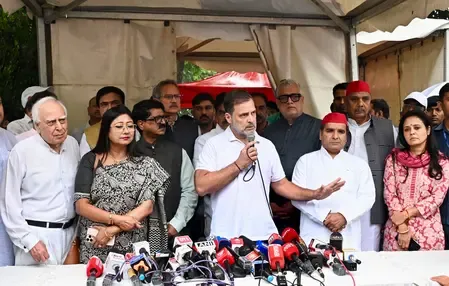
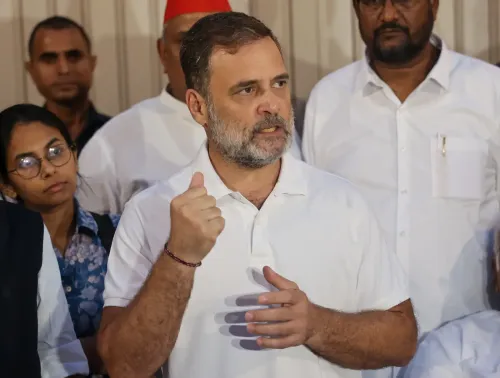
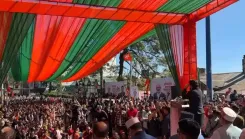
Opposition parties presented a united front at Delhi's Ramlila Maidan on Sunday, 1 November 2026, rallying under the INDIA bloc banner to protest against what they called the 'illegal' Special Intensive Revision (SIR) of electoral rolls and the appointment of Chief Election Commissioner (CEC) Gyanesh Kumar. Rashtriya Janata Dal (RJD) Working President Tejashwi Yadav drew on the Mahabharata to frame the opposition's fight, while Left leaders accused the government of brutally suppressing democratic protest.
Tejashwi's Mahabharata Parallel
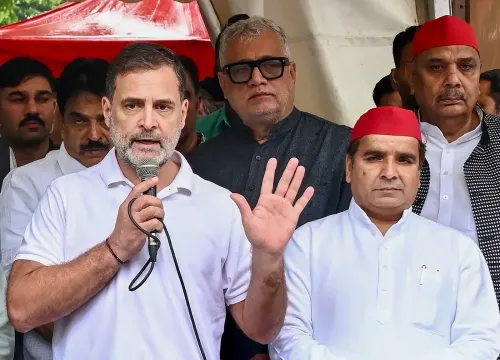
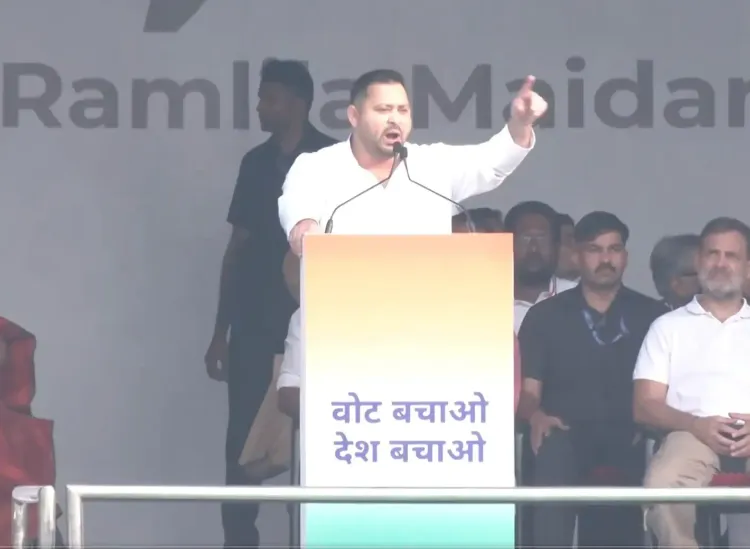
Tejashwi Yadav told the rally that while Ramlila Maidan was historically known for the staging of the Ramlila, the opposition had gathered there to enact a 'Mahabharata' against those who, he alleged, were 'stealing votes.' Drawing on the character of Shakuni — the scheming uncle in the Hindu epic — he argued that the ruling establishment had made a fair contest impossible.
'You all know Mahabharata started from gambling and not from the battlefield. Now that Shakuni is playing his game, we are forced to turn this into Kurukshetra. Whenever Shakuni rolled his dice, it would land exactly as Shakuni dictated — meaning there was dishonesty, and there was no level playing field,' Yadav said, pointedly asking the crowd who 'Shakuni' was and where the 'dice' lay in the alleged 'vote chori' exercise.
Sharpening his attack on the electoral authority, he demanded that CEC Gyanesh Kumar face a treason charge for what he described as stripping citizens of their voting rights. 'This Gyanesh Kumar is a puppet of Narendra Modi. A case of treason should be registered against him, and he should be sent to jail so that in the future, no individual ever dares to destroy our nation's democracy, crush our democracy, or tamper with our Constitution,' Yadav demanded.
Left Parties Slam Crackdown on Protesters
All India Students Association (AISA) President Neha Bora accused the Bharatiya Janata Party (BJP) government of discriminating against a section of citizens and deploying police force against peaceful demonstrators. She alleged a sharp deterioration in freedom of speech and assembly under the present administration.
'Who are you to ask the people of India to prove their citizenship? You have adopted the very tactics that your forefathers, the Britishers, used to employ. Your forefathers made the freedom fighters sign peace bonds and sent them to jail. You are doing the same to people out on streets, protesting against your discriminatory policies. You are putting people behind bars, beating and caning people protesting with Tiranga in their hands,' Bora said.
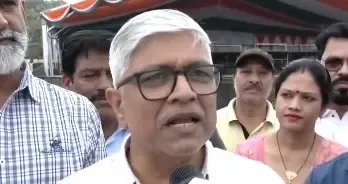
Left Front leaders more broadly condemned what they termed the 'shrinking' of democratic values and civil liberties under the current government, framing the rally as a defence of constitutional rights rather than a purely partisan gathering.
Context: Why the SIR Has Become a Flashpoint
The Special Intensive Revision (SIR) of electoral rolls has drawn sustained opposition criticism, with multiple parties alleging it is being used selectively to disenfranchise voters from specific communities. This comes amid a broader pattern of disputes over electoral roll management and the independence of the Election Commission of India (ECI) — debates that have intensified since amendments to the process for selecting election commissioners were made by the Centre in recent years.
Notably, the choice of Ramlila Maidan — a venue with deep symbolic resonance in India's protest history, most famously associated with Anna Hazare's 2011 anti-corruption movement — was deliberate, signalling the bloc's intent to draw a large and visible crowd.
What the Turnout Signals
Neha Bora hailed the rally's attendance as evidence of a 'vibrant democracy' and warned that what she called 'tyrants' would not withstand public scrutiny over time. 'You think that you will remain seated in Parliament, keeping the seats intact. You claim that the independence was achieved in 2014 and India's history will end with the BJP. This is not going to last forever,' she said.
With state assembly elections on the horizon, the INDIA bloc's ability to sustain this unified street-level mobilisation will be closely watched by political analysts and the Centre alike.
Point of View
But it risks obscuring the substantive legal and constitutional questions around the Special Intensive Revision — questions that deserve forensic scrutiny, not just epic metaphor. The demand for a treason charge against the Chief Election Commissioner is constitutionally extraordinary and sets a precedent that could cut both ways depending on who is in power. What the mainstream coverage is missing is that the INDIA bloc's street-level unity has repeatedly failed to translate into electoral cohesion; the rally's real test is whether it sustains as a movement or dissipates between election cycles. The colonial-era comparison deployed by Left speakers is rhetorically potent, but the more precise accountability question — whether the SIR process was legally conducted and politically neutral — remains unanswered and under-examined.
NationPress
1 Nov 2026
Frequently Asked Questions
What is the Special Intensive Revision (SIR) that triggered the INDIA bloc rally?
The Special Intensive Revision (SIR) is a process of intensively updating and revising electoral rolls conducted by the Election Commission of India. Opposition parties have termed it 'illegal' and alleged it is being used selectively to disenfranchise voters from specific communities, which is the central grievance behind the 1 November rally at Ramlila Maidan.
What did Tejashwi Yadav say at the Ramlila Maidan rally?
Tejashwi Yadav invoked the Mahabharata, comparing the electoral dispute to the battle of Kurukshetra and using the character of Shakuni to allege dishonesty in the 'vote chori' exercise. He also demanded that CEC Gyanesh Kumar be charged with treason for allegedly undermining citizens' voting rights.
Why did Left parties speak out at the INDIA bloc rally?
Left Front leaders condemned the BJP government for what they described as a brutal crackdown on street protesters, including alleged beatings and arrests of demonstrators carrying the Tricolour. AISA President Neha Bora drew parallels with British colonial-era tactics of imprisoning freedom fighters to describe the government's response to dissent.
Who is CEC Gyanesh Kumar and why is he a target of the opposition?
Gyanesh Kumar is India's Chief Election Commissioner, whose appointment and conduct have been contested by the INDIA bloc. The opposition accuses him of acting at the direction of the ruling BJP government, with Tejashwi Yadav specifically calling him a 'puppet of Narendra Modi' and demanding legal action against him for allegedly stifling democratic processes.
What is the significance of Ramlila Maidan as a protest venue?
Ramlila Maidan in New Delhi has deep symbolic resonance in India's protest history, most notably as the site of Anna Hazare's 2011 anti-corruption movement. By choosing this venue, the INDIA bloc was signalling its intent to draw a historically significant and highly visible crowd, lending added weight to its anti-SIR demonstration.