Exploring the Complex Dynamics of India-Myanmar Border Relations: A Ground-Level Report
Synopsis
A recent report reveals the intricate realities at the India-Myanmar border, highlighting the humanitarian efforts in Mizoram amidst Myanmar’s crisis, showcasing deep-rooted cultural ties and local economic interdependencies.
Key Takeaways
Humanitarian Efforts: Mizoram is sheltering thousands of refugees from Myanmar's Chin State.
Cultural Ties: Deep ethnic connections exist between Mizo and Chin communities.
Local Economies: Trade between India and Myanmar is vital for local livelihoods.
Policy Implications: Understanding local realities is crucial for India's future engagement with Myanmar.
Emerging Dynamics: The border regions reflect evolving relationships beyond formal diplomacy.
Naypyidaw/New Delhi, April 11 (NationPress) India's approach towards Myanmar has been characterized by caution, influenced by various factors including security, strategic priorities, and economic considerations, particularly in light of China's increasing dominance in the region.
Nevertheless, the actual conditions on the ground tell a different story, driven by border communities and their intertwined local economies, according to a report released on Saturday.
Ophelia Yumlembam from the Organisation for Research on China and Asia (ORCA) highlighted this phenomenon in her analysis for Myanmar's Institute for Strategy and Policy, particularly noting its significance in Mizoram, a northeastern state of India.
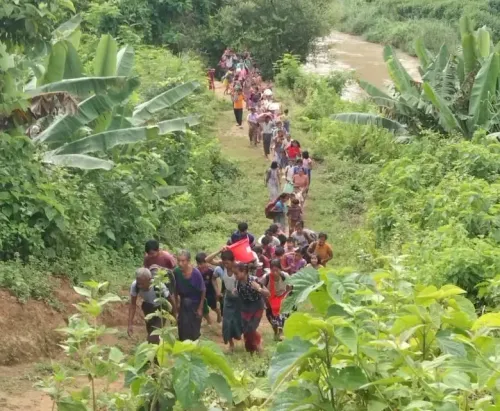
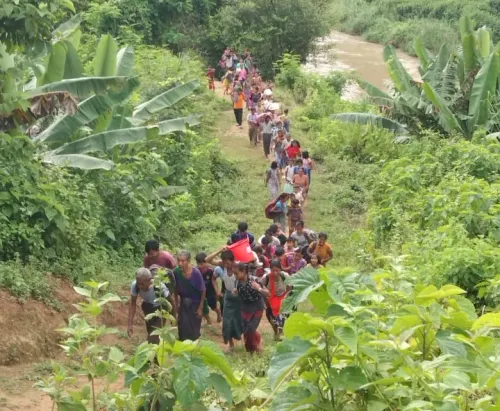
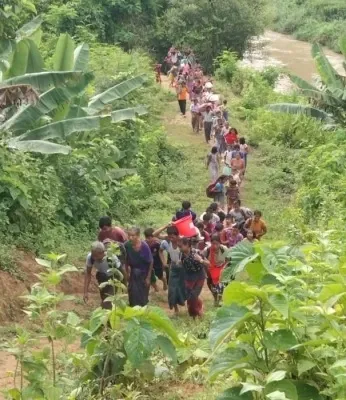
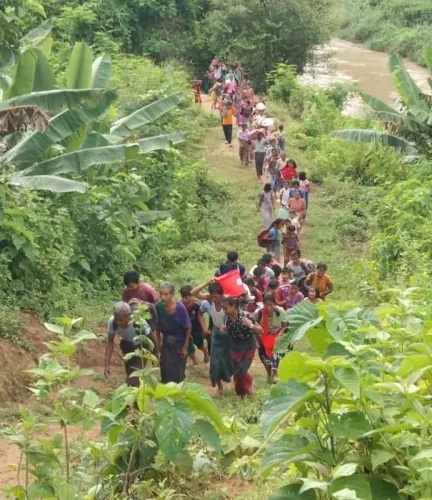
Despite directives from India's central government aimed at limiting cross-border migration, the Mizoram state government has extended refuge to thousands fleeing from Myanmar’s Chin State.
“This humanitarian response is deeply rooted in the ethnic and cultural ties shared by the Mizo people of Mizoram and the Chin communities of Chin State, both of whom belong to the Chin-Kuki-Mizo ethnolinguistic group. Official figures estimate that over 32,000 refugees currently reside in Mizoram, although the actual number could be much higher. Local organizations and religious groups have played a vital role in offering food, shelter, and basic healthcare, despite facing resource constraints,” Yumlembam stated.
In areas such as Zokhawthar in Mizoram, located just across from Myanmar’s Rikhawdar, the movement of people has remained consistent since violence escalated in Chin State following Operation 1027 and the subsequent military airstrikes. Many families fleeing the brutalities under the military regime have settled in border districts like Lawngtlai and Zokhawthar. For Mizoram, providing asylum and assistance is not merely seen as a humanitarian gesture, but as a moral obligation towards a community linked by shared history and identity,” she added.
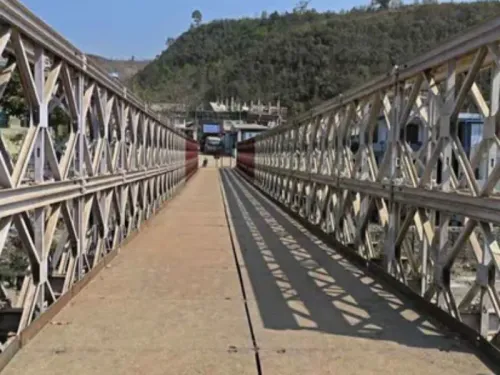
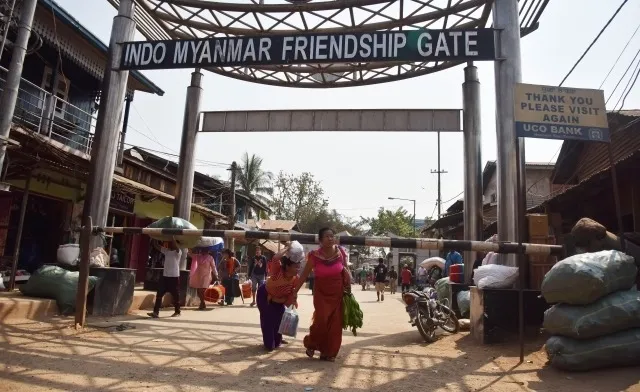
Yumlembam pointed out that beyond these cultural bonds, local economies in states such as Mizoram and Manipur are intricately connected and have historically relied on designated trading hubs for access to essential goods.
For decades, she explained, small-scale traders and transporters have routinely crossed these trading points, building their livelihoods on a consistent flow of informal and semi-formal trade.
Yumlembam emphasized that the India-Myanmar border reflects not just “a narrative of crisis” but also illustrates how relationships can develop beyond traditional diplomatic boundaries.
In this light, she argued, the borderlands offer critical insights into how regional connections persist through uncertain times.
“For India, this highlights the necessity of aligning its broader strategic vision with a persistent awareness of local conditions. Recognizing the significance of border communities and the evolving circumstances on the ground can help ensure that India's engagement remains adaptive and forward-thinking, especially as Myanmar's political landscape continues to change. The degree to which these grassroots connections are acknowledged and incorporated into future policy frameworks will be vital for shaping bilateral relations, particularly as the bordering regions in Myanmar now fall under the influence of local ethnic armed groups,” Yumlembam noted.
Point of View
This report sheds light on the intricate relationship between India and Myanmar, emphasizing the importance of understanding local contexts. As the region faces challenges, it is crucial to prioritize the needs and realities of border communities in shaping future diplomatic strategies.
NationPress
19 Sept 2026
Frequently Asked Questions
What is the current situation at the India-Myanmar border?
The situation remains tense due to ongoing violence in Myanmar, leading to an influx of refugees into India, particularly in Mizoram, where local communities are providing support.
How many refugees are currently in Mizoram?
Official estimates indicate that over 32,000 refugees from Myanmar are currently residing in Mizoram, but the actual number may be higher.
What role do local organizations play in addressing the refugee crisis?
Local organizations and church groups in Mizoram have been instrumental in providing food, shelter, and healthcare to the refugees despite limited resources.
Why is the relationship between Mizoram and Myanmar significant?
The relationship is significant due to deep ethnic and cultural ties between the Mizo people and the Chin communities, which foster a sense of responsibility toward supporting each other.
What economic ties exist between India and Myanmar?
Local economies in northeastern states like Mizoram and Manipur are closely linked with Myanmar through designated trading points, facilitating informal trade for decades.