India emerges as Seychelles' preferred partner in maritime security and climate resilience
Synopsis
India has locked in its status as Seychelles' 'preferred partner' with a USD 175 million economic package and the MAHASAGAR framework — a deliberate strategic play in the Western Indian Ocean that contrasts sharply with China's dependency-creating infrastructure model. As the Indo-Pacific contest intensifies, New Delhi's capacity-building approach may prove more durable than Beijing's cheque-book diplomacy.
Key Takeaways
India has been identified as the 'preferred partner' for Seychelles in maritime security and climate resilience, per an Australian Institute of International Affairs report.
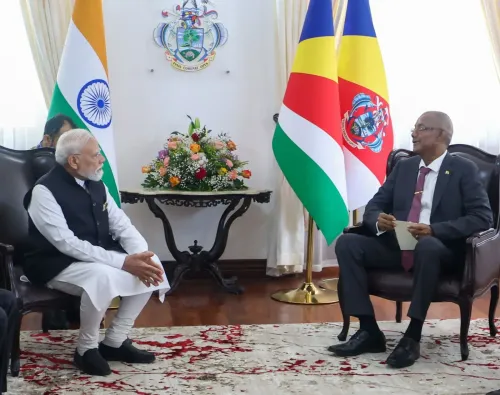
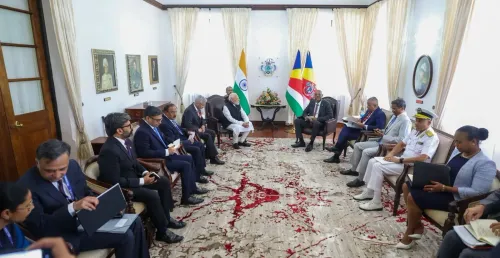
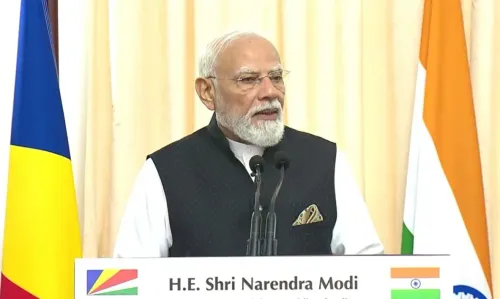
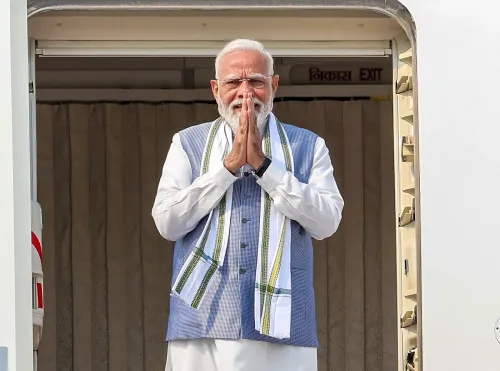
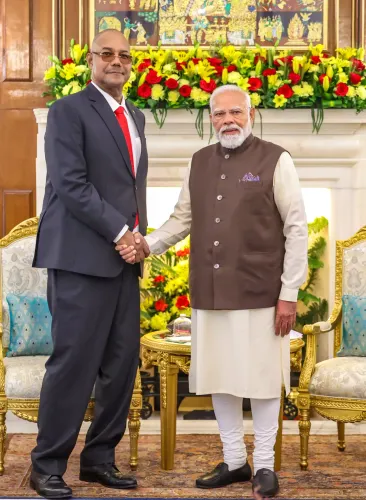
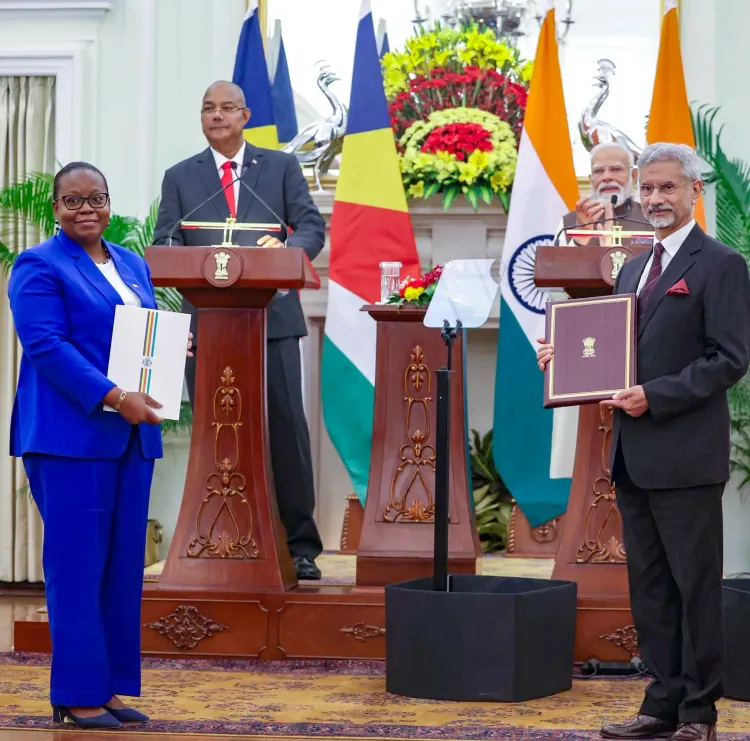
India and Seychelles marked 50 years of diplomatic relations, coinciding with the maiden state visit of President Patrick Herminie to India .
A Special Economic Package of USD 175 million was announced to advance maritime security and sustainable development under the SESEL framework.
The Indian Navy maintains continuous deployments in the Gulf of Aden and operates the Information Fusion Centre-Indian Ocean Region for real-time maritime information sharing.
India's partnership model — focused on local capacity-building under South-South cooperation — is contrasted with China's state-enterprise-driven infrastructure approach that critics say creates dependency.
India has firmly established itself as the 'preferred partner' for Seychelles in maritime security and climate resilience, according to a report by the Australian Institute of International Affairs. The analysis highlights how New Delhi's island diplomacy is deepening strategic ties with climate-vulnerable nations across the Western Indian Ocean, balancing geopolitical interests with local legitimacy.
Diplomatic Milestone and MAHASAGAR Vision
The report notes that the 50th anniversary of diplomatic relations between India and Seychelles coincided with the maiden state visit of Seychellean President Patrick Herminie to India — a development that underscores the intensifying maritime competition in the region. The visit also marked Seychelles' growing role in India's Mutual and Holistic Advancement for Security and Growth Across Regions (MAHASAGAR) vision. Alongside, the two nations announced a joint vision titled Sustainability, Economic Growth and Security through Enhanced Linkages (SESEL), backed by a Special Economic Package of USD 175 million to advance maritime security and sustainable development.
Maritime Security and Counter-Piracy Cooperation
Seychelles' vast Exclusive Economic Zone (EEZ) — significantly larger than its land territory — leaves it exposed to Somali pirate attacks, making enhanced maritime surveillance a national priority. According to the report, containing the piracy threat requires multilateral cooperation, and India has stepped in as a key regional stakeholder. The Indian Navy has maintained a continuous mission-based deployment in the Gulf of Aden, providing anti-piracy escorts along international transit corridors and securing Sea Lanes of Communication (SLOCs) as a net security provider.
India has also developed the Information Fusion Centre-Indian Ocean Region initiative to enable real-time maritime information sharing among partner nations. Naval interoperability between the two countries is further institutionalised through the provision of patrol vessels, Dornier aircraft, and training of Republic of Seychelles naval personnel — building mutual trust without the need for formal alliances.
India vs China: Contrasting Approaches
The report draws a pointed contrast between India's and China's engagement models in Seychelles. While China offers rapid infrastructure development through centrally financed projects executed by state-owned enterprises, such arrangements reportedly limit local business participation and create strategic dependency on Beijing. India's approach, by contrast, focuses on strengthening local institutions and human resource capacity under the framework of South-South cooperation — offering Seychelles a pathway to long-term self-reliance.
Climate Resilience and the Blue Economy
Beyond security, India is accelerating support for Seychelles' blue economy — a critical pillar for island nations whose livelihoods depend on ocean resources. The shared priorities of development cooperation and climate resilience continue to shape New Delhi's island diplomacy with Victoria, according to the report. This comes amid growing global attention on small island developing states, which face disproportionate risks from rising sea levels and extreme weather events.
As the Indo-Pacific strategic landscape grows more contested, India's model of partnership-driven engagement — grounded in capacity-building rather than dependency — appears to be gaining traction among smaller island nations seeking reliable long-term allies.
Point of View
Yet delivery timelines and bureaucratic friction have historically undercut New Delhi's promises to smaller partners. The USD 175 million package and MAHASAGAR vision signal intent; the real test is whether disbursements and naval assets arrive on schedule. In a region where China moves fast, India's legitimacy advantage is only as durable as its execution record.
NationPress
24 Sept 2026
Frequently Asked Questions
Why is India considered Seychelles' preferred partner in maritime security?
India has deepened ties with Seychelles through naval deployments, patrol vessels, Dornier aircraft, and personnel training, while avoiding the dependency-creating models associated with Chinese infrastructure financing. According to an Australian Institute of International Affairs report, India's focus on local capacity-building under South-South cooperation gives it a legitimacy advantage in the Western Indian Ocean.
What is the USD 175 million Special Economic Package for Seychelles?
It is a financial commitment announced by India during the maiden state visit of Seychellean President Patrick Herminie, aimed at advancing maritime security and sustainable development. The package is tied to the joint SESEL vision — Sustainability, Economic Growth and Security through Enhanced Linkages.
What is India's MAHASAGAR vision and how does Seychelles fit into it?
MAHASAGAR stands for Mutual and Holistic Advancement for Security and Growth Across Regions — India's strategic framework for the Indian Ocean neighbourhood. Seychelles is identified as a growing participant in this vision, reflecting the island nation's importance to India's maritime security architecture in the Western Indian Ocean.
How does India's approach in Seychelles differ from China's?
China offers rapid infrastructure development through state-owned enterprises with limited local business participation, reportedly creating strategic dependency on Beijing. India, by contrast, focuses on strengthening local institutions and human resource capacity, offering Seychelles a path to long-term self-reliance under the South-South cooperation framework.
Why is Seychelles strategically important in the Indo-Pacific?
Seychelles possesses a vast Exclusive Economic Zone that far exceeds its land territory, making it a critical node for maritime surveillance and counter-piracy operations. Its vulnerability to Somali pirate attacks and its location along key Sea Lanes of Communication make it a significant partner for any nation seeking influence in the Western Indian Ocean.