Is the India-UAE Defence Pact a Sign of a New Strategic Security Alliance?
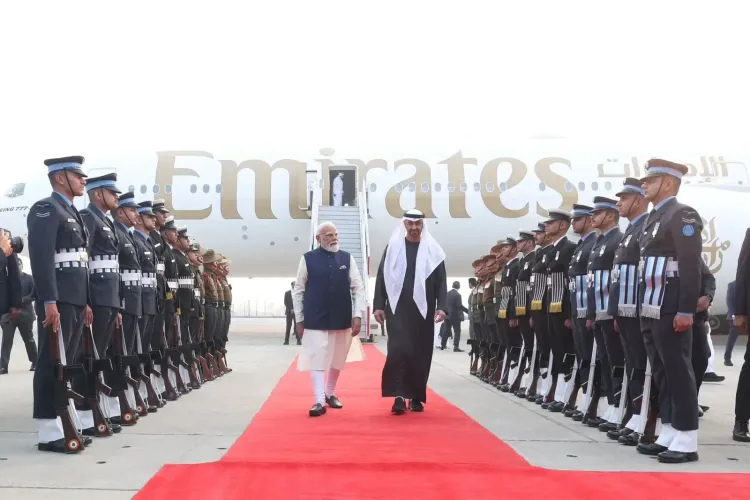
Synopsis
Explore how the India-UAE defence pact marks a significant transformation in their bilateral relations, transitioning from transactional ties to a strategic security alliance aimed at addressing contemporary challenges.
Key Takeaways
India and UAE are transitioning to a strategic defence partnership.
The partnership encompasses various critical domains including cybersecurity and counter-terrorism.
This agreement reflects the need for enhanced military collaboration in a complex geopolitical landscape.
Counter-terrorism and financial enforcement are key components of the partnership.
The defence pact signifies India's evolving role in West Asia's security dynamics.
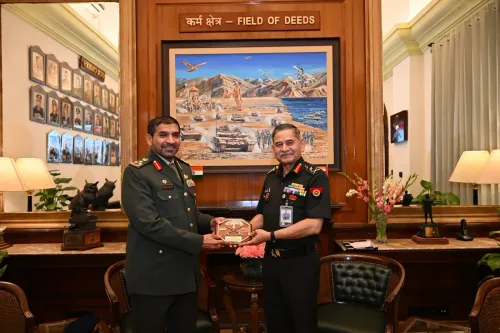
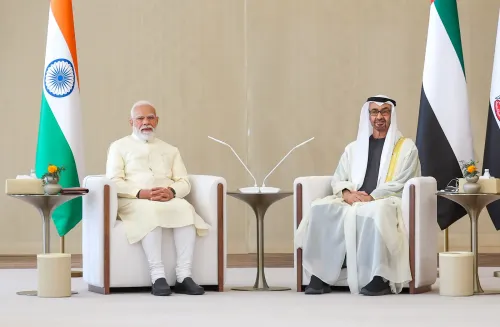
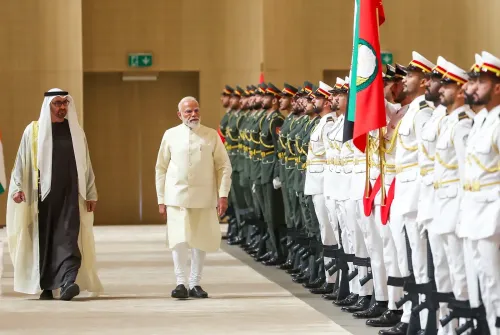
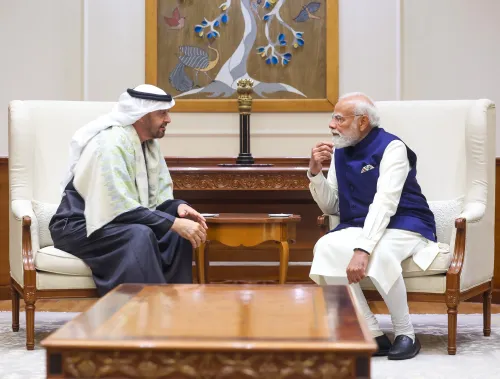
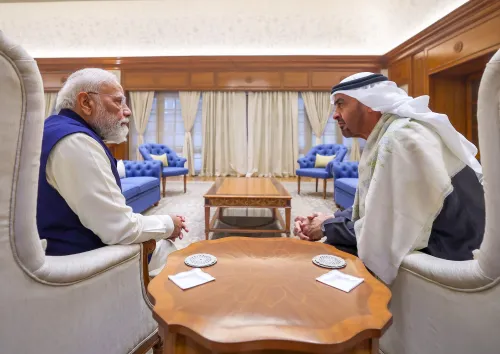
New Delhi, Feb 8 (NationPress) India and the United Arab Emirates (UAE) are actively evolving their bilateral relationship into a robust defence and security framework. This development illustrates a move away from mere transactional interactions, embracing cooperation that tackles hard-security challenges, as reported.
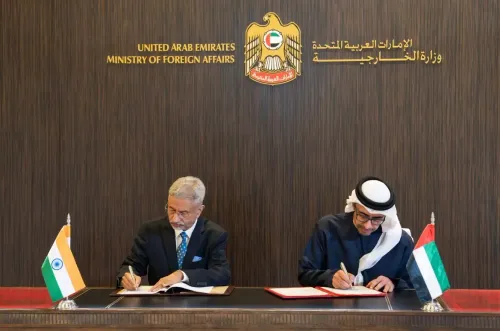
Following the establishment of the Strategic Defence Partnership Agreement in January 2026, a series of agreements emerged, encompassing defence, space, energy, technology, and investment. This defence collaboration is part of the broader institutional strengthening of the Comprehensive Strategic Partnership, as noted by Dr. Anu Sharma, Assistant Professor at Amity Institute of Defence and Strategic Studies (AIDSS), in an opinion piece for India Narrative.
Sharma highlights that the proposed Strategic Defence Partnership framework aims to expand cooperation across various domains, including defence industrial collaboration, innovation, advanced technologies, training and education, doctrine development, special operations, interoperability, cyberspace, and counter-terrorism.
This framework signifies a shift from sporadic military interactions to a more structured partnership, aligning doctrines and enhancing interoperability, especially in emerging sectors like cybersecurity. The timing of this shift mirrors evolving geopolitical tensions in West Asia, indicating shifting regional alignments and increasing strategic complexities, as noted in the opinion piece.
The report elaborates that for the UAE, the past decade has highlighted the necessity of diversifying partnerships to bolster military capabilities, intelligence-sharing, and access to advanced technologies.
For India, instability in West Asia directly influences energy price stability, the welfare of its diaspora, and maritime security, challenges that require more than just diplomatic solutions.
Furthermore, counter-terrorism cooperation and financial enforcement have become crucial elements of the partnership. Both nations have firmly condemned terrorism, including cross-border terrorism, and reaffirmed their commitment to enhancing cooperation under the Financial Action Task Force (FATF) framework to combat terror financing and strengthen anti-money laundering strategies.
This development portrays the partnership as a comprehensive security arrangement encompassing both kinetic and non-kinetic domains, including intelligence coordination and financial monitoring.
Another significant aspect of the agreement is the integration of security cooperation with connectivity and corridor-based geopolitical strategies. The framework positions India and the UAE as key partners in the India–Middle East–Europe Economic Corridor (IMEC) initiative, recognizing their strong ties with Israel and suggesting that India-UAE collaboration has broader regional strategic implications.
Sharma states, "The strategic vision suggests that as connectivity projects gain prominence in geopolitical competition, states will seek security arrangements to safeguard infrastructure, shipping, data routes, and supply chains. Hence, defence partnerships are evolving into an 'insurance layer' for geoeconomic strategy."
From India's standpoint, the defence partnership signifies a broader strategic transition from being primarily an economic player in the Gulf region to a more active participant in regional security, especially in maritime security and non-traditional threat areas.
The key focus areas include trade corridors, connectivity for micro, small and medium enterprises, cybersecurity, interoperability, and cross-domain threats like drone warfare, cyberattacks, maritime risks, and terror financing networks.
For the UAE, enhancing defence ties with India offers a chance for diversification in security and industrial cooperation. India presents a unique blend of a vast and rapidly expanding defence-industrial base, viewed by the UAE as an opportunity for co-developing military capabilities and establishing resilient supply chain partnerships.
The significant geopolitical importance of this partnership lies in its potential to redefine regional strategic signals. By emphasizing sovereignty, strategic autonomy, counter-terror financing, interoperability, and collaboration in advanced technologies, India and the UAE are fostering a partnership designed to operate effectively in a multipolar and crisis-prone regional landscape, rather than solely in times of stability.
As Sharma articulates, "This is not a traditional alliance; it is a strategic alignment that projects pragmatic operational content – one that could shape how India positions itself in West Asia as a less distant partner focused on a security-relevant partnership with mutually established defence cooperation."
Sharma concludes that the India-UAE strategic defence partnership represents a consolidation phase, formalizing a security relationship that has gradually developed beneath the surface of extensive economic engagement.
The convergence across defence manufacturing, interoperability, cybersecurity, counter-terrorism, and related sectors such as space and advanced technology illustrates that both nations are fortifying resilient ties within an increasingly contested regional order, where protecting trade routes, energy supply chains, and critical infrastructure necessitates stronger defence coordination alongside diplomatic efforts.
--IASN
sd/
Point of View
I see the evolving India-UAE defence partnership not just as a strategic alliance but as a crucial step towards addressing emerging security challenges in a multipolar world. This collaboration reflects a commitment to long-term stability and cooperation, which is essential for both nations and the broader region.
NationPress
29 Sept 2026
Frequently Asked Questions
What is the Strategic Defence Partnership Agreement?
The Strategic Defence Partnership Agreement is a framework established between India and the UAE to enhance cooperation across various domains, including defence industrial collaboration, cybersecurity, and counter-terrorism.
How does this agreement affect regional security?
The agreement aims to strengthen regional security by fostering collaborative measures to address hard-security challenges and enhance military capabilities between India and the UAE.
What are the key focus areas of the India-UAE defence partnership?
Key focus areas include cybersecurity, maritime security, trade corridors, and counter-terrorism efforts, addressing both traditional and non-traditional threats.
How does this partnership influence geopolitical dynamics?
The defence partnership positions India and the UAE as pivotal players in regional connectivity initiatives, such as the India–Middle East–Europe Economic Corridor, impacting broader geopolitical alignments.
Is this partnership an alliance?
While it offers a strategic alignment, it is not a traditional alliance. It emphasizes practical cooperation in response to evolving security challenges.