Is India Ensuring a Leprosy-Free Future with Free Diagnosis and Treatment?
Synopsis
On National Leprosy Day, the Indian government highlights the success of free diagnosis and treatment in combating leprosy. With significant advancements under the National Leprosy Eradication Programme, India aims for a future without this disease. Join the effort to eliminate stigma and ensure dignity for all affected.
Key Takeaways
Free diagnosis and treatment are crucial for leprosy control.
Leprosy is a curable disease .
The NLEP aims for a Leprosy-Free India by 2027.
Stigma reduction is an essential part of the program.
All services are available at no cost to patients.
New Delhi, Jan 30 (NationPress) The government announced on Friday that free diagnosis and multi-drug therapy in public health hospitals are pivotal in maintaining a leprosy-free status for India. Each year, National Leprosy Day is commemorated on January 30, marking the death anniversary of Mahatma Gandhi, to recognize his contributions to those affected by this affliction.
According to a post from the Health Ministry on the social media platform X, "Through the National Leprosy Eradication Programme (NLEP), India is steadfast in its mission to achieve a Leprosy-Free India by providing free diagnosis, treatment, and healthcare services across government facilities throughout the nation."
“Let’s unite to eradicate stigma and uphold dignity and care for everyone,” the statement emphasized.
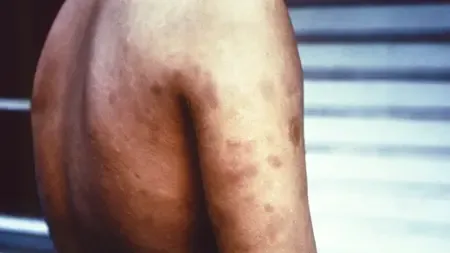
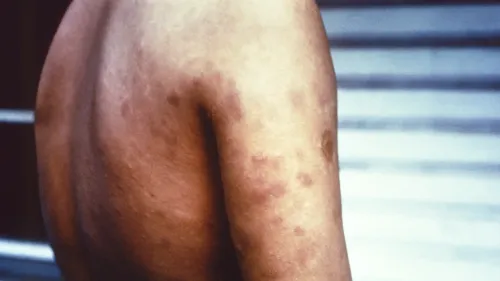
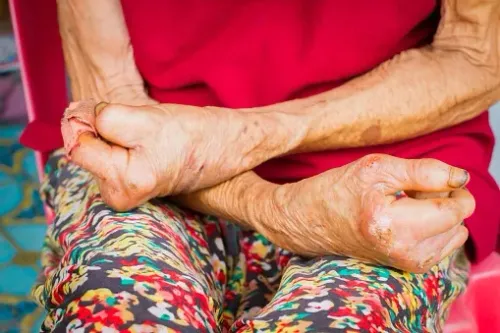
Leprosy, medically referred to as Hansen's disease, is a persistent infectious ailment primarily caused by the bacterium Mycobacterium leprae. It impacts the skin, peripheral nerves, the mucous membrane of the upper respiratory tract, and the eyes.
Beyond the physical impairments, individuals suffering from leprosy often endure stigma and discrimination. However, leprosy is treatable, and early intervention can avert disabilities.
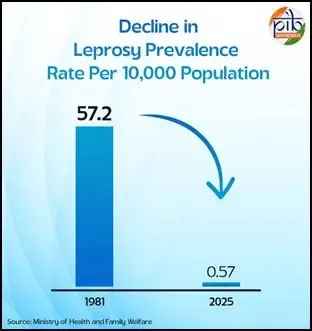
India officially declared leprosy as no longer a public health concern (less than 1 case per 10,000 people) in December 2005.
By March 2025, 31 states/UTs and 638 districts had achieved this milestone, reporting a prevalence rate of 0.57 per 10,000.
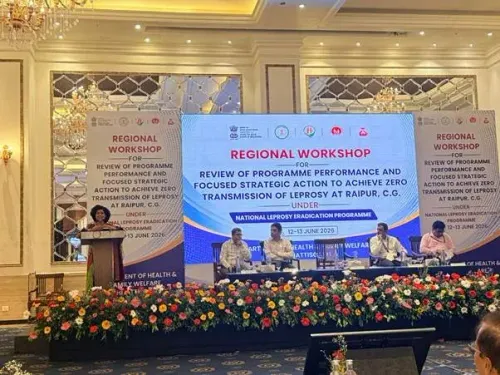
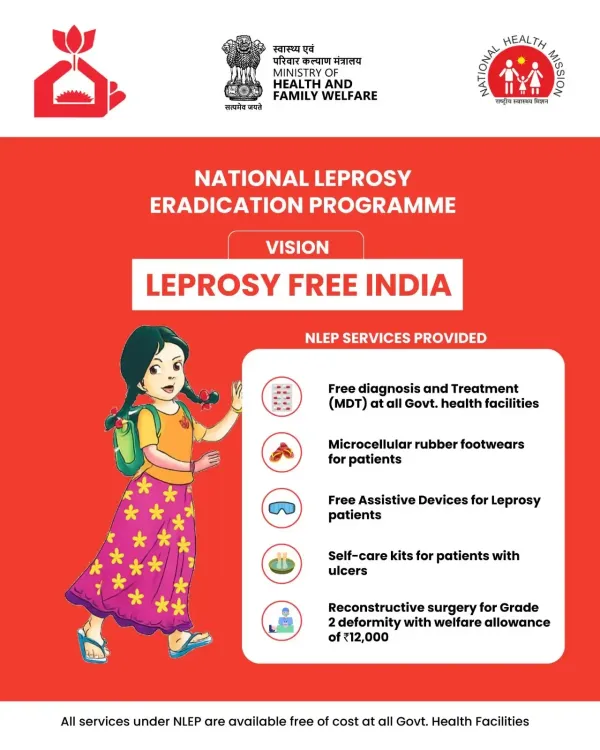
The NLEP aims for "Zero Transmission, Zero Leprosy" by 2027 through proactive detection, complimentary multi-drug therapy (MDT), and efforts to reduce stigma.
Under the NLEP, the government offers a range of services, including free diagnosis and MDT at all public health facilities, microcellular rubber shoes for patients, complimentary assistive devices, self-care kits for ulcer patients, and reconstructive surgeries for Grade 2 deformities, accompanied by a welfare allowance of Rs 12,000.
All NLEP services are provided at no cost within government health establishments.
Without treatment, leprosy can lead to progressive and irreversible disabilities. The bacteria are transmitted through droplets from the nose and mouth during close and frequent contact with untreated individuals.
Leprosy is classified as a neglected tropical disease (NTD) that is prevalent in over 120 countries, with approximately 200,000 new cases documented each year.
Point of View
I affirm that the government's commitment to free leprosy diagnosis and treatment is crucial. It not only addresses a pressing public health issue but also promotes dignity and respect for those affected. It’s essential that we continue to support these initiatives for a healthier and stigma-free society.
NationPress
30 Sept 2026
Frequently Asked Questions
What is the National Leprosy Eradication Programme?
The National Leprosy Eradication Programme (NLEP) is an initiative by the Indian government aimed at eliminating leprosy as a public health issue through free diagnosis, treatment, and care services.
What services are provided under the NLEP?
The NLEP provides free diagnosis, multi-drug therapy, microcellular rubber footwear, assistive devices, self-care kits, and reconstructive surgeries for affected individuals.
How does leprosy spread?
Leprosy is transmitted through droplets from the nose and mouth during close contact with untreated individuals.
What is the current status of leprosy in India?
As of March 2025, India has achieved a prevalence rate of 0.57 per 10,000, with several states successfully eliminating leprosy as a public health problem.