India Seizes Opportunities Amid Middle East Crisis by Enhancing Strategic Petroleum Reserves and Import Diversification
Synopsis
The ongoing conflict in the Middle East has enabled India to strengthen its strategic petroleum reserves and diversify its energy imports, particularly from Argentina and the US, as discussed in a recent analysis by Vivek Mishra. This shift may reshape India's energy landscape amidst geopolitical tensions.
Key Takeaways
India is enhancing its strategic petroleum reserves amid the Middle East crisis.
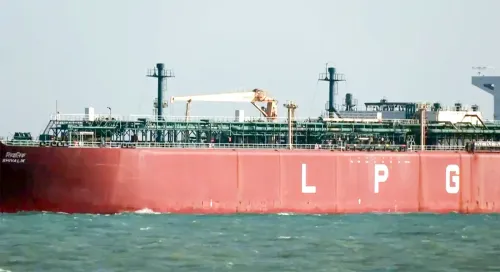
Diversification of LPG imports is occurring, with increased supplies from Argentina and the US.
The negotiations in Islamabad are crucial for determining future relations between Iran and the US.
The Iran-US conflict is a pivotal moment in modern warfare and geopolitical strategy.
India must prepare for ongoing conflicts while seeking diplomatic solutions.
New Delhi, April 11 (NationPress) The current upheaval in the Middle East has opened up various avenues for India, including enhancing its domestic strategic petroleum reserves and diversifying its import sources, as highlighted in a recent report.
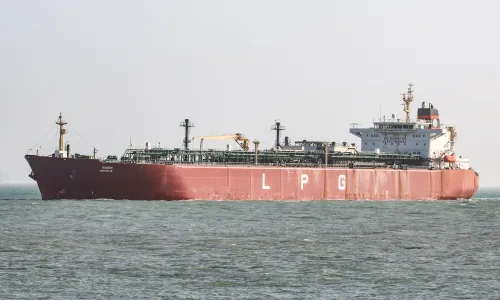
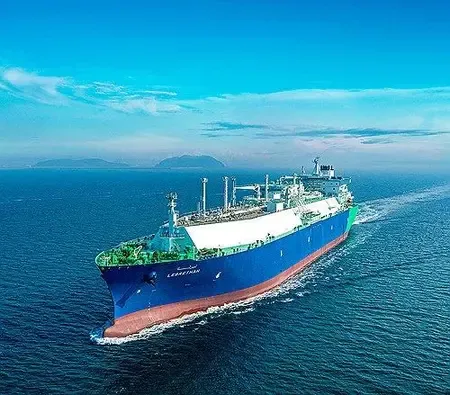
In an article for the non-profit organization Politeia Research Foundation, ORF's Deputy Director Vivek Mishra pointed out that both Argentina and the United States have emerged as significant contributors to India's LPG imports during this crisis. Notably, Argentina has more than doubled its exports to India in the first quarter of 2026 compared to the previous year, while the US has rapidly increased its LPG exports to India, particularly in March.
“During the initial three weeks of March this year, India imported 176,000 tonnes of LPG from the US, which exceeded the 89,000 tonnes sourced from the Middle East. The waivers on Iranian and Russian crude and petroleum products have broadened India's options significantly,” he stated.
Mishra emphasized that the ongoing discussions in Islamabad are crucial for understanding how both Iran and the US will approach the ceasefire. It’s also important to explore how these negotiations might lead to a temporary agreement to reopen the Strait of Hormuz.
“However, the more complex issues that have entrenched the US and Israel in the region—such as Iran’s uranium enrichment, the potential for the extraction or removal of enriched nuclear materials from Iran, the lifting of sanctions, and other points on Iran's 10-point agenda—cannot be resolved in a few meetings. For context, the JCPOA negotiations, conducted in peacetime, took over two years during the Obama administration,” Mishra noted.
According to him, the developments following the Gaza conflict and evolving into the Iran-US-Israel discord should be a lesson for India, preparing it to navigate a seemingly endless state of conflict interspersed with periods of peace.
“Both warfare and diplomacy are evolving in ways that suggest traditional methods are becoming outdated,” he asserted.
Mishra also articulated that the Iran-US conflict has exposed both the strengths and weaknesses of military and geopolitical strategies employed by major and regional powers.
“The Iran-United States war marks a pivotal moment in the transformation of modern warfare, which began with the Russia-Ukraine conflict. From the employment of drones, lessons in attrition, and insights into a nation fighting for survival, to testing the credibility of the US's extended conventional deterrence, the US-Iran war has offered significant revelations,” he said.
He cited that several of the ten conditions stipulated by Iran appear to be impractical, including the continued control over the Strait of Hormuz and US acceptance of Iran's enrichment activities.
“It will be exceptionally challenging for the Trump administration to impose terms on Iran or to accept Tehran’s stipulations. What initially seemed achievable for the Trump administration—mobilizing internal dissent against the Islamic regime—now appears increasingly unlikely. The sustained bombing of Iran and its strategic assets by both Israel and the US has stirred internal unrest against the Trump administration, even among those who initially viewed the attacks as a chance for replacing the regime with a democratic system,” Mishra wrote in Politeia Research Foundation (PRF).
The US-Iran war has also transformed into a testing ground for ideas, strategies, and tactics that were previously considered mere possibilities.
“The blockade of the Strait of Hormuz and the deployment of 30,000-pound GBU-57 bunker buster bombs, also referred to as Massive Ordnance Penetrator, have shifted from theoretical discussions to practical application. While the conflict in the Middle East continues, many believe it could fundamentally reshape the region for the foreseeable future. Consequently, this might also lead to a significant alteration in America's role in the area,” he elaborated.
Point of View
India is strategically positioning itself amid geopolitical uncertainties. The implications of these actions are essential for national energy security and regional stability.
NationPress
20 Sept 2026
Frequently Asked Questions
How is India diversifying its energy imports?
India is increasing its LPG imports from countries like Argentina and the US, significantly reducing its reliance on Middle Eastern sources.
What impact could the Middle East crisis have on India's energy strategy?
The crisis allows India to augment its strategic petroleum reserves and seek alternative suppliers, enhancing its energy security.
Who is Vivek Mishra?
Vivek Mishra is the Deputy Director of the ORF and has analyzed the implications of the ongoing Middle Eastern conflict on India's energy imports.
What are Iran's conditions in the current geopolitical climate?
Iran has laid out a 10-point agenda that includes demands regarding uranium enrichment and control over the Strait of Hormuz, presenting significant diplomatic challenges.
What does the US-Iran conflict mean for global energy markets?
The conflict could lead to significant shifts in energy supply chains, affecting global oil prices and geopolitical alliances.