India's first eVTOL prototype: How The ePlane Company aims to reshape urban mobility
Synopsis
India's first full-scale eVTOL prototype has moved from concept to a 2.2-tonne ground-tested reality at IIT Madras — backed by five years of engineering, a 10,000 km sub-scale flight record, and a 788-unit air ambulance order from ICATT. If The ePlane Company clears regulatory hurdles, it could put India among the earliest large-scale eVTOL operators in the world.
Key Takeaways
The ePlane Company , incubated at IIT Madras , has unveiled India's first full-scale eVTOL prototype, the e200X PT-01 , weighing 2.2 tonnes .
The aircraft features a carbon-fibre airframe , an 800V electric powertrain , NVIDIA IGX Thor hardware, and HENSOLDT avionics.
The company logged more than 10,000 km of flight testing across sub-scale demonstrators over five years before reaching full-scale.
ICATT has signed an agreement to procure 788 eVTOL air ambulances from the company.
Commercial operations are targeted for 2028 , beginning with air ambulance services before expanding to passenger transport.
The prototype is currently in structured ground testing at the company's 60,000 sq ft IIT Madras facility, ahead of flight testing.
India's first full-scale electric vertical take-off and landing (eVTOL) aircraft prototype, developed by IIT Madras-incubated startup The ePlane Company, has entered structured ground testing — marking a significant milestone in the country's emerging urban air mobility sector. The e200X PT-01, a 2.2-tonne full-scale aircraft, was unveiled earlier this month and signals India's ambition to move beyond road-bound urban transport.
What the e200X PT-01 Is
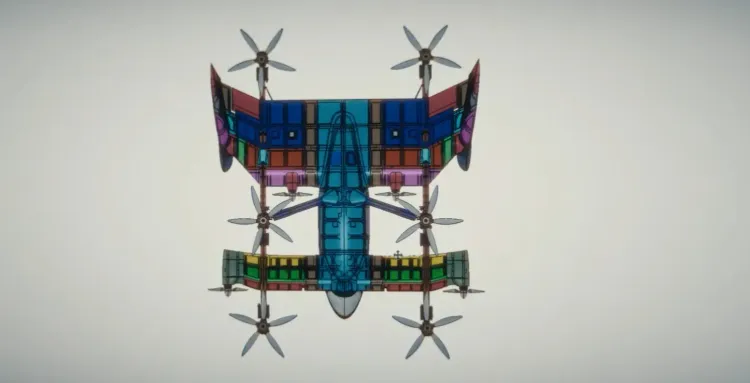
The e200X PT-01 is designed to take off and land vertically — like a helicopter — before transitioning to conventional forward flight. Unlike traditional helicopters, which depend on one or two large fuel-powered rotors, the eVTOL uses multiple electrically powered propellers driven by batteries. This distributed propulsion architecture is expected to reduce noise levels, improve energy efficiency, and enhance operational safety: if one motor fails, the aircraft can continue flying.
The prototype features a carbon-fibre airframe, an 800V high-voltage electric powertrain, NVIDIA IGX Thor computing hardware, and HENSOLDT avionics. Ground testing is currently under way at the company's 60,000 sq ft facility at IIT Madras, ahead of scheduled flight testing.
Five Years in the Making
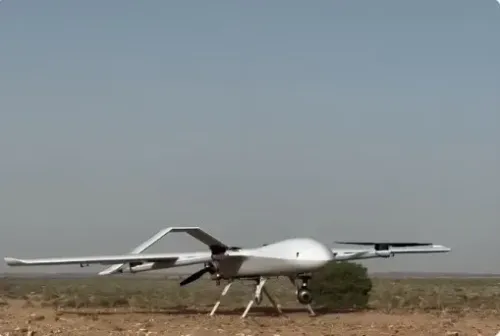
According to the company, the e200X PT-01 is the result of five years of engineering and iterative testing. Earlier demonstrators included the ATVA in 2021 and the heavy-lift e50 in 2023, collectively logging more than 10,000 km of flight testing across sub-scale platforms. In a post on X on Monday, The ePlane Company described the prototype as marking the transition of its programme 'from sub-scale into a 2.2-ton full-scale reality'.
Commercial Roadmap and Air Ambulance Push
The ePlane Company plans to launch commercial operations by 2028, with an initial focus on air ambulance services before expanding into passenger transport. This phased approach reflects a global pattern among eVTOL developers, who are prioritising regulated, high-value use cases to build certification track records before entering mass urban mobility.
Notably, the International Critical Air Transfer Team (ICATT) has already signed an agreement with the company to procure 788 eVTOL air ambulances — a substantial order that, if fulfilled, would make India one of the world's largest operators of electric air ambulances.
Why eVTOLs Could Matter for Indian Cities
Because eVTOLs do not require long runways, they can operate from compact landing pads known as vertiports. This makes them viable for airport transfers, emergency medical response, and short intra-city journeys — use cases that are acutely relevant in congested Indian metros where road travel times have steadily worsened. This comes amid growing policy interest in urban air mobility globally, with regulators in the US, Europe, and parts of Asia already developing certification frameworks.
India's own regulatory environment for eVTOLs remains nascent, and the path from prototype to certified commercial operations will depend significantly on how swiftly the Directorate General of Civil Aviation (DGCA) develops applicable airworthiness standards. The ePlane Company's flight testing results and DGCA engagement in the coming months will be closely watched by the sector.
Point of View
Let alone received regulatory certification. The ePlane Company's 2028 commercial target is ambitious in a country where the DGCA has yet to publish an eVTOL-specific airworthiness framework. India has a strong record of incubating deep-tech hardware startups at IITs, but the gap between prototype and certified commercial aircraft is where most global eVTOL programmes have slipped. The real test is not the ground-testing milestone — it is whether India's regulatory machinery can keep pace with the engineering.
NationPress
20 Oct 2026
Frequently Asked Questions
What is India's first eVTOL aircraft prototype?
It is the e200X PT-01 , a 2.2-tonne full-scale electric vertical take-off and landing aircraft developed by The ePlane Company, an IIT Madras-incubated startup. The prototype is currently undergoing structured ground testing at IIT Madras, ahead of flight testing.
How does an eVTOL differ from a helicopter?
Unlike helicopters, which use one or two large fuel-powered rotors, eVTOLs use multiple electrically powered propellers driven by batteries. This distributed propulsion system reduces noise, improves energy efficiency, and allows the aircraft to continue operating safely even if one motor fails.
When does The ePlane Company plan to begin commercial operations?
The company is targeting commercial operations by 2028, starting with air ambulance services before expanding into passenger transport. The phased approach is designed to build a regulatory certification track record in a high-value, regulated use case first.
What is the ICATT air ambulance order?
The International Critical Air Transfer Team (ICATT) has signed an agreement with The ePlane Company to procure 788 eVTOL air ambulances. If fulfilled, this would make India one of the world's largest operators of electric air ambulances.
What are vertiports and why do they matter for India?
Vertiports are compact landing and take-off pads designed for eVTOL aircraft, which do not require long runways. For congested Indian cities, vertiports could enable airport transfers, emergency medical response, and short intra-city flights without the infrastructure demands of conventional aviation.