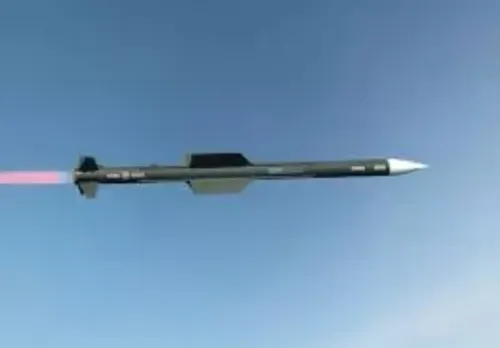
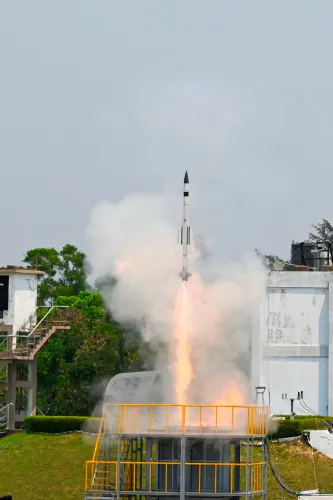
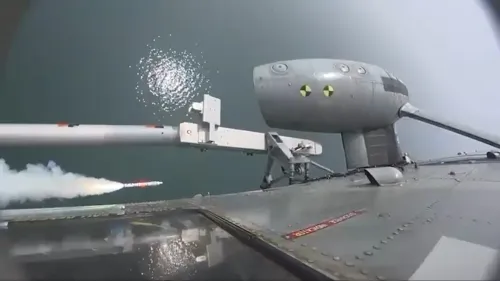
DRDO, Indian Navy achieve maiden NASM-SR salvo launch in Bay of Bengal
Synopsis
India fired two NASM-SR anti-ship missiles in rapid succession from a naval helicopter off Odisha — the country's first-ever salvo launch of an advanced air-launched anti-ship missile. The milestone signals a meaningful leap in India's indigenous maritime strike capability and helicopter-platform readiness.
Key Takeaways
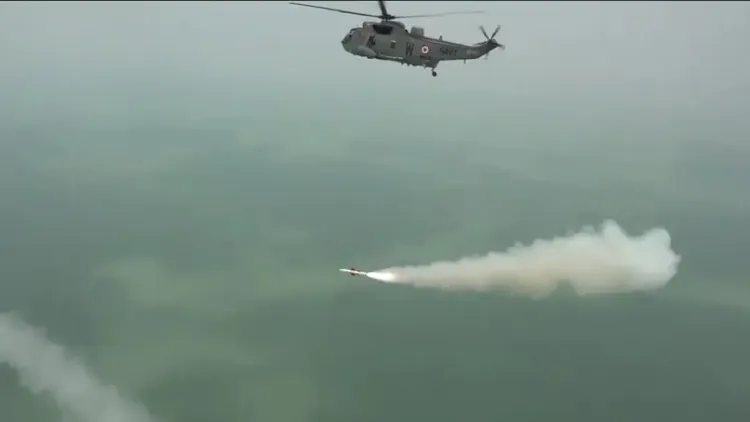
DRDO and the Indian Navy conducted the maiden salvo launch of the NASM-SR on 29 April off the Odisha coast in the Bay of Bengal .
Two missiles were fired in quick succession from a single naval helicopter, validating coordinated salvo strike capability.
The test is India's first successful salvo launch of an advanced air-launched anti-ship missile system.
Defence Minister Rajnath Singh congratulated DRDO , the Indian Navy , the Indian Air Force , and industry partners including DcPP collaborators .
The NASM-SR is designed for short-range, high-accuracy engagement of hostile naval targets from helicopter platforms.
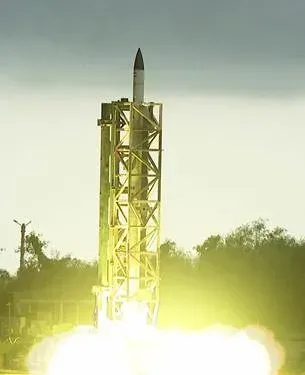
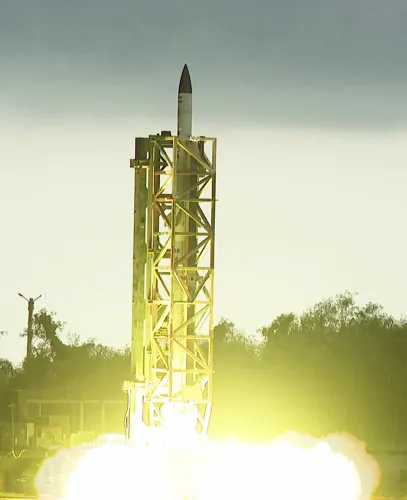
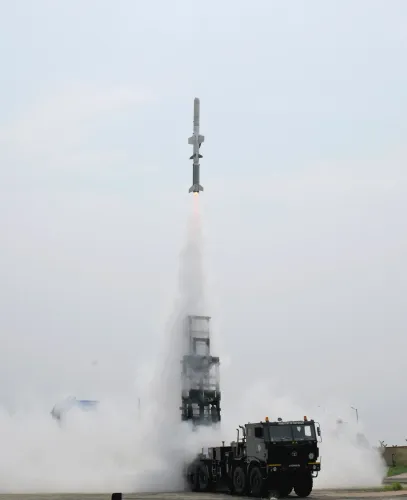
The Defence Research and Development Organisation (DRDO) and the Indian Navy on 29 April successfully conducted the maiden salvo launch of the Naval Anti-Ship Missile–Short Range (NASM-SR) from a naval helicopter platform off the coast of the Bay of Bengal near Odisha. The milestone marks India's first successful salvo launch of an advanced air-launched anti-ship missile system of its kind, delivering a significant boost to the country's maritime strike capabilities.
What the Test Demonstrated
During the trial, two NASM-SR missiles were launched in quick succession from the same helicopter platform, validating the system's ability to execute a coordinated salvo strike. The test confirmed the missile's precision, reliability, and the operational readiness of the helicopter-based launch platform. Officials noted that the missile is equipped with modern guidance and targeting features, making it highly effective against hostile naval vessels.
Strategic Significance for Indian Navy
The NASM-SR is designed to strengthen the Indian Navy's capability to engage hostile naval targets at short range with high accuracy. This development is particularly significant given India's strategic interest in the Bay of Bengal and the Indian Ocean Region, where maritime security remains a priority. Notably, this achievement reflects India's accelerating push toward self-reliance in defence technology under its Atmanirbhar Bharat defence framework, and is the latest in a series of indigenous missile milestones in recent years.
Rajnath Singh Congratulates Teams
Defence Minister Rajnath Singh congratulated all teams involved in the successful trial, including DRDO, the Indian Navy, the Indian Air Force, and industry partners such as DcPP collaborators. Singh said the successful development and testing of the NASM-SR would, according to his statement, "significantly enhance the operational capabilities of India's armed forces."
Broader Defence Context
The successful salvo launch comes as India continues to modernise its military assets and deepen synergies between its defence research agencies and armed forces. Officials highlighted that the test underscores the growing collaboration between DRDO and frontline services in delivering combat-ready systems. As India's indigenous defence ecosystem matures, the NASM-SR is expected to become a key component of the Navy's helicopter-borne strike arsenal in the years ahead.
Point of View
Particularly relevant in the Indian Ocean Region where grey-zone naval activity is rising. What mainstream coverage underplays is the helicopter-platform dimension: land-based missile tests are common, but validating a rotary-wing salvo capability is operationally harder and tactically more versatile. The real measure of success will be how quickly NASM-SR moves from trial to fleet induction — India's indigenous systems have historically faced long delays between successful tests and operational deployment.
NationPress
19 Sept 2026
Frequently Asked Questions
What is the NASM-SR missile?
The Naval Anti-Ship Missile–Short Range (NASM-SR) is an indigenously developed Indian missile designed to engage hostile naval targets at short range with high accuracy. It is launched from helicopter platforms and is equipped with modern guidance and targeting systems.
What happened during the NASM-SR salvo launch test?
On 29 April, DRDO and the Indian Navy fired two NASM-SR missiles in quick succession from a naval helicopter off the Odisha coast in the Bay of Bengal. This was India's first successful salvo launch of an advanced air-launched anti-ship missile system.
Why is the NASM-SR salvo launch significant?
It is India's first successful salvo launch of an advanced air-launched anti-ship missile, validating both the missile's reliability and the operational readiness of the helicopter-based launch platform. It marks a major step in India's indigenous maritime strike capability.
Who congratulated the DRDO and Navy teams?
Defence Minister Rajnath Singh congratulated DRDO, the Indian Navy, the Indian Air Force, and industry partners including DcPP collaborators, stating the test would significantly enhance the operational capabilities of India's armed forces.
How does NASM-SR fit into India's defence strategy?
NASM-SR is part of India's broader Atmanirbhar Bharat push for self-reliance in defence technology. It is intended to strengthen the Navy's helicopter-borne strike arsenal and enhance maritime security in strategically important waters such as the Bay of Bengal and the Indian Ocean Region.