Are Government Policies Driving India's GDP Growth?
Synopsis
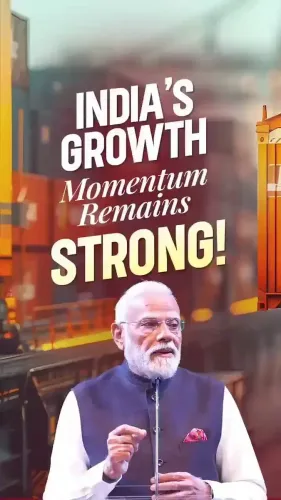
India’s robust economic growth in Q2 FY26 has drawn praise from experts, who attribute this success to effective government policies led by Prime Minister Narendra Modi. With GDP growth hitting record levels, the nation is on track for an ambitious economic future.
Key Takeaways
India's GDP growth reached 8.2% in Q2 FY26.
Government policies have been crucial in driving this growth.
Inflation has significantly decreased to 0.25%.
The gap between real and nominal GDP has narrowed to 0.5 percentage points.
Manufacturing and construction sectors are leading growth.
New Delhi, Nov 28 (NationPress) Experts praised India's impressive economic performance in Q2 FY26, asserting that the government initiatives — designed by Prime Minister Narendra Modi and his team — have significantly propelled GDP growth to unprecedented levels.
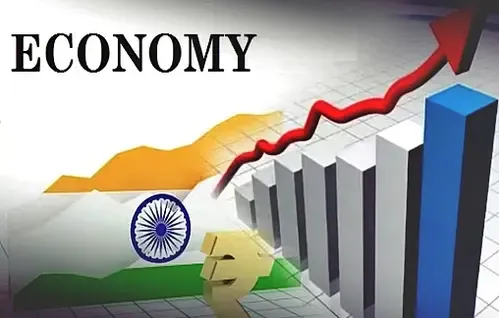
For the second consecutive quarter, India's GDP growth notably exceeded predictions, achieving a six-quarter high of 8.2 percent in Q2 FY2026, and demonstrating an increase from the 7.8 percent growth recorded in Q1 FY2026, contrary to widespread anticipations of a slowdown.
Vineet Nahata, CEO of Power Gilt Treasuries and Chairman of the Economic Affairs Committee of PHDCCI, informed IANS that this has a substantial impact on inflation, which has decreased significantly.
The disparity between real and nominal GDP, which was as wide as 12 percentage points in Q1 FY23, has now narrowed to just 0.5 percentage points in Q2 FY26.
“Currently, our inflation rate, based on the CPI, stands at 0.25 percent. This has been a major factor in closing the gap between real and nominal GDP,” stated Nahata.
“I want to commend the finance ministry for implementing policies that have proven effective in boosting the nation's GDP growth, and the outcomes are evident,” he added.
He further emphasized that the execution of economic strategies is aimed at achieving ‘Viksit Bharat’ by 2047.
With an expected 7.6 percent real GDP growth for FY26, the GDP is projected to exceed $4 trillion by March 2026, while FY27 is anticipated to reach around $4.4 trillion, according to a report from SBI Research, which noted that the narrative surrounding India is evolving into something larger and more ambitious.
Overall trends indicate that GDP growth is primarily domestic-driven, bolstered by service exports and supported by low inflation and value-added growth in labor-intensive sectors.
The manufacturing sector recorded a robust growth rate of 9.1 percent, while the construction sector expanded by 7.2 percent in the secondary sector during the quarter.
Point of View
It is crucial to recognize the significant advancements in India's economic landscape driven by strategic government policies. The GDP growth is indicative of a broader vision for a developed India by 2047, while also addressing inflation and enhancing domestic productivity.
NationPress
6 Oct 2026
Frequently Asked Questions
What is the current GDP growth rate of India?
India's GDP growth rate for Q2 FY26 is 8.2 percent.
How does inflation relate to GDP growth?
The recent reduction in inflation has contributed to a narrower gap between real and nominal GDP, enhancing economic stability.
What sectors are driving India's GDP growth?
The manufacturing and construction sectors are significantly contributing to the GDP growth, with manufacturing growing at 9.1 percent.
What are the government's goals for the economy?
The government aims to achieve 'Viksit Bharat' or a developed India by 2047 through effective economic policies.
Who are the key figures behind these economic policies?
These policies are largely envisioned and implemented by Prime Minister Narendra Modi and his finance ministry.