India's National Industrial Corridors: A Catalyst for State Growth

Synopsis
Discover how India's ambitious National Industrial Corridor strategy is transforming the industrial landscape, with significant investments and state collaborations aimed at fostering economic growth and sustainability.
Key Takeaways
Four National Industrial Corridors completed, with more in progress. ₹28,602 crore investment package announced for 12 corridors.
Focus on creating smart industrial cities with sustainable infrastructure.
Phase-I has attracted ₹2.02 lakh crore in investments.
Collaboration between government and states for transport connectivity .
New Delhi, Feb 26 (NationPress) The Indian government's initiative to boost industrial expansion is gaining significant momentum, with four National Industrial Corridors already finalized and another four approaching completion, following the announcement of a ₹28,602 crore package for 12 corridors in the fiscal year 2024-25, as detailed in an official factsheet released on Thursday.
The Union Budget for 2026-27 has further catalyzed this growth by allocating ₹3,000 crore for the establishment of an integrated East Coast Industrial Corridor, featuring a well-connected node at Durgapur in West Bengal.
These innovative industrial smart cities are designed to create globally competitive manufacturing and investment centers, incorporating plug-and-play facilities and a walk-to-work ecosystem. Their goal is to establish top-tier, future-ready infrastructure that anticipates demand.
The initiatives encompass various states and include significant projects such as the Delhi-Mumbai Industrial Corridor (DMIC), the Dholera Special Investment Region in Gujarat, the Shendra Bidkin Industrial Area in Maharashtra, the Integrated Industrial Township - Greater Noida in Uttar Pradesh, and the Krishnapatnam and Tumakuru industrial regions in Karnataka, along with the Ponneri Industrial Area in Tamil Nadu and the Raghunathpur Industrial Park in West Bengal.
Additional states selected for these endeavors include Rajasthan, Madhya Pradesh, Punjab, Haryana, Bihar, and Andhra Pradesh.
According to the Economic Survey for 2025-26, the cities in Phase-I of these projects have collectively allocated 350 industrial plots, attracting investments totaling ₹2.02 lakh crore across diverse sectors, including electronics, renewable energy, pharmaceuticals, and Electric Vehicles (EVs).
To further this model of industrial corridor-led growth, the Government of India, in collaboration with State Governments, is developing these zones as strategically planned economic areas, supported by robust transport connectivity.
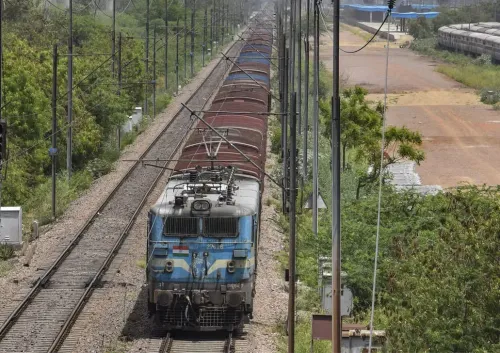
Industrial corridors are linear development areas that link major economic hubs through a cohesive network of roads, railways, ports, and airports. The key characteristics of these corridors include: promoting accelerated industrial growth by enhancing connections between industry and essential infrastructure, and developing along crucial transport routes, especially rail trunk lines, ensuring efficient freight movement and public transportation.
The aim of these corridors is to establish infrastructure comparable to global standards and create a business-friendly atmosphere that fosters economic agglomeration and industrial clustering, enabling regions to fully realize their growth potential.
The Indian government is actively pursuing multiple Industrial Corridor Projects under the National Industrial Corridor Programme (NICDP), guided by the PM GatiShakti framework to ensure coordinated, multimodal connectivity for key economic zones.
These projects are being developed with a focus on sustainability, supporting the transition to Low-Carbon Cities (LCCs) through the creation of extensive green spaces, the provision of public transit systems, and the integration of renewable energy sources.
Point of View
I observe that the government's strategic focus on developing industrial corridors marks a pivotal shift in India's economic landscape. By fostering collaboration between various states and ensuring robust infrastructure, this initiative not only aims to attract investments but also to promote sustainable growth across the nation.
NationPress
26 Sept 2026
Frequently Asked Questions
What are National Industrial Corridors?
National Industrial Corridors are designated linear development zones that connect major economic centers through an integrated network of infrastructure, aimed at enhancing industrial growth and connectivity.
How much investment is being made in these corridors?
The government has announced a ₹28,602 crore package for the development of 12 such corridors, with additional allocations in subsequent budgets to support their growth.
Which states are involved in the National Industrial Corridor projects?
The projects cover multiple states including Maharashtra, Gujarat, Uttar Pradesh, Karnataka, Tamil Nadu, West Bengal, and others, promoting regional development.
What sectors are expected to benefit from these industrial corridors?
Key sectors include electronics, renewable energy, pharmaceuticals, and Electric Vehicles (EVs), with significant investment opportunities emerging in these areas.
What is the goal of the National Industrial Corridor Programme?
The primary goal is to create globally benchmarked manufacturing and investment hubs, fostering economic agglomeration and ensuring sustainable development.