Is India’s Industrial Sector on a Growth Trajectory with Strategic Resilience Through Diversification?
Synopsis
India's industrial sector is thriving, overcoming global challenges with strategic diversification. The Economic Survey reveals growing GVA, technological adoption, and strong performance in manufacturing, indicating a promising future for the economy. Discover how India is positioning itself for a resilient industrial landscape in this insightful report.
Key Takeaways
India's industrial sector is experiencing robust growth.
Manufacturing GVA rose by 7.0% year-on-year.
Government initiatives are enhancing domestic capacities.
Strategic diversification is essential for future resilience.
India ranks 37th in global industrial performance.
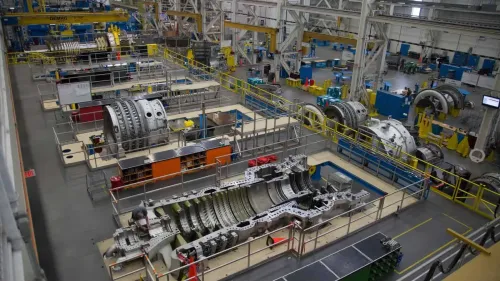
New Delhi, Jan 29 (NationPress) The industrial sector in India is exhibiting robust growth amidst a dynamic and challenging global landscape, bolstered by advancements in infrastructure, logistics, ease of doing business, and innovation systems, as stated in the Economic Survey 2025-26 released on Thursday.
The Survey emphasizes the crucial shift required for the next phase of industrialization, moving from an import substitution model to one that prioritizes scale, competitiveness, innovation, and deeper integration into Global Value Chains (GVCs).
“Instead of striving for complete self-sufficiency in every sector, India should focus on developing strategic resilience through diversification and enhancing its capabilities. This entails increasing private sector investments in R&D, adopting new technologies, improving skills, and establishing quality systems,” the Survey noted.
According to the Economic Survey, the Gross Value Added (GVA) from manufacturing grew by 7.72 percent and 9.13 percent in the first and second quarters of FY26, respectively, largely due to ongoing structural changes within the sector.
“India’s industrial performance remains strong, with Industry GVA increasing by 7.0 percent year-on-year in real terms during the first half of FY2025-26, indicating a notable rebound from a growth of 5.9 percent in the previous fiscal year (FY2024-25),” remarked the Survey presented in Parliament by Finance Minister Nirmala Sitharaman.
Factors contributing to this growth include a gradual shift towards higher-value manufacturing segments, improved industrial infrastructure through corridor-led development, and increased technology adoption and formalization among firms.
Currently, medium and high-technology sectors represent 46.3 percent of India’s total manufacturing value added.
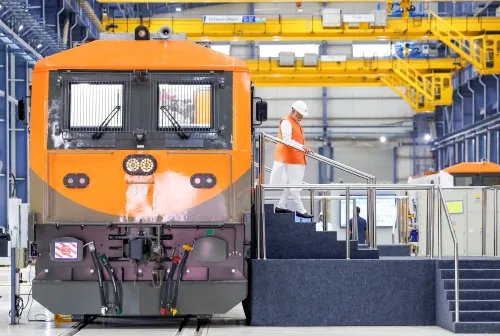
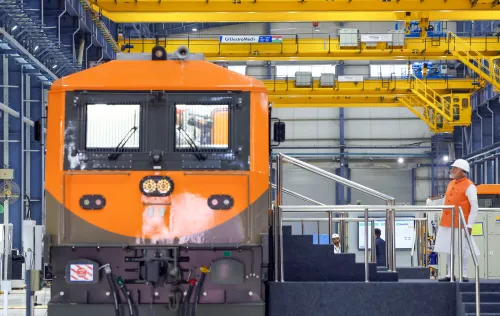
“This growth can be attributed to various government initiatives like the Production Linked Incentive (PLI) schemes and the India Semiconductor Mission, in addition to strengthening domestic capacities in sectors such as electronics, pharmaceuticals, chemicals, and transportation,” stated the Survey.
The report also highlights India’s improved global standing, with its ranking in Competitive Industrial Performance (CIP) climbing to 37th in 2023, up from 40th in 2022.
Additionally, core industries have maintained a strong performance, with India being the second-largest global producer of steel and cement.
India is the second-largest cement producer worldwide, trailing only China. Domestic cement consumption averages around 290 kg per capita, compared to the global average of 540 kg per capita. The steel sector has experienced significant transformation over the past five years, driven primarily by strong domestic demand from the construction and manufacturing industries.
Furthermore, the coal industry achieved record production levels in FY25, reaching 1,047.52 Million Tonnes (MT) of coal—a 4.98 percent increase from the previous year's 997.83 MT.
The chemicals and petrochemicals sector remains vital for the country's industrial development, contributing 8.1 percent to the overall manufacturing sector's GVA in FY24. Meanwhile, the automotive industry recorded nearly 33 percent growth in production from FY15 to FY25.
Point of View
I firmly believe that India's industrial growth trajectory, driven by strategic diversification and government reforms, positions it well for future challenges. The focus on innovation and competitiveness will not only enhance the country's global standing but also catalyze sustainable economic growth. Our commitment to fostering these advancements must remain unwavering.
NationPress
27 Oct 2026
Frequently Asked Questions
What are the key findings of the Economic Survey 2025-26?
The Economic Survey highlights that India's industrial sector is showing strong growth, with manufacturing GVA increasing significantly. It emphasizes the need for strategic resilience through diversification and innovation, rather than complete self-reliance.
How is India performing in global industrial rankings?
India's ranking in Competitive Industrial Performance improved to 37th in 2023, up from 40th in 2022, indicating a strengthening global position.
What sectors are driving industrial growth in India?
Key sectors driving growth include electronics, pharmaceuticals, chemicals, and transportation, supported by government initiatives like the Production Linked Incentive schemes.