India Moves Closer to Nuclear Self-Reliance: Key Developments
Synopsis
India inches closer to achieving long-term nuclear self-sufficiency with a significant breakthrough in its three-stage nuclear program. This development could reshape the country’s energy landscape and reduce dependency on uranium imports.
Key Takeaways
India is progressing towards nuclear self-reliance.
Criticality marks the self-sustaining phase of a reactor.
Thorium reserves offer a long-term energy solution.
Technological advancements are essential for nuclear energy expansion.
India's commitment to breeder reactors differentiates its approach.
New Delhi, April 19 (NationPress) India appears to be on the verge of achieving long-term nuclear self-sufficiency, following a critical development in its ambitious three-stage nuclear initiative, as reported in the Vietnam Times. This milestone marks a significant shift in India’s longstanding strategy aimed at overcoming fuel limitations and establishing a robust nuclear energy framework.
The report highlights a persistent challenge that India has faced: “India lacked sufficient uranium, the primary fuel for most nuclear reactors.” Currently, the country continues to rely on imports, with key agreements established with nations such as Canada. However, India is endowed with vast thorium reserves, representing about 25 percent of the global total, hidden within its terrain, presenting a unique opportunity for the future.
The article points out that thorium cannot be utilized as fuel in its raw form and necessitates conversion, leading India to adopt a long-range strategy instead of seeking immediate solutions. “Rather than focusing merely on speed, (Indian nuclear scientist Dr Homi J.) Bhabha envisioned a far more ambitious undertaking: a system capable of transforming resource scarcity into self-sufficiency, even if it required decades to realize.”
This vision was the foundation for India’s three-stage nuclear program—starting with uranium, progressing to plutonium, and ultimately harnessing thorium. After years of delay, recent advancements have altered the situation.
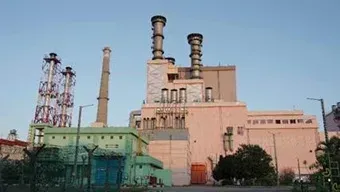
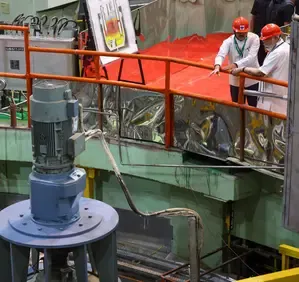
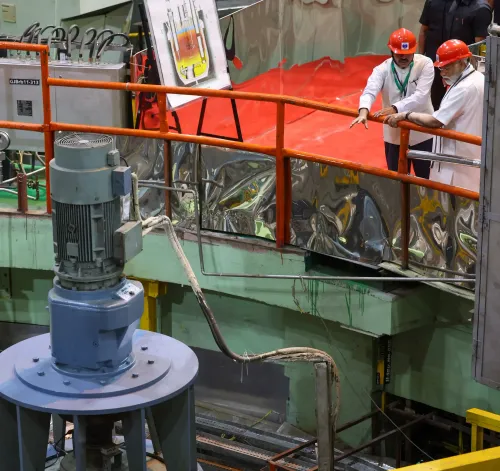
On April 6, India’s Prototype Fast Breeder Reactor (PFBR) at Kalpakkam achieved criticality for the first time. The report emphasizes the significance of this event, stating that “criticality marks the phase when a nuclear reactor becomes self-sustaining.”
While fast breeder reactors are operational in other nations, the Vietnam Times notes that “in most cases, the endeavors surrounding these reactors haven’t unfolded as planned.” India’s unwavering commitment to this endeavor sets it apart. “India did not waver in its quest for breeder reactors, recognizing their essential role.”
The importance of this milestone extends far into the future. The Vietnam Times asserts that “by achieving criticality, India has demonstrated its capacity to operate a reactor fueled by plutonium, bringing the nation closer to expanding its nuclear fuel resources.” These reactors have the potential to “generate more usable material than they consume,” thus converting limited resources into sustainable energy sources.
Furthermore, the report underscores the intricate technological challenges involved, including the utilization of mixed oxide fuel and liquid sodium cooling, which “must be sealed, monitored, and engineered with utmost precision.”
Despite this breakthrough, challenges remain. Currently, nuclear energy constitutes just over 3 percent of India’s electrical generation, and “there’s still a considerable journey ahead.” Nonetheless, if successful, this initiative could drastically reduce reliance on imported uranium.
In conclusion, the report suggests that India might finally be realizing Dr. Bhabha’s long-held aspiration: “Operating on fuel it already possesses instead of depending on global sources.”
Point of View
I view this development as a pivotal moment for India's energy future. The nation is making strides toward harnessing its resources sustainably, showcasing both ingenuity and persistence in the face of challenges.
NationPress
19 Sept 2026
Frequently Asked Questions
What is the significance of achieving criticality in nuclear reactors?
Achieving criticality signifies that a nuclear reactor has reached a state of self-sustaining nuclear fission, which is crucial for long-term energy production.
How does India plan to utilize its thorium reserves?
India aims to develop technology that can convert thorium into usable nuclear fuel, as part of its three-stage nuclear program.
What challenges does India face in its nuclear energy expansion?
India currently generates only around 3% of its electricity from nuclear energy and still relies on imported uranium, posing significant challenges for expansion.
Who was Dr. Homi J. Bhabha?
Dr. Homi J. Bhabha was a prominent Indian nuclear scientist who played a key role in developing India's nuclear program.
What are fast breeder reactors?
Fast breeder reactors are a type of nuclear reactor that generates more fissile material than it consumes, enhancing fuel efficiency.