NITI Aayog Reports on India's Resilient Trade Performance in Q3 FY26
Synopsis
India's trade dynamics in Q3 FY26 show mixed results with a 1.6% rise in exports and a 7.9% increase in imports. NITI Aayog highlights the importance of diversification in the gems and jewellery sector.
Key Takeaways
India's merchandise exports rose by 1.6% in Q3 FY26.
Imports surged by 7.9% during the same period.
Services exports saw a growth of 7.8% .
The gems and jewellery sector is vital for India's manufacturing.
Structural challenges include reliance on imports and limited value addition.
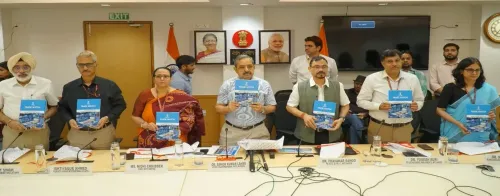
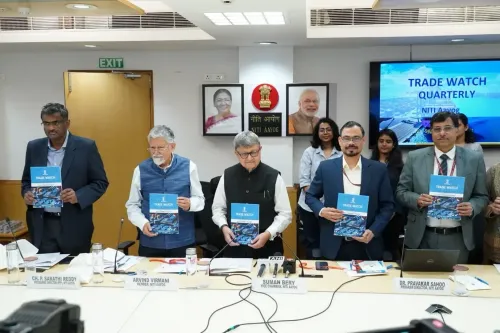
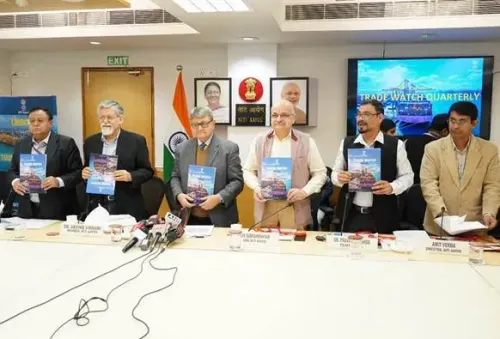
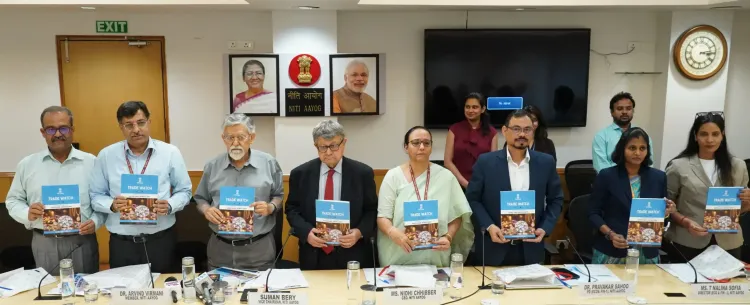
New Delhi, April 20 (NationPress) India's trade performance during the third quarter of FY26 exhibited a mixed yet resilient pattern, with merchandise exports increasing by 1.6% and imports escalating by 7.9%, as reported by NITI Aayog on Monday with the release of its 'Trade Watch Quarterly.'
Services exports experienced robust growth of 7.8%, while services imports grew at a more moderate pace, fostering a persistent surplus that has been instrumental in stabilizing the overall external balance.
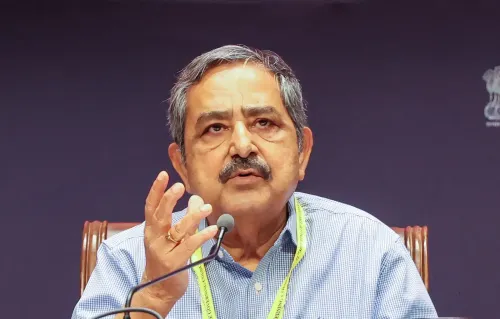
Suman Bery, Vice‑Chairman of NITI Aayog, unveiled the latest edition of this publication for the period of October‑December 2025.
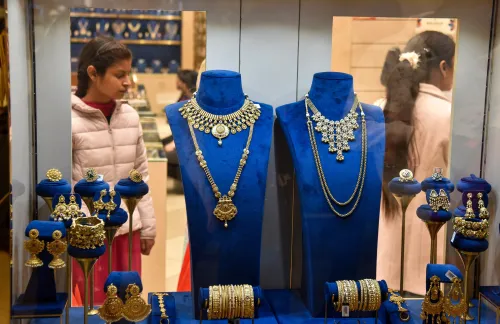
This quarter's thematic focus was on gems and jewellery, a vital segment of India's labour-intensive manufacturing sector. Excluding raw gold, the global market size was projected at $378 billion in 2024, with India's exports valued at $29.5 billion, making up 7.8% of worldwide exports, the statement indicated.
India's export prowess in this sector is primarily centered around diamonds and precious metal jewellery, which collectively represent over half of the global demand, estimated at around $207.3 billion.
In these categories, India has established a formidable global presence, with exports totaling $26.7 billion. This reflects its status as a global processing center, significantly enhanced by value addition from imported raw materials, with Surat recognized as the world's largest diamond cutting and polishing hub, according to the statement.
NITI Aayog pointed out several structural challenges, including limited value addition stemming from a fractured MSME base, dependency on imported materials, a credit gap due to a lack of confidence from financial institutions, skill and design deficiencies, and inadequate integration into global trading networks.
The think tank urged for a shift towards emerging sectors like lab-grown diamonds, improved access to financing and raw materials, technological investments, and the establishment of stronger policy frameworks to tackle these issues.
“In industries such as gems and jewellery, it is crucial to align with shifting global demands, enhance value addition, and mitigate structural obstacles to stay competitive,” stated Suman Bery.
The analysis revealed that India’s trade framework in this domain is characterized by high product and market concentration. Exports are predominantly channeled to a few key markets, particularly the United States, UAE, and Hong Kong, while imports are concentrated among a limited array of suppliers for raw materials.
Point of View
It is crucial to recognize the importance of India's trade resilience, particularly in the context of the evolving global market. NITI Aayog's insights reflect both opportunities and challenges, urging proactive measures to enhance competitiveness.
NationPress
30 Sept 2026
Frequently Asked Questions
What was the percentage increase in India's merchandise exports in Q3 FY26?
India's merchandise exports increased by 1.6% in Q3 FY26.
Which sector was highlighted for its significance in the latest trade report?
The gems and jewellery sector was highlighted as a critical pillar of India's manufacturing ecosystem.
What challenges did NITI Aayog identify in India's trade structure?
NITI Aayog identified challenges such as limited value addition, reliance on imported inputs, and skill gaps.
What was the value of India's gems and jewellery exports?
India's gems and jewellery exports were valued at $29.5 billion.
What is the global market size for gems and jewellery excluding raw gold?
The global market size for gems and jewellery, excluding raw gold, was estimated at $378 billion in 2024.