India's trade hits $1.84 trillion in Q4 FY26, up 5.4% despite global headwinds
Synopsis
India's trade crossed $1.84 trillion in Q4 FY26 — but the real story is structural. Services exports are punching above their weight at 9% growth, while pharmaceuticals, India's $35.8 billion export pillar, faces a strategic ceiling: the world is moving toward biologics and advanced therapeutics, and India is still largely playing in generics.
Key Takeaways
India's total trade rose 5.4 per cent year-on-year to $1.84 trillion in Q4 FY2025–26 , per NITI Aayog's Trade Watch Quarterly.
Full-year exports grew 4.2 per cent ; imports rose 6.5 per cent in FY2025–26.
Services exports grew 9 per cent , with India ranked the world's eighth-largest services exporter in 2025 and a 10.3 per cent CAGR over 2015–2025.
India exported pharmaceutical and API products worth $35.8 billion against a global market estimated at $1.3 trillion .
Telangana , Gujarat , and Maharashtra are the top three states driving pharmaceutical production and exports.
India's pharma sector faces structural gaps in biologics and advanced therapeutics, and continued API import dependence on China .
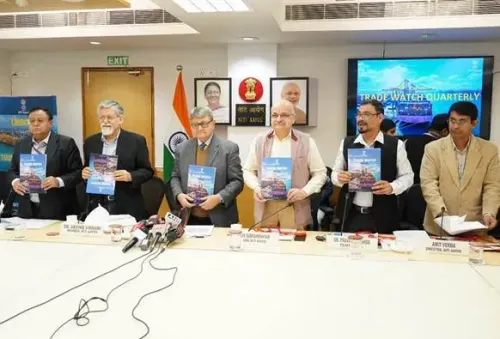
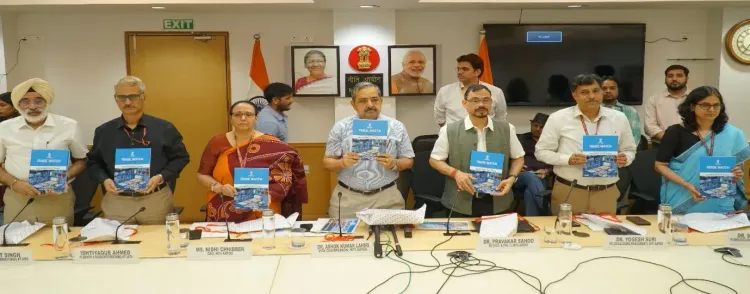
India's total merchandise and services trade rose 5.4 per cent year-on-year during January–March 2026 (Q4 FY2025–26) to reach $1.84 trillion, according to the NITI Aayog 'Trade Watch Quarterly' report released on Tuesday, 23 June in New Delhi. The figures reflect a broadly stable external sector performance despite persistent uncertainties in global markets.
Key Trade Figures
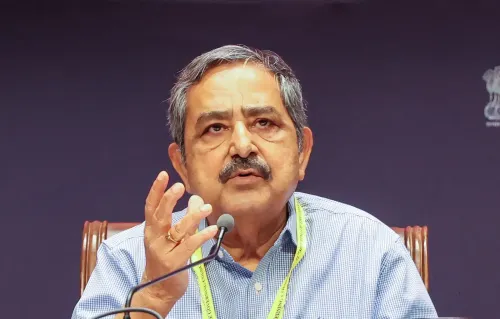
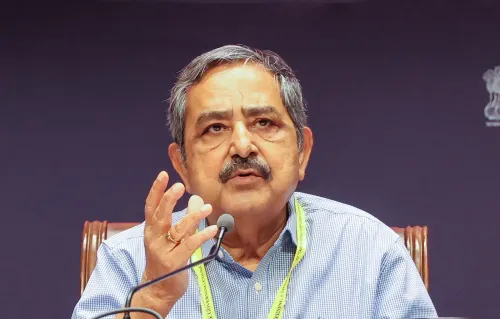
For the full financial year FY2025–26, India's total trade touched $1.84 trillion, with exports growing 4.2 per cent and imports rising 6.5 per cent. The report was released by Ashok Kumar Lahiri, Vice-Chairman of NITI Aayog, in the presence of the organisation's CEO and other senior officials.
While merchandise exports moderated and imports increased, the composition of trade remained broadly stable. Services trade emerged as the standout performer, with exports growing at 9 per cent — outpacing import growth and sustaining a strong services surplus. India retained its position as the world's eighth-largest services exporter in 2025, with services exports recording a compound annual growth rate (CAGR) of 10.3 per cent during 2015–2025, significantly above the global average.
Pharmaceutical Sector in Focus
The quarterly report's thematic spotlight falls on India's pharmaceutical sector, which it identifies as a strategic pillar of the economy. Global pharmaceutical and Active Pharmaceutical Ingredients (API) demand is estimated at approximately $1.3 trillion in 2025, and India exported pharmaceutical and API products worth $35.8 billion during the same period.
India's export strength remains concentrated in formulations — particularly retail medicaments and generic drugs — where it has established a strong global presence. The country continues to play a significant role in global healthcare supply chains, supported by capabilities in generic medicines, vaccines, and essential drugs. However, its share in global pharmaceutical trade remains modest, indicating significant room for expansion.
Challenges and Structural Gaps
The report identifies a critical structural gap: the global pharmaceutical industry is increasingly shifting towards high-value segments such as biologics, immunologicals, and advanced therapeutics, where India's participation remains limited. In APIs, while India has strengthened its position in specialised chemical intermediates and antibiotics, it continues to face dependence on imported raw materials and intermediates — particularly from China.
This import reliance is flagged as a supply chain vulnerability that could constrain India's ambitions in the sector. Notably, the three states of Telangana, Gujarat, and Maharashtra together drive a significant share of India's pharmaceutical production, exports, and global value chain integration, underpinned by cluster-based manufacturing ecosystems and supportive policy frameworks.
The Road Ahead
The NITI Aayog report argues that India is well-positioned to deepen its role in global pharmaceutical value chains, with opportunities to expand into biologics, biosimilars, and advanced therapeutics. Sustained investment in research and development, technology, skills, and regulatory efficiency — alongside improved market access in key export destinations — could support higher value addition and reinforce India's standing as a leading global pharmaceutical manufacturing hub.
With services trade acting as a structural buffer and pharmaceuticals identified as the next growth frontier, India's external sector trajectory heading into FY2026–27 will hinge on how quickly it can reduce upstream import dependence and move up the pharmaceutical value chain.
Point of View
But the NITI Aayog report quietly surfaces a more uncomfortable truth: India's pharmaceutical export story is built on generics at a moment when global demand is pivoting hard toward biologics and advanced therapeutics. The $35.8 billion pharma export figure looks impressive until measured against a $1.3 trillion global market — a share so thin it underscores how much ground remains. The China API dependency is the most urgent structural risk, one that has been flagged repeatedly since the pandemic supply shocks of 2020 without decisive policy resolution. Services trade is carrying the external sector right now; the question is whether manufacturing — and especially pharma — can catch up before the generics advantage erodes.
NationPress
22 Sept 2026
Frequently Asked Questions
What did NITI Aayog's Trade Watch Quarterly report say about India's trade in Q4 FY26?
According to NITI Aayog's Trade Watch Quarterly released on 23 June 2026, India's total merchandise and services trade grew 5.4 per cent year-on-year in Q4 FY2025–26 to reach $1.84 trillion. The report highlighted stable external sector performance despite global market uncertainties.
How did India's services exports perform in FY2025–26?
India's services exports grew 9 per cent in Q4 FY2025–26, outpacing import growth and sustaining a strong services surplus. India ranked as the world's eighth-largest services exporter in 2025, with a CAGR of 10.3 per cent over 2015–2025, well above the global average.
How large are India's pharmaceutical exports?
India exported pharmaceutical and API products worth $35.8 billion in 2025, against a global pharmaceutical and API market estimated at approximately $1.3 trillion. India's strength lies in generic medicines and formulations, though its overall share of global pharmaceutical trade remains modest.
Which states lead India's pharmaceutical exports?
Telangana, Gujarat, and Maharashtra are identified as the top three states driving India's pharmaceutical production and exports. Their success is attributed to cluster-based manufacturing ecosystems, globally competitive firms, and supportive policy frameworks.
What are the key challenges facing India's pharmaceutical sector?
The NITI Aayog report flags two main challenges: limited participation in high-value segments such as biologics, immunologicals, and advanced therapeutics; and continued dependence on imported raw materials and intermediates, particularly APIs from China. Both constrain India's ability to move up the global pharmaceutical value chain.