India must leap into high-value pharma manufacturing, say economists

Synopsis
India dominates global generics but is missing the shift toward biologics, complex APIs, and advanced therapeutics. A new NITI Aayog report, backed by economist calls for a stronger PLI, puts the question squarely on the table: can India move from high-volume to high-value before the global pharmaceutical order hardens around it?
Key Takeaways
Economists on 23 June called for a stronger PLI scheme to push India into high-value pharmaceuticals and API manufacturing.
The NITI Aayog pharmaceutical trade report confirms India’s edge lies in formulations and generics, not advanced segments.
The existing PLI scheme for pharma has generated total sales of ₹3,08,408.60 crore , including ₹1,98,509.49 crore in exports, since inception through September 2025 .
Investment under the PLI scheme hit ₹40,294 crore — more than double the original target of ₹17,275 crore .
Global pharma demand is shifting toward biologics, vaccines, and advanced therapeutics — segments where India’s export presence remains limited.
Signed FTAs could support higher-value pharma exports once regulatory barriers are addressed, according to economists.
India needs to make a decisive shift toward manufacturing high-value pharmaceuticals and Active Pharmaceutical Ingredients (API), economists said on Tuesday, 23 June, reacting to a fresh NITI Aayog report on pharmaceutical trade. While the country ranks among the world's largest suppliers of generic medicines and a major provider of vaccines and essential drugs, its export footprint in advanced segments remains limited.
The Case for a Pharma Leap
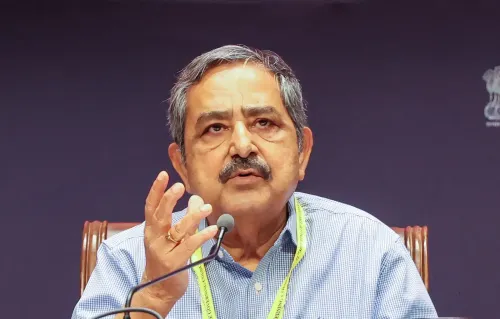
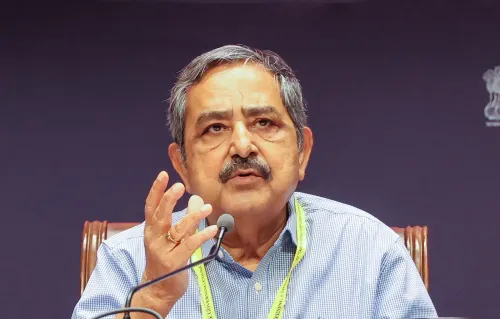
Economist Ved Jain argued that the moment is right to pivot toward exporting higher-margin pharmaceutical products. “We should invest in research innovation on basic drugs and facilities and for that, and I believe there has to be a strong PLI scheme for valued products, like high basic drugs and API products,” he said.
Jain also called for removing residual regulatory barriers and ramping up production capacity alongside the push into high-value segments. He noted that the free trade agreements (FTAs) India has signed in recent years could accelerate this transition, provided outstanding regulatory restrictions are resolved.
What the NITI Aayog Report Found
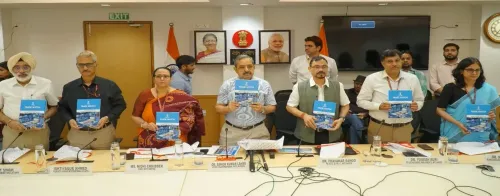
According to the NITI Aayog report released on 23 June, India’s comparative advantage remains concentrated in formulations — particularly retail medicaments and generic drugs — where it holds strong competitiveness even in tightly regulated markets such as the United States and Europe. However, the global pharmaceutical landscape has increasingly shifted toward high-value segments such as biologics, vaccines, immunologicals, and advanced therapeutics, where India’s export presence remains limited.
PLI Scheme: Progress and Gaps
The Production Linked Incentive (PLI) Scheme for pharmaceuticals already supports manufacturing of high-value products including biopharmaceuticals, complex generics, patented and off-patent drugs, orphan drugs, and autoimmune drugs. Since inception through September 2025, the scheme generated total sales of ₹3,08,408.60 crore, of which ₹1,98,509.49 crore came from exports.
Investment under the scheme reached ₹40,294 crore by September 2025, significantly exceeding the original target of ₹17,275 crore. The scheme has also helped reduce India’s import dependence on bulk drugs. Economists, however, argue that a stronger and more targeted PLI is needed to compete in the biologics and advanced therapeutics space.
What Needs to Happen Next
The convergence of a maturing generic export base, signed FTAs, and existing PLI momentum gives India a structural window to move up the pharmaceutical value chain. Critics argue that without a sharper policy focus on research and development, regulatory modernisation, and API self-sufficiency, the country risks remaining a high-volume, low-margin supplier even as global demand shifts toward complex biologics and speciality drugs.
With the NITI Aayog report now in the public domain, industry and policymakers are expected to deliberate on whether the current PLI framework requires recalibration to target these higher-value segments more aggressively.
Point of View
Complex APIs, and advanced therapeutics — segments where China has moved aggressively and India has not. The PLI scheme’s investment overshoot is encouraging, but investment in capacity is not the same as investment in innovation. Without a dedicated R&D push and regulatory modernisation, India risks locking itself into a high-volume, low-margin generic corridor precisely when margins are compressing globally. The NITI Aayog report names the problem; the harder question is whether the policy response will match its scale.
NationPress
22 Sept 2026
Frequently Asked Questions
What did economists say about India’s pharmaceutical sector on 23 June?
Economists said India must move beyond generic medicines and make a decisive shift into manufacturing high-value pharmaceuticals and Active Pharmaceutical Ingredients (API). They called for a stronger Production Linked Incentive (PLI) scheme targeting these advanced segments, reacting to a NITI Aayog report on pharmaceutical trade.
What does the NITI Aayog pharmaceutical trade report say?
The NITI Aayog report, released on 23 June, finds that India’s comparative advantage is concentrated in formulations and generic drugs, where it competes strongly even in regulated markets like the US and Europe. However, it flags that India’s presence in high-value segments such as biologics, vaccines, and advanced therapeutics remains limited.
How has the PLI scheme for pharmaceuticals performed so far?
The PLI scheme for pharmaceuticals has generated total sales of ₹3,08,408.60 crore, including ₹1,98,509.49 crore in exports, since inception through September 2025. Investment under the scheme reached ₹40,294 crore, significantly exceeding the original target of ₹17,275 crore.
Why is moving into high-value pharma important for India?
The global pharmaceutical industry is shifting toward biologics, immunologicals, and advanced therapeutics, where profit margins are significantly higher than in generics. India’s current export base is concentrated in lower-margin segments, leaving it exposed as global demand patterns evolve.
How can India accelerate its pharma export upgrade?
Economists suggest a combination of stronger PLI incentives targeting high-value and API products, investment in research and innovation, removal of regulatory barriers, and leveraging free trade agreements India has already signed to gain preferential market access for advanced pharmaceutical exports.