India's 20% share in global generic exports: a launchpad for pharma's next leap

Synopsis
India supplies one-fifth of the world's generic medicines by volume — but experts warn that volume alone won't sustain growth. The real prize lies in biosimilars, cell therapies, and complex generics, backed by domestic API manufacturing and a wave of new free trade agreements. The shift from quantity to quality could redefine India's pharmaceutical footprint globally.
Key Takeaways
India accounts for approximately 20 per cent of global generic medicine exports by volume, according to Dr.
Manoranjan Sharma of Infomerics Ratings .
Experts say growth now requires a pivot to biosimilars , speciality drugs , cell and gene therapies , and novel drug delivery systems.
Reducing dependence on imported active pharmaceutical ingredients (APIs) and building domestic manufacturing capacity are identified as critical priorities.
The government's PLI scheme is reportedly delivering early results; stronger public-private partnerships and venture capital support are also recommended.
India's overall exports reached roughly $865 billion in FY25 ; trade agreements with the UAE , Australia , and the UK are opening new pharma export corridors.
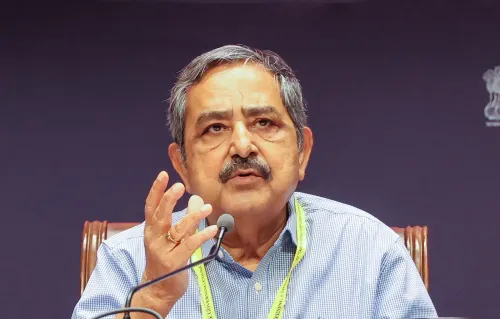
India commands nearly 20 per cent of global generic medicine exports by volume, but sustaining that leadership will demand a decisive pivot from bulk volumes to higher-value products such as biosimilars, speciality drugs, and advanced therapies, according to Dr. Manoranjan Sharma, Chief Economist at Infomerics Ratings. The assessment, shared on 24 June, underscores a structural inflection point for the country's $865 billion export economy.
India's Pharma Standing and the Value-Chain Gap
India is already a dominant force in global generics, supplying roughly one-fifth of the world's generic medicines by volume. Yet volume leadership has not translated into proportionate revenue or margin gains. Dr. Sharma argued that the next growth phase hinges on shifting from a quantity-first model to one anchored in innovation and complexity.
'India is a global leader in generic medicines, with around 20 per cent of global exports coming from the country. To move to the next level, it is important to shift from volume-based exports to value-driven exports,' he said.
Where the Opportunities Lie
Sharma identified biosimilars, speciality drugs, cell and gene therapies, and novel drug delivery systems as priority segments for India to pursue. These categories carry significantly higher margins than conventional generics and are growing rapidly in regulated markets such as the US, Europe, and Japan.
He also stressed the need for greater investment in research and development, complex generics, digital manufacturing, testing laboratories, and export infrastructure. Reducing dependence on imported active pharmaceutical ingredients (APIs) was flagged as equally critical, with Sharma advocating development of fermentation-based APIs and advanced intermediates to shore up domestic supply chains.
Policy Levers: PLI, FTAs, and Regulatory Reform
On the policy side, Sharma noted that the government's Production Linked Incentive (PLI) scheme is 'delivering encouraging results on the ground.' He called for complementing it with stronger public-private partnerships, regulatory harmonisation, talent development, and greater venture capital support for the sector.
Trade agreements are also opening new corridors. India has signed deals with the UAE, Australia, and the UK, while negotiations with the European Union are reportedly progressing. 'These initiatives will help diversify export markets, improve competitiveness and strengthen supply-chain reliability,' Sharma said.
Broader Export Resilience and Industrial Clusters
India's overall exports reached approximately $865 billion in FY25, demonstrating resilience despite global headwinds. Sharma argued that reducing logistics costs, ensuring stable and predictable policy frameworks, and expanding manufacturing ecosystems across pharmaceuticals, electronics, semiconductors, renewable energy, and defence would collectively help create globally competitive industrial clusters.
He also underlined that continued focus on innovation, quality standards, intellectual property protection, and ease of doing business would be key to unlocking the next phase of growth for India's pharmaceutical industry. With free trade agreements multiplying and domestic policy support in place, the structural building blocks are arguably stronger than at any previous point — the question is whether execution can match ambition.
Point of View
But it masks a structural vulnerability: the country competes primarily on price in commoditised segments rather than on innovation or complexity. The PLI scheme has provided a floor, but it is not yet a ladder. The real test is whether Indian pharma companies — and the government — can channel policy support into genuine R&D investment and API self-sufficiency, rather than incremental capacity in the same low-margin categories. With China dominating API supply and Western markets increasingly scrutinising supply-chain concentration, the window to move up the value chain is open — but it will not stay open indefinitely.
NationPress
22 Sept 2026
Frequently Asked Questions
What is India's current share in global generic medicine exports?
India accounts for approximately 20 per cent of global generic medicine exports by volume, making it one of the world's leading suppliers of generic pharmaceuticals. This position, however, is largely volume-driven rather than value-driven.
Why should India shift from generic to higher-value pharmaceutical products?
Generic medicines are typically low-margin, commoditised products where competition is primarily price-based. Shifting to biosimilars, speciality drugs, and cell and gene therapies would allow India to capture higher revenues and margins while reducing vulnerability to price pressure in bulk generics.
What role does the PLI scheme play in India's pharma growth?
The Production Linked Incentive (PLI) scheme is reportedly delivering early positive results by incentivising domestic pharmaceutical manufacturing. Experts recommend complementing it with stronger public-private partnerships, regulatory harmonisation, and greater venture capital support to accelerate the transition to higher-value products.
How are free trade agreements helping India's pharmaceutical exports?
India has signed trade agreements with the UAE, Australia, and the UK, and is in negotiations with the European Union. These deals are expected to diversify export markets, improve competitiveness, and strengthen supply-chain reliability for Indian pharmaceutical companies.
What is the significance of reducing API import dependence for India's pharma sector?
Active pharmaceutical ingredients (APIs) are the core raw materials for drug manufacturing. India currently imports a significant share of its APIs, primarily from China, creating supply-chain risk. Developing domestic fermentation-based APIs and advanced intermediates would improve self-sufficiency and reduce vulnerability to external disruptions.