India-Russia INDRA 2026 naval exercise begins harbour phase in Vladivostok
Synopsis
India and Russia have kicked off the harbour phase of INDRA 2026 in Vladivostok, with INS Sahyadri and Russian corvette Aldar Tsydenzhapov at the centre of a tri-services exercise spanning the Sea of Japan, Chelyabinsk, and the Russian Far East. The drill — covering counter-terrorism at sea, Su-30SM air combat, and Mi-8 rescue operations — is one of the most expansive INDRA editions to date.
Key Takeaways
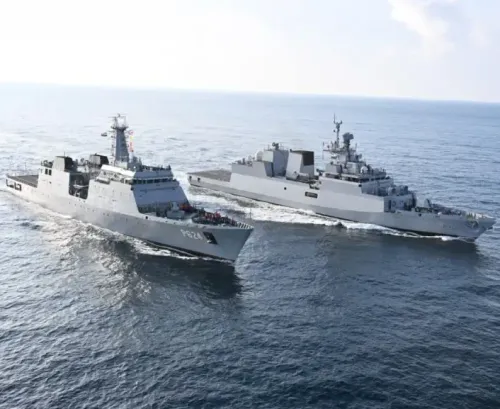
INDRA 2026 harbour phase commenced on 16 October in Vladivostok with a planning conference between INS Sahyadri and Russian Navy Ship Aldar Tsydenzhapov .
The maritime component will take place in the Sea of Japan from 16 to 17 October , featuring artillery drills, tactical manoeuvres, and counter-terrorism scenarios.
The land component in Chelyabinsk Region runs until 23 October , focusing on unit command and joint operations against illegal armed groups.
Su-30SM aircraft crews will practise air combat and low-altitude target engagement; Mi-8 helicopter crews will rehearse special forces deployment and search-and-rescue.
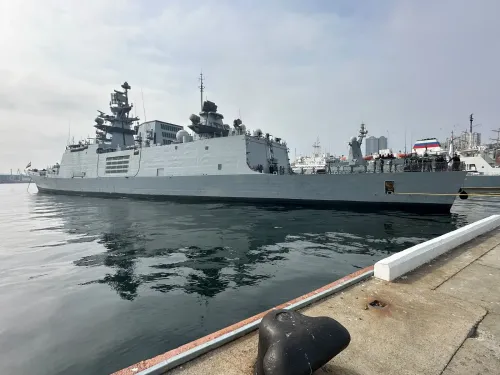
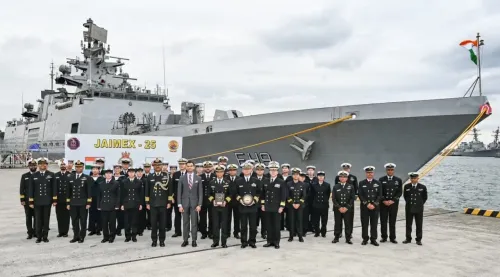
INS Sahyadri arrived in Vladivostok on 10 October and participated in the exercise's opening ceremony at the Pacific Fleet's main base.
INDRA has been a bilateral exercise series since 2003 , now covering all three services.
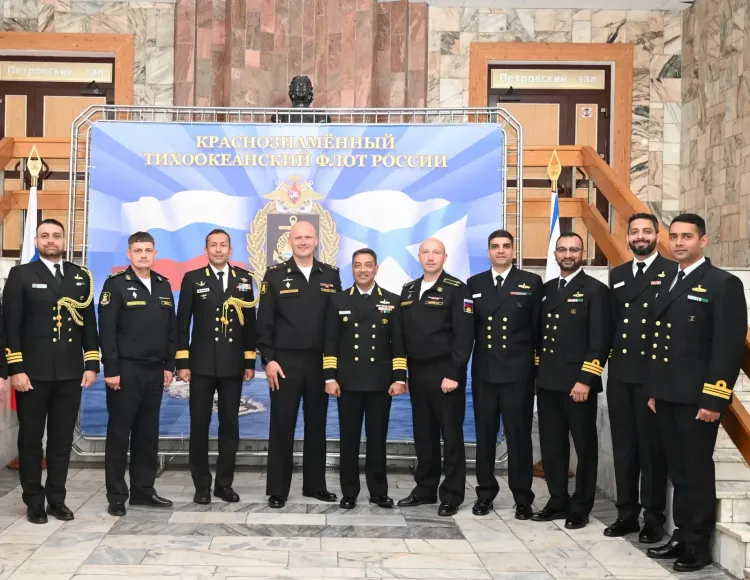
The India-Russia joint naval exercise INDRA 2026 launched its harbour phase on Friday, 16 October in Vladivostok, with a planning conference between the operational teams of Indian Naval Ship (INS) Sahyadri and Russian Navy Ship Aldar Tsydenzhapov. The conference, attended by senior personnel from the Russian Navy's Pacific Fleet, laid out the broad programme for the upcoming sea phase of the exercise.
What the Harbour Phase Covered
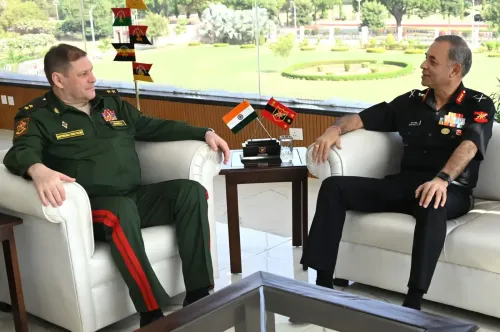
As part of the port call, the delegation aboard INS Sahyadri held a protocol meeting with Vice Admiral A.Y. Sysuev, Commander of the Primorsky Flotilla of the Pacific Fleet's mixed forces. The Indian Navy confirmed the development in a post on X, stating that the planning conference 'outlined the broad programme for the Sea Phase of the exercise.'
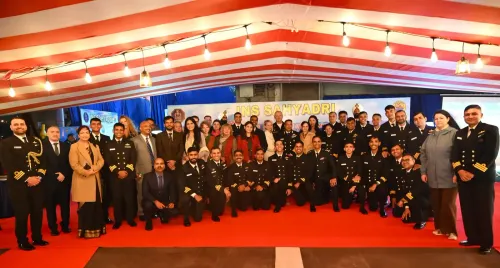
INS Sahyadri had arrived in Vladivostok on 10 October and participated in the opening ceremony of the maritime phase at the Pacific Fleet's main base.
Scale and Scope of INDRA 2026
The Russian Defence Ministry had announced on Wednesday that INDRA 2026 is a cross-branch exercise spanning Russia's Chelyabinsk Region and the Russian Far East. The exercise brings together ground forces, warships of both navies, and aircraft of the Russian Aerospace Forces and the Indian Air Force.
The land component is scheduled to continue until 23 October, with military contingents practising unit command and control and conducting a joint operation to neutralise illegal armed groups at a training ground, according to the Russian Defence Ministry.
Maritime Component: Sea of Japan Operations
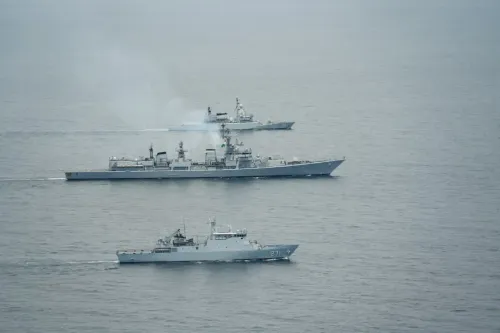
The practical phase of the maritime component is set to take place in the Sea of Japan from 16 to 17 October. Participating ships will practise tactical manoeuvres, carry out artillery firing drills against sea and aerial targets, conduct inspection operations, and rehearse the liberation of a vessel simulated to have been seized by terrorists.
Notably, the maritime drills place particular emphasis on counter-terrorism at sea — a dimension that has grown in prominence across Indian Navy exercises in recent years.
Air Force Component and Helicopter Drills
Crews of the Russian Aerospace Forces and the Indian Air Force, operating Su-30SM tactical aircraft, will practise engaging small, low-flying targets, destroying airborne weapons carriers at short and medium ranges, and conducting manoeuvrable air combat at medium and low altitudes.
Additionally, Russian and Indian crews flying Mi-8 military helicopters are scheduled to practise deploying special forces units and conducting search-and-rescue operations for aircrews in distress in remote areas, the Russian Defence Ministry said.
Strategic Context
INDRA is a long-running bilateral exercise series that began in 2003 and has progressively evolved from single-service drills into a tri-services format. This year's iteration comes amid continued diplomatic engagement between New Delhi and Moscow even as India navigates its relationships with Western partners through platforms such as the Quad. The exercise underscores India's longstanding policy of strategic autonomy, maintaining defence cooperation with Russia while deepening ties with the United States, France, and Japan. All eyes will be on the sea phase results and whether any new joint protocols are formalised at the exercise's conclusion.
Point of View
A balancing act that is itself a strategic message. The exercise's evolution from single-service manoeuvres in 2003 to a complex, multi-domain format reflects India's growing appetite for high-end joint operations — with partners across the geopolitical spectrum.
NationPress
16 Oct 2026
Frequently Asked Questions
What is the INDRA 2026 exercise?
INDRA 2026 is a joint India-Russia cross-branch military exercise spanning naval, ground, and air components across Vladivostok, the Sea of Japan, Chelyabinsk Region, and the Russian Far East. It is the latest edition of a bilateral exercise series that has run since 2003 and has evolved into a full tri-services format.
Where and when is the INDRA 2026 naval exercise taking place?
The harbour phase began on 16 October in Vladivostok, Russia, and the maritime practical phase takes place in the Sea of Japan from 16 to 17 October. The land component in Chelyabinsk Region continues until 23 October.
Which Indian warship is participating in INDRA 2026?
Indian Naval Ship (INS) Sahyadri is the primary Indian vessel taking part in INDRA 2026. It arrived in Vladivostok on 10 October and took part in the opening ceremony at the Pacific Fleet's main base before beginning the harbour phase.
What drills are planned during the sea and air phases of INDRA 2026?
The sea phase includes tactical manoeuvres, artillery firing against sea and aerial targets, inspection operations, and counter-terrorism scenarios involving the simulated seizure of a vessel. The air component covers Su-30SM combat drills and Mi-8 helicopter missions for special forces deployment and search-and-rescue.
Why does India continue joint exercises with Russia despite Western pressure?
India maintains a policy of strategic autonomy, engaging in defence cooperation across multiple partnerships simultaneously. INDRA reflects long-standing military ties — India's armed forces operate significant Russian-origin equipment — even as New Delhi deepens its engagement with the Quad and Western defence partners.