Iran's Pezeshkian: US naval blockade on Strait of Hormuz doomed to fail
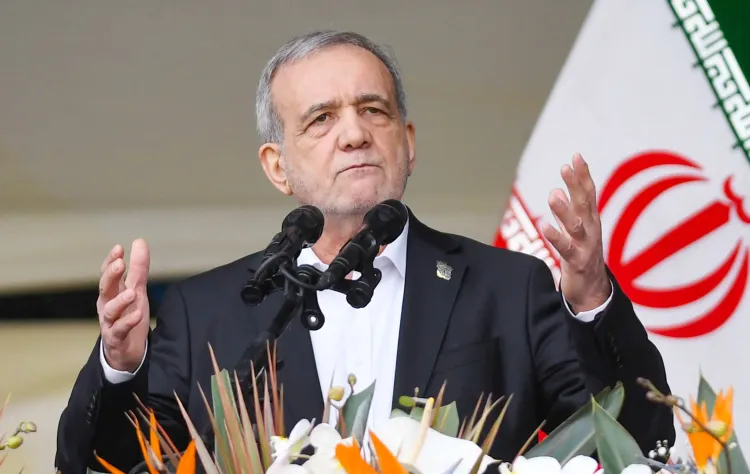
Synopsis
Iranian President Masoud Pezeshkian used Persian Gulf National Day to issue a direct warning to Washington: the US naval blockade on the Strait of Hormuz will fail. With post-ceasefire talks in Islamabad having collapsed and one of the world's most critical oil chokepoints at stake, the standoff between Tehran and Washington is far from over.
Key Takeaways
Iranian President Masoud Pezeshkian on 30 April declared the US naval blockade on the Strait of Hormuz "doomed to failure." The US reportedly imposed the blockade after post-ceasefire talks in Islamabad on 11–12 April failed to reach an agreement.
A ceasefire between Iran, the US, and Israel took effect on 8 April after 40 days of fighting that began on 28 February .
Iran's then-Supreme Leader Ali Khamenei was reportedly killed during the conflict, along with senior commanders and civilians.
Pezeshkian said responsibility for any insecurity in the waterway lies with the United States and Israel .
Iran describes itself as "the guardian of security" in the Gulf, but bars passage to vessels affiliated with the US and Israel.
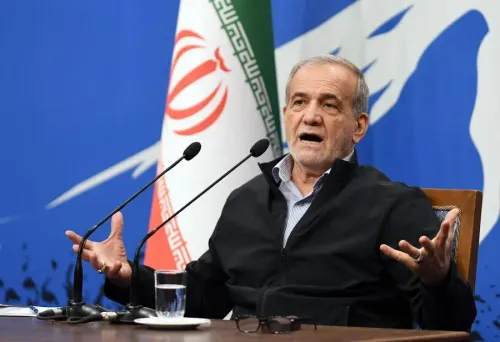
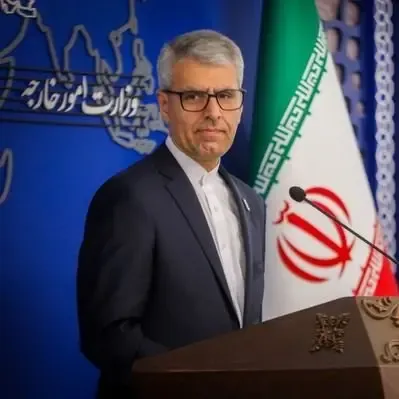
Iranian President Masoud Pezeshkian declared on Thursday, 30 April that any US attempt to impose a naval blockade and maritime restrictions on Iran is "doomed to failure," warning that such moves violate international law and threaten regional and global stability. The statement came as Tehran marked Persian Gulf National Day, which falls on 30 April each year.
What Pezeshkian Said
In a statement published on his office's website, Pezeshkian said Iran's "enemies" have shifted their pressure to the economic and maritime arenas, deploying a naval blockade on the Strait of Hormuz and restrictions on maritime trade as a new tool against the Iranian government and people. He stressed that the Gulf "is not an arena for imposing unilateral foreign wills, but rather part of the international interactions' system," adding that its security "makes sense only in the light of collective cooperation and mutual respect for the sovereignty of the coastal countries."
Pezeshkian emphasised that "any attempt to impose a blockade and maritime restrictions on the waterway is contrary to international law and a threat to the regional nations' interests and global peace and stability, and is doomed to failure." He placed direct responsibility for any insecurity in the waterway on the United States and Israel.
Background: The US Blockade and Its Origins
According to the report, the United States imposed its blockade on the Strait of Hormuz after post-ceasefire negotiations between Iran and the US in Islamabad, Pakistan on 11 and 12 April failed to produce an agreement. A ceasefire between Iran, the United States, and Israel had taken effect on 8 April, following 40 days of fighting that reportedly began on 28 February when the US and Israel launched joint attacks on Tehran and other Iranian cities, killing Iran's then-Supreme Leader Ali Khamenei, senior commanders, and civilians, according to the report.
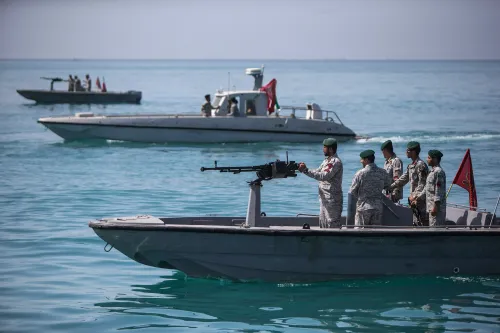
Iran, in turn, responded with waves of missile and drone strikes targeting Israel and US assets across the Middle East, and tightened its grip on the Strait of Hormuz, reportedly barring passage to vessels belonging to or affiliated with Israel and the United States.
Iran's Position on the Strait of Hormuz
Pezeshkian described Iran as "the guardian of security" in the Gulf and the Strait of Hormuz, asserting that Tehran continues to adhere to the principles of freedom of navigation and maritime safety — "except for hostile countries." He added that implementation of these principles must be accompanied by respect for Iranian sovereignty and the Iranian nation.
Iran has repeatedly maintained, according to the statement, that foreign presence and interventions in the region serve only to escalate tensions and disrupt lasting peace. Pezeshkian also noted that during what he described as the 40-day US-Israeli war against Iran, US military bases in West Asia failed to ensure host countries' security, and that Iran treated the origins of strikes against its territory as legitimate targets for retaliation.
Strategic Significance of the Strait of Hormuz
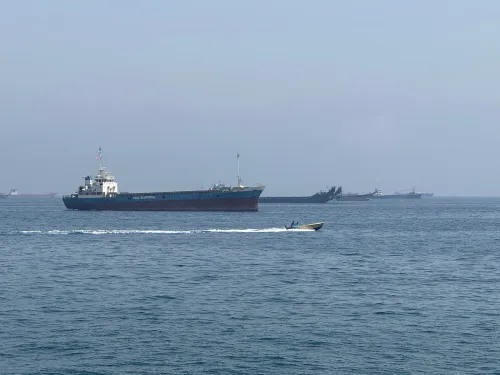
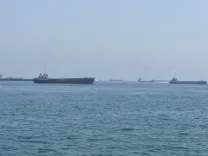
The Strait of Hormuz is one of the world's most critical maritime chokepoints, through which a significant share of global oil and gas exports pass. Any sustained disruption to navigation there carries substantial consequences for global energy markets and international trade. This comes amid an already volatile regional environment, with the post-ceasefire diplomatic process between Tehran and Washington at an apparent impasse following the failed Islamabad talks.
As tensions remain elevated, the trajectory of US-Iran negotiations and the status of the Strait of Hormuz blockade will be closely watched by regional governments and global energy markets alike.
Point of View
And that the blockade is Washington's pressure lever going into the next round. The Strait of Hormuz is not merely a bilateral issue — with global energy flows at stake, every escalatory move carries systemic risk well beyond the US-Iran dyad. Tehran's framing of itself as the 'guardian' of the strait while simultaneously barring US- and Israeli-affiliated vessels is a contradiction that will test the patience of neutral shipping nations and Gulf Arab states who depend on the waterway's stability.
NationPress
18 Sept 2026
Frequently Asked Questions
Why did Iran's President Pezeshkian call the US naval blockade doomed to failure?
Pezeshkian argued that the US blockade on the Strait of Hormuz violates international law and threatens regional and global stability. He made the statement on 30 April, Persian Gulf National Day, asserting that unilateral maritime restrictions cannot succeed against Iran.
What is the US blockade on the Strait of Hormuz?
According to reports, the United States imposed a naval blockade on the Strait of Hormuz after post-ceasefire negotiations with Iran in Islamabad on 11–12 April 2025 failed to produce an agreement. The blockade restricts maritime movement through one of the world's most critical oil and gas shipping chokepoints.
What was the ceasefire between Iran, the US, and Israel about?
A ceasefire took effect on 8 April following 40 days of fighting that reportedly began on 28 February, when the US and Israel launched joint strikes on Tehran and other Iranian cities. Iran retaliated with missile and drone strikes on Israeli and US assets across the Middle East.
Who was Ali Khamenei and what happened to him?
Ali Khamenei was Iran's Supreme Leader, reportedly killed during the 40-day conflict between Iran and the US-Israeli alliance, according to the report. His death marked a significant turning point in the conflict.
Why does the Strait of Hormuz matter globally?
The Strait of Hormuz is one of the world's most critical maritime chokepoints, through which a large share of global oil and gas exports pass. Any sustained disruption to navigation there has major consequences for international energy markets and global trade.