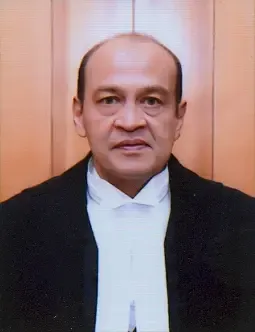
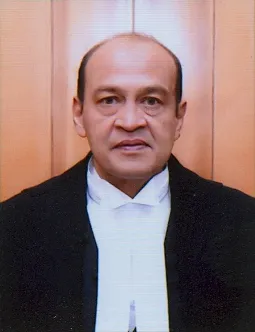
Justice Yashwant Varma Exits Impeachment Inquiry Amid Controversy
Synopsis
Justice Yashwant Varma has withdrawn from impeachment proceedings against him, citing severe procedural flaws and lack of evidence. His resignation follows allegations of burnt currency found at his residence during his tenure as a judge. This controversial case raises important questions about due process and the integrity of judicial inquiries.
Key Takeaways
Justice Yashwant Varma has withdrawn from impeachment proceedings.
He cited significant procedural flaws and lack of evidence.
The controversy involves allegations of burnt currency found at his official residence.
Justice Varma expresses concerns about fairness in the inquiry process.
He has submitted his resignation amidst the ongoing controversy.
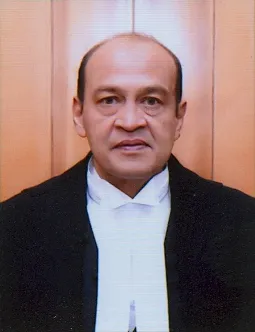
New Delhi, April 10 (NationPress) Justice Yashwant Varma of the Allahabad High Court has opted to withdraw from the ongoing inquiry proceedings against him, citing severe procedural flaws, denial of a fair chance to defend himself, and a “total lack” of evidence connecting him to the purported discovery of burnt currency at his official residence.
In a comprehensive letter to the inquiry committee on Thursday, Justice Varma expressed his decision “with deep anguish and a heavy heart,” asserting that the accusations against him were based more on assumptions than on factual evidence.
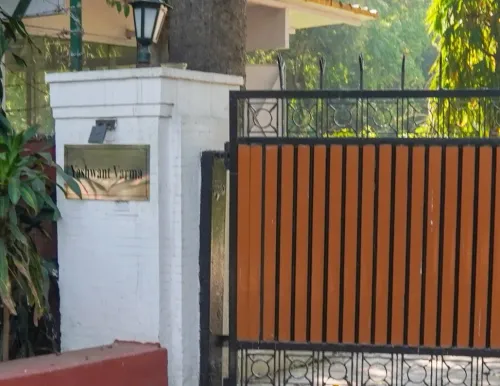
The controversy originated from a fire incident on March 14, 2025, at his official residence in Delhi during his time as a judge of the Delhi High Court, where videos captured by firefighters allegedly displayed burnt currency in a storeroom.
Justice Varma noted that he felt “compelled to conclude” that the proceedings were based solely on the acknowledged existence of a storeroom within the property and the allegation of cash being discovered there, lacking any substantial evidence to prove his involvement.
“Continuing to engage in these proceedings would be the greatest disservice to myself and the institution, thus legitimizing a process that demands I answer the unanswerable — where did the money originate?” he stated, confirming his immediate withdrawal.
Justice Varma contended that the burden of proof was unjustly shifted, obliging him to disprove “presumed facts and numerous assumptions” even though the prosecution failed to establish a prima facie case. “This situation has led to a reversal of the burden of proof as we understand it and imposed upon me the heavy task of proving multiple negatives,” he remarked.
He asserted that no evidence was presented to indicate that the alleged cash found in the storeroom belonged to him or was placed there with his knowledge or consent. “No accusation was ever made, nor was any evidence presented to show that any cash was placed in that storeroom by me or at my direction,” he stated.
Detailing the circumstances surrounding the fire incident on March 14, 2025, Justice Varma reiterated that he was not present on the premises at the time and was unaware of the alleged cash until after the incident occurred. He clarified that the storeroom in question was a separate structure, accessible from an unmanned rear entrance, routinely used by domestic staff and maintenance personnel.
“It defies common sense to suggest that I would choose such a location to store ‘cash’,” he expressed. He raised significant objections regarding the inquiry's conduct, indicating that selective reliance on material from a previous in-house committee (IHC) investigation led to the exclusion of exculpatory evidence, including the official fire report, which did not mention cash.
Justice Varma also claimed that several crucial witnesses, including senior members of the Delhi Fire Services and Delhi Police, were dismissed after cross-examination revealed inconsistencies in the accusations against him.
He raised additional concerns regarding the fairness of the proceedings, stating that vital evidence — including CCTV footage — was withheld despite multiple requests. “This crucial evidence that could clarify the entire incident has been kept away,” he remarked, noting that even requests for a cloned copy were denied.
“The conclusion in the CFSL Extraction Report, indicating that data from the CCTV hard drive could not be accessed, is highly questionable,” he added, emphasizing that the DVR itself was never subjected to forensic examination.
In response to accusations of tampering with evidence, Justice Varma stated there was “simply no material” to indicate that he or anyone on his behalf interfered with the scene. He asserted that decisions regarding the non-seizure or reporting of the alleged cash were made by senior officials before he was informed about the fire.
He also dismissed allegations of providing an “evasive explanation,” asserting that he consistently maintained that the cash did not belong to him or his family, and that they had no knowledge of its existence. “The charge evidently stems from a misinterpretation of my letter,” he remarked.
Expressing “deep disappointment” with the inquiry's conduct, Justice Varma indicated that the proceedings failed to uphold principles of fairness and due process. “A rational and just inquiry would have recognized the complete absence of a prima facie case,” he concluded.
Meanwhile, in a related development, Justice Varma has submitted his resignation immediately to President Droupadi Murmu, abruptly ending his tenure amid ongoing impeachment proceedings.
In his resignation letter, he stated, “I do not wish to burden your esteemed office with the reasons that have compelled me to submit this letter,” adding that “it is with great sorrow” that he is resigning. “It has been an honor to serve in this capacity,” the letter continued.
A copy of the resignation was also sent to Chief Justice of India Surya Kant.
Justice Varma has been at the center of the controversy since burnt cash was allegedly discovered on March 14, 2025, at his official residence during his tenure as a judge of the Delhi High Court.
Impeachment notices, supported by 145 Lok Sabha members and 63 Rajya Sabha members, were submitted in July 2025, resulting in the formation of an inquiry committee under the Judges (Inquiry) Act, 1968.
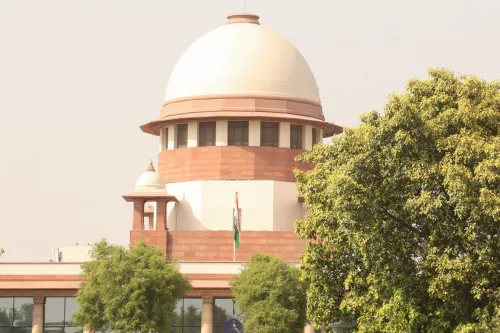
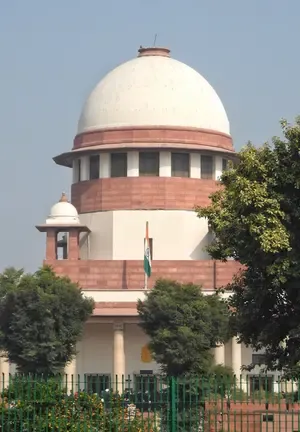
Earlier this year, the Supreme Court rejected a plea from Justice Varma challenging the Lok Sabha Speaker’s decision to form the inquiry committee.
In pronouncing the verdict, a bench of Justices Dipankar Datta and Satish Chandra Sharma stated: “We hold that the petitioner is not entitled to any relief in this matter.”
Justice Varma had questioned the formation of the inquiry panel on procedural grounds, arguing that impeachment notices submitted concurrently in both Houses required joint consultation between the Lok Sabha Speaker and the Rajya Sabha Chairman before the inquiry committee could be established.
He had previously challenged the findings of a three-member in-house inquiry committee set up by the Supreme Court, which concluded that he exercised “secret or active control” over the cash allegedly recovered from the premises.
The Supreme Court dismissed that challenge as well, affirming that the in-house procedure was “fair and just” and did not compromise judicial independence.
Based on the in-house inquiry report, then Chief Justice of India (CJI) Sanjiv Khanna recommended the initiation of removal proceedings, leading to the formation of a parliamentary inquiry committee.
Point of View
Justice Varma's withdrawal raises serious concerns about the integrity of the impeachment process and whether procedural fairness is being upheld. The allegations and circumstances surrounding this case warrant thorough scrutiny to maintain public trust in the judiciary.
NationPress
18 Sept 2026
Frequently Asked Questions
What prompted Justice Varma to withdraw from the impeachment proceedings?
Justice Varma withdrew due to alleged procedural irregularities, denial of a fair defense opportunity, and a complete lack of evidence against him.
What are the allegations against Justice Varma?
Justice Varma faces allegations related to burnt currency found at his official residence during a fire incident in March 2025.
What was Justice Varma's reaction to the inquiry process?
Justice Varma expressed profound disappointment, stating the inquiry failed to adhere to fairness and due process principles.
Who supported the impeachment notices against Justice Varma?
The impeachment notices were backed by 145 Lok Sabha members and 63 Rajya Sabha members.
What did the Supreme Court decide regarding Justice Varma's challenges?
The Supreme Court dismissed Justice Varma's challenges to the inquiry committee's formation, affirming the procedure was fair and just.