Pralhad Joshi Calls Out Karnataka Government's Administrative Shortcomings Following Speaker's Walkout
Synopsis
In a scathing critique, Union Minister Pralhad Joshi highlights the Karnataka Congress government's ongoing administrative failures, particularly after the Assembly Speaker's recent walkout. This incident underscores significant governance issues and raises questions about ministerial accountability and interest in state affairs.
Key Takeaways
Pralhad Joshi criticizes Karnataka Congress government for administrative failures.
The Speaker's walkout underscores governance issues.
Ministers' inability to answer questions raises concerns about accountability.
Factionalism appears to distract from governance.
Speaker's dissatisfaction reflects ongoing struggles within the administration.
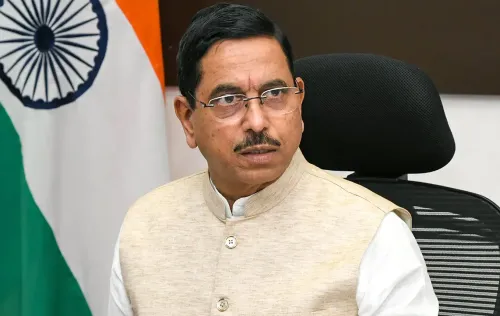
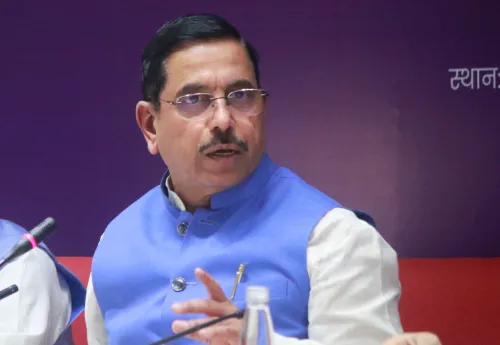
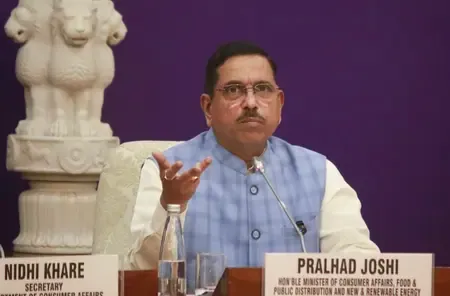
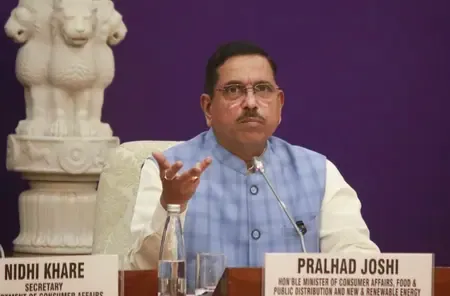
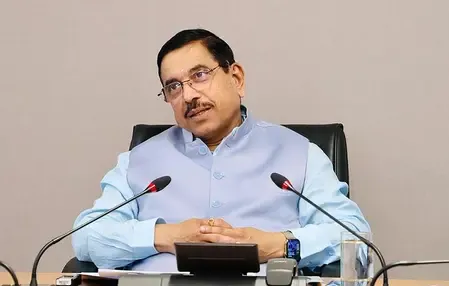
New Delhi/Bengaluru, March 18 (NationPress) Union Minister for Food, Public Distribution and Consumer Affairs Pralhad Joshi has taken aim at the Karnataka Congress government, alleging it has consistently demonstrated administrative failures. The recent episode, wherein the Assembly Speaker left the House in frustration, has further highlighted the government's ineptitude.
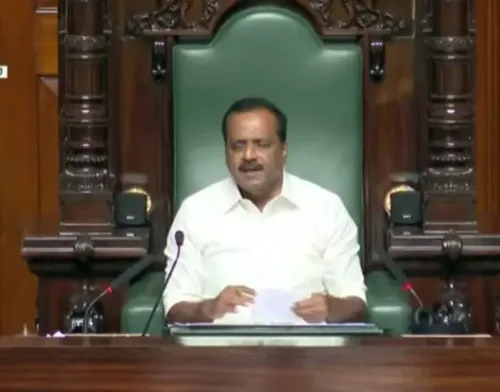
On Monday, Speaker U.T. Khader voiced his discontent, asserting that the government had been cautioned multiple times to ensure timely responses were prepared.
He questioned how MLAs could be expected to engage in Assembly proceedings if their inquiries remained unanswered, mentioning that he had issued strict orders on four previous occasions, marking this as the fifth.
Indicating a lack of progress, the Speaker emphasized that the House could not operate effectively with ongoing lapses. He declared that the proceedings would be halted until ministers and officials provided explanations for the delays, leading to an adjournment of the House.
Commenting on this situation, Joshi remarked that the Speaker’s exit from the House in front of Chief Minister Siddaramaiah—after observing that ministers had not adequately responded to MLAs’ questions, with some ministers absent—was indicative of the government's decline.
He further stated that if multiple ministers were unable to address queries raised by MLAs, it pointed to a “truly deplorable” state of governance. It also implied that the Chief Minister lacked control over his ministers or the administration.
Joshi noted that state ministers had reached a point where they could not respond to questions even during the budget session.
He expressed that if ministers were unable to be present in the Assembly on time, it cast doubt on their interest in governance, suggesting they appeared disengaged from running the government.
Moreover, he alleged that some ministers and MLAs seemed more preoccupied with discussions regarding a “change of Chief Minister” than with the well-being of the populace and state development.
He questioned how ministers who had ample time for travel “wherever they desired” could not prioritize attending the Assembly.
Quoting the Speaker, Joshi noted that despite four previous warnings regarding ministers' absence, there had been no improvements, even on the fifth warning.
According to him, the Speaker had effectively assigned “failing marks” to both the ministers' performance and the administration of the Congress government over the last two and a half years.
Joshi also accused the government of fostering a culture of punishing senior officials for the mistakes of ministers. He argued that the suspension of senior IAS officers and the issuance of show-cause notices following the Speaker's anger reflected poorly on the administration.
He concluded that the Speaker’s walkout demonstrated that both the Chief Minister and Deputy Chief Minister had lost control over governance due to the ongoing power struggle concerning the “Chief Minister’s chair.”
Point of View
This incident illustrates a concerning pattern of governance challenges within the Karnataka Congress government. The Speaker's dissatisfaction and subsequent walkout not only reflect internal discord but also raise significant questions about ministerial effectiveness and the overall administrative framework in the state.
NationPress
1 Oct 2026
Frequently Asked Questions
What prompted the Speaker's walkout in Karnataka's Assembly?
The Speaker walked out due to dissatisfaction with the government's failure to provide timely responses to MLAs' questions, despite multiple warnings.
What does Pralhad Joshi say about the Karnataka government's performance?
Joshi criticizes the government for its repeated administrative failures, indicating a lack of control and accountability among ministers.
How has the Speaker expressed his concerns?
The Speaker has issued strict orders multiple times regarding attendance and responses from ministers, ultimately leading to his walkout.
What implications does this incident have for Karnataka's governance?
This incident highlights significant governance issues, suggesting a need for better accountability and engagement from state ministers.
Is there a power struggle within the Karnataka government?
Yes, Joshi indicated that ongoing discussions about a potential 'change of Chief Minister' reflect internal strife and factionalism.