Pralhad Joshi Slams Rahul Gandhi Over Monsoon Session Disruption
Synopsis
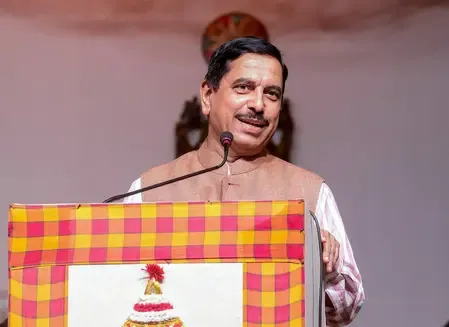
BJP minister Pralhad Joshi on August 13, 2026 accused Congress leader Rahul Gandhi of undermining parliament by walking out of a Home Minister debate the opposition itself had demanded, calling the conduct 'deplorable and a disservice to parliamentary democracy.'
Key Takeaways
Pralhad Joshi posted on August 13, 2026 accusing Rahul Gandhi of disrupting the Monsoon Session of Parliament.
Joshi says the government agreed to Congress's demand for a Home Minister statement, but Congress walked out when the opportunity came.
He accused Gandhi of making political statements 'on foreign soil' instead of engaging in parliamentary debate.
Joshi cited 95 electoral defeats to argue Congress has failed to learn from repeated rejection by voters.
He called Congress's conduct 'deplorable and a disservice to parliamentary democracy.' The broader pattern of opposition walkouts vs. government counter-accusations has been a recurring feature of Indian parliamentary sessions over the past decade.
When the government finally agreed to a debate Congress had demanded, Congress walked out anyway. That contradiction is now at the centre of a sharp political broadside from Union Consumer Affairs Minister Pralhad Joshi, who on Thursday, August 13, 2026, accused Leader of the Opposition Rahul Gandhi of showing 'continued disregard for parliamentary institutions' by disrupting the Monsoon Session of Parliament.
Joshi's post pulls no punches. 'Congress demanded a discussion and a statement from the Home Minister and the Government agreed,' he wrote. 'Yet, when the opportunity arose, the very person who demanded it chose to walk away.' The charge is straightforward: the opposition manufactured a grievance, received a concession, and then refused to use it.
The Walkout That Handed the BJP Its Talking Point
Few political manoeuvres are as easy to caricature as demanding a debate and then declining to show up for it. Joshi frames the disruption of the Monsoon Session — Parliament's annual sitting, typically running through July and August — not as a protest but as a performance, one he says reflects 'the arrogance of an individual who repeatedly avoids meaningful debate in Parliament and chooses to make political statements on foreign soil.' That last phrase is pointed. It is a direct reference to the BJP's long-running criticism of Rahul Gandhi for making remarks about Indian politics during overseas visits — a charge the Congress has consistently rejected as an attempt to delegitimise dissent.The '95 Defeats' Jibe and What It Signals
Joshi adds a numerical sting: 'Despite being rejected by the people 95 times, Congress leaders seem unwilling to learn from their repeated failures.' The figure refers to the cumulative electoral losses the party has faced in state assembly and parliamentary contests over recent years — a metric the BJP has deployed repeatedly to question the Congress's popular mandate. Calling the conduct 'deplorable and a disservice to parliamentary democracy,' Joshi signals that the ruling party intends to keep this disruption in the spotlight. India's parliamentary history is littered with walkouts from both sides of the aisle. Opposition parties have used adjournments as leverage; ruling parties have accused them of sabotaging governance. What makes this moment sharper is the sequencing Joshi describes: a demand met, an opportunity granted, a walkout chosen. That sequence, if accurate, is a difficult one for the Congress to defend on procedural grounds alone. Whether the remaining days of the Monsoon Session produce the Home Minister's statement — or more adjournments — will determine whether this exchange stays a Twitter skirmish or becomes a sustained parliamentary flashpoint.Point of View
The party attempts to shift the debate from the substance of the Home Minister's statement to the opposition's procedural credibility. The '95 defeats' reference reinforces a longer BJP narrative that frames Congress disruptions as the tantrums of a party in terminal electoral decline. For the Congress, the challenge is to reframe the walkout as principled protest rather than avoidance — a distinction that grows harder to sustain each time the pattern repeats.
NationPress
27 Sept 2026
Frequently Asked Questions
Why did Pralhad Joshi criticise Rahul Gandhi on August 13 2026?
Joshi accused Rahul Gandhi of disrupting the Monsoon Session of Parliament even after the government agreed to Congress's own demand for a Home Minister statement, calling it a contradiction that undermined parliamentary democracy.
What is the Monsoon Session of Parliament?
The Monsoon Session is the annual mid-year sitting of India's Parliament, typically held from July to August, during which the government and opposition debate legislation and current affairs.
What did Joshi mean by Rahul Gandhi making statements on foreign soil?
Joshi was referencing the BJP's ongoing criticism of Rahul Gandhi for commenting on Indian political matters during overseas visits, which the ruling party frames as inappropriate and the Congress dismisses as legitimate political speech.
What does '95 times rejected by the people' refer to?
Joshi used the figure of 95 electoral defeats to describe the cumulative state and parliamentary election losses Congress has suffered in recent years, a metric the BJP frequently deploys to question the party's democratic mandate.
Is it unusual for the opposition to walk out of a session it demanded?
It is procedurally contradictory and politically damaging. While walkouts are a common tactic in Indian parliamentary history, leaving after the government concedes a demanded debate hands the ruling party a ready-made criticism of bad faith.