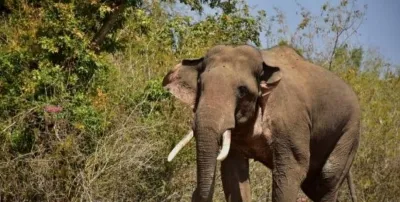
Karnataka Government Honors Late Veterinarian by Naming Elephant Calf After Her

Synopsis
In a heartfelt tribute, the Karnataka government has decided to name a newborn elephant calf after the late Dr. Sameeksha Reddy, a trainee veterinarian who tragically lost her life in a hippopotamus attack. This decision reflects the government's commitment to recognize her dedication to animal welfare.
Key Takeaways
Sameeksha Reddy was a dedicated trainee veterinarian.
A newborn elephant calf will be named in her honor.
The Karnataka government is considering granting her martyr status .
Investigations are underway regarding the circumstances of her tragic death.
The incident has raised concerns about safety protocols at wildlife facilities.
Shivamogga (Karnataka), March 23 (NationPress) The government of Karnataka has chosen to commemorate trainee veterinarian Dr. Sameeksha Reddy, who tragically lost her life in a hippopotamus attack last week at the Shivamogga Zoo, by naming a newborn elephant calf in her honor.
The Chairman of the Zoo Authority of Karnataka, N. Rangaswamy, made this announcement following a visit to the zoo to assess the situation with officials on Monday in Shivamogga.
He revealed that an elephant calf recently born at the Bannerghatta Biological Park near Bengaluru will carry the name of Dr. Sameeksha Reddy, who succumbed to injuries from a hippopotamus attack at the Shivamogga zoo.
Rangaswamy informed reporters that the Karnataka government is also contemplating granting martyr status to the late Dr. Reddy, expressing that her death is profoundly shocking and unacceptable.
Authorities from the police and forest department are currently probing the incident, and actions will be taken against those deemed responsible once the report is finalized.
Sources indicate that the hippopotamus, which had previously lost two calves and was pregnant with a third, may have attacked the veterinarian out of an instinct to protect.
Additionally, the incident has raised allegations of negligence from the victim's family. Dr. Sameeksha Reddy, aged 27, met her tragic end after being attacked by a hippopotamus at the Tyavarekoppa Tiger and Lion Safari in Shivamogga on March 20.
Her uncle, Naveen, spoke to the media, claiming serious lapses on the part of the authorities and demanding strict accountability. He mentioned that a vehicle was arranged for her visit to the safari and that she was accompanied by two others from her hostel. A guard allegedly permitted her to enter the enclosure to examine the hippopotamus.
Naveen questioned this decision, asserting that basic precautions should have been in place when dealing with a wild animal known for its dangerous nature. He highlighted that even apex predators like lions tend to avoid hippopotamuses and criticized officials for allowing a trainee to approach the animal without proper safety measures.
He noted that the hippopotamus was expected to give birth within a week, placing it in a highly sensitive and defensive state, which exacerbated the likelihood of an attack. He expressed disbelief that they allowed her to enter the enclosure so recklessly, labeling the incident as utter negligence.
Recalling her dedication, Naveen stated that her death represents a significant loss. He characterized her as a compassionate and outstanding student devoted to animal welfare. Despite opportunities for a more comfortable existence, she chose to serve in this capacity. He added that she had a lifelong passion for helping animals and often collaborated with veterinarians in Bengaluru to assist stray animals. Although she had been encouraged to pursue higher education abroad, she opted to remain in India.
The State Minister for Forest, Ecology, and Environment, Eshwar Khandre, characterized the incident as unfortunate and has ordered a comprehensive investigation. He extended condolences, stating that every life is precious, and assured that the government would support the grieving family.
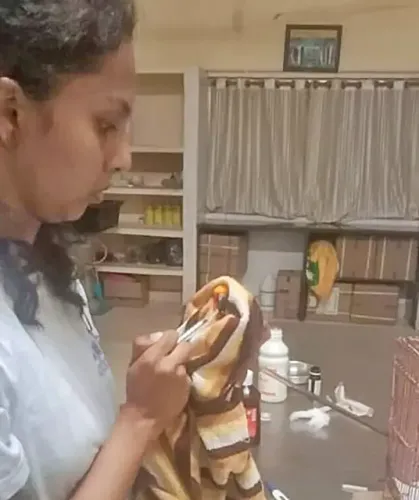
According to officials, Dr. Sameeksha Reddy had gone to the zoo hospital around 10:30 P.M. to treat a Sun Conure. Later, at approximately 11:45 P.M., she entered the enclosure to check the body temperature of the pregnant hippopotamus using a thermal camera. During this process, the animal unexpectedly attacked her, inflicting severe injuries.
She was promptly taken to a private hospital in Shivamogga, where she underwent surgery but tragically succumbed to her injuries at around 6:30 A.M.
A team of senior veterinarians and forest officials has been assigned to investigate the circumstances surrounding the incident, including potential safety violations. The report is anticipated within a week.
The minister has also instructed authorities to rigorously enforce standard operating procedures for handling and treating wild animals in all zoos across the state, emphasizing the necessity for increased caution among staff when interacting with wildlife.
Point of View
It highlights the need for stringent measures to prevent such incidents in the future. The ongoing investigation will hopefully bring accountability and ensure the safety of both staff and animals.
NationPress
24 Sept 2026
Frequently Asked Questions
What happened to Dr. Sameeksha Reddy?
Dr. Sameeksha Reddy tragically lost her life due to an attack by a hippopotamus while working at the Shivamogga Zoo.
Why is the elephant calf being named after her?
The Karnataka government has decided to honor her dedication to animal welfare by naming a newborn elephant calf after her.
Is there an investigation into the incident?
Yes, police and forest department officials are conducting an investigation to determine the circumstances surrounding the incident.
What are the allegations from the victim's family?
The family has alleged negligence on the part of the authorities and is demanding accountability for the incident.
What measures are being taken following the incident?
The state minister has ordered a high-level probe and emphasized the need for strict adherence to safety protocols in zoos.