Historic: Karnataka Approves SC Internal Reservation at 5.25:5.25:4.5 Ratio
Synopsis
Karnataka's Cabinet has made history by approving SC internal reservation in a 5.25:5.25:4.5 ratio — a first-of-its-kind move in India that directly addresses intra-community inequity among 101 SC groups and 59 nomadic communities, with 56,432 government posts to be filled under the new framework.
Key Takeaways
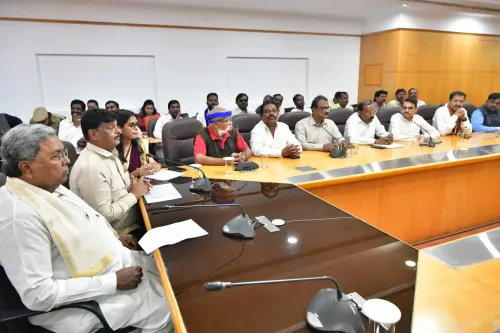
Karnataka Cabinet unanimously approved SC internal reservation in the ratio of 5.25:5.25:4.5 for left, right, and other SC communities on Friday, April 25, 2025 .
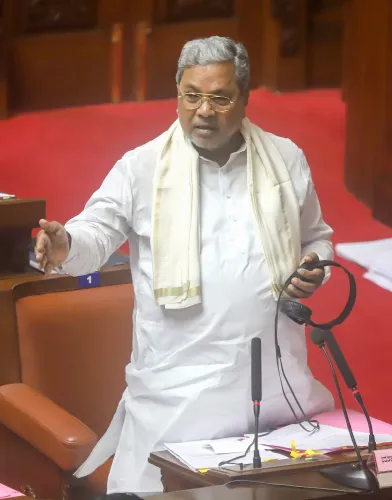
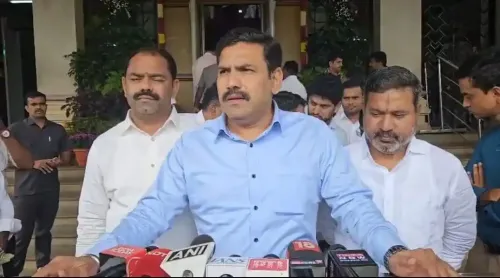
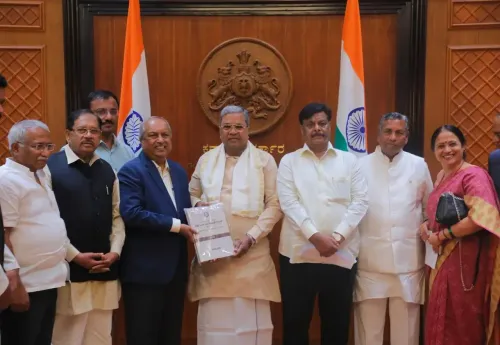
CM Siddaramaiah announced the decision at a post-Cabinet press conference, calling it one of the most significant internal reservation decisions in the country.
The new structure operates within a 15 per cent SC and 3 per cent ST reservation ceiling, in compliance with the Karnataka High Court's 50 per cent cap on total reservations.
Communities such as Bovi, Lambani, Koracha, Korama , and 59 nomadic groups fall under the 4.5 per cent other-category allocation; 20 per cent of Category C posts are reserved for nomadic communities.
The government will fill 56,432 posts this year under the revised reservation framework, with recruitment notifications expected shortly.
The 6 per cent gap between the government's desired 56 per cent and the court-mandated 50 per cent cap will be treated as backlog pending a final judicial verdict.
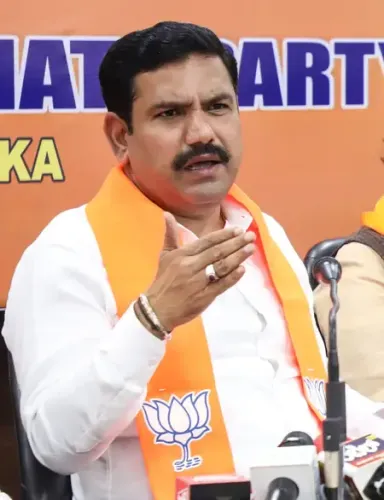
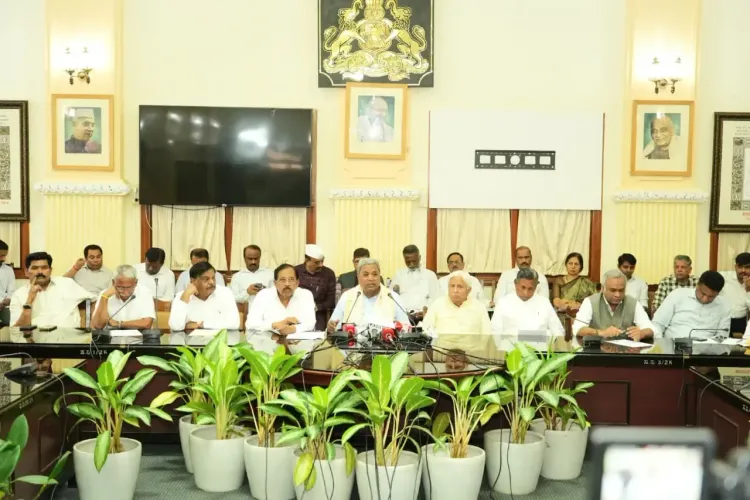
Bengaluru, April 25: The Karnataka Cabinet on Friday, April 25, unanimously approved a landmark internal reservation policy for Scheduled Castes (SC), allocating quotas in the ratio of 5.25:5.25:4.5 for left-hand, right-hand, and other SC communities respectively. Chief Minister Siddaramaiah announced the decision at a press conference following the Cabinet meeting, calling it one of the most transformative steps taken by any state government in India on the question of intra-SC reservation.
What the New Reservation Structure Looks Like
Under the revised framework, left-hand SC communities will receive 5.25 per cent reservation, right-hand SC communities will receive 5.25 per cent, and other SC communities — including groups such as Bovi, Lambani, Koracha, Korama, and 59 nomadic communities — will receive 4.5 per cent.
This restructuring is anchored within a total SC reservation of 15 per cent and ST reservation of 3 per cent, in compliance with the Karnataka High Court's directive capping total reservation at 50 per cent. The earlier framework allocated 17 per cent to SCs in a 6:6:5 ratio, which has now been recalibrated to fit within the revised ceiling.
Additionally, 20 per cent of posts under Category C will be exclusively reserved for the 59 nomadic communities, who fall under the 4.5 per cent other-category allocation.
CM Siddaramaiah's Statement and Government's Commitment
Chief Minister Siddaramaiah stated that the decision reflects the government's unwavering commitment to equal share and equal opportunity for all marginalised communities. He expressed confidence that Dalit organisations and affected communities will welcome the move.
He also confirmed that the government will fill 56,432 posts in the current year, as announced in the state budget, and that recruitment notifications will be issued shortly. Recruitment will be expedited, and all appointments will follow the new internal reservation structure.
Siddaramaiah clarified that the 6 per cent reservation component — the difference between the earlier 56 per cent and the court-mandated 50 per cent cap — will be treated as backlog until courts deliver a final verdict. The government remains committed to implementing 56 per cent total reservation in the future, he added.
Legal and Constitutional Background
The decision comes in the wake of a Supreme Court ruling that empowered individual states to sub-classify or create internal reservations within the broader Scheduled Caste category. Following that judgment, Karnataka constituted a one-member commission headed by retired Justice Nagamohan Das to study the issue and recommend an equitable distribution.
The commission's findings led the Cabinet to initially adopt a 6:6:5 internal ratio. However, when the Indra Sawhney case precedent was cited — reaffirming that total reservations must not exceed 50 per cent — a technical committee led by the Chief Secretary was formed to recalibrate the numbers. The current 5.25:5.25:4.5 ratio is the outcome of that exercise.
Community Demand and Political Backing
The push for internal SC reservation has deep roots in Karnataka's political and social landscape. At a Scheduled Castes convention held in Chitradurga, representatives from 101 SC communities and 59 nomadic groups had unanimously demanded internal reservation. The demand was also part of the Congress party's manifesto commitments, with a committee headed by Home Minister G. Parameshwara having previously assured its implementation.
Siddaramaiah noted that marginalised sub-groups within the SC umbrella — particularly nomadic communities — had historically been left behind despite the broader reservation framework, and this decision directly addresses that inequity.
Broader Implications and What Comes Next
This decision places Karnataka among the few Indian states to have operationalised intra-SC sub-classification following the Supreme Court's green light. It sets a potential precedent for other states grappling with similar intra-community equity debates, particularly in states with large and diverse SC populations such as Uttar Pradesh, Tamil Nadu, and Andhra Pradesh.
Critics and legal experts will likely watch closely to see whether the 50 per cent cap compliance holds up to judicial scrutiny, especially given the government's stated ambition to push total reservation to 56 per cent once courts permit. The backlog treatment of the 6 per cent component is also likely to face legal challenges.
With 56,432 government posts set to be filled under this new framework, the immediate on-ground impact for SC job aspirants in Karnataka will be significant. Recruitment notifications are expected in the coming weeks, and the state's administrative machinery has been directed to comply with the revised roster structure without delay.
Point of View
This move signals that the Congress government in Karnataka is doubling down on identity-based welfare as a political differentiator ahead of future electoral cycles — and other states with large SC populations will be watching closely.
NationPress
16 Sept 2026
Frequently Asked Questions
What is Karnataka's new SC internal reservation ratio?
Karnataka's Cabinet has approved an internal SC reservation ratio of 5.25:5.25:4.5 for left-hand, right-hand, and other SC communities respectively. This is within a total SC reservation of 15 per cent, in compliance with the High Court's 50 per cent overall cap.
Why did Karnataka revise its SC reservation from 6:6:5 to 5.25:5.25:4.5?
The earlier 6:6:5 ratio was based on a 17 per cent SC allocation, which pushed total reservation to 56 per cent — beyond the court-mandated 50 per cent ceiling. The revised ratio recalibrates the SC share to 15 per cent to stay within legal limits.
Which communities benefit from the 4.5 per cent 'other' SC reservation in Karnataka?
The 4.5 per cent category covers communities such as Bovi, Lambani, Koracha, Korama , and 59 nomadic groups . Additionally, 20 per cent of Category C posts will be exclusively reserved for these 59 nomadic communities.
How many government jobs will be filled under Karnataka's new SC reservation framework?
The Karnataka government plans to fill 56,432 posts in the current year, as announced in the state budget. Recruitment notifications are expected to be issued shortly, with all appointments following the new internal reservation structure.
What is the legal basis for Karnataka's SC sub-classification decision?
The decision follows a Supreme Court ruling permitting states to sub-classify Scheduled Castes for reservation purposes. Karnataka subsequently formed a commission under retired Justice Nagamohan Das and a technical committee led by the Chief Secretary to arrive at the final ratio.