How Did CM Khandu Thank the Air Force for Controlling the Forest Fire?
Synopsis
In a significant show of gratitude, Arunachal Pradesh's CM Pema Khandu acknowledged the Indian Air Force's rapid response in battling a raging forest fire in Lohit Valley. This operation not only showcased the effectiveness of aerial firefighting but also highlighted the crucial inter-agency collaboration necessary in such emergencies. Discover the full story behind this heroic act.
Key Takeaways
Swift Response: The IAF demonstrated rapid action to control the forest fire.
Collaboration: The operation involved coordination between the Army and IAF.
Aerial Firefighting: Mi-17V5 helicopters were crucial in managing the blaze.
No Casualties: Thankfully, there were no reported injuries or property damage.
Ecological Concerns: Forest fires are a growing threat in the Northeast region.
Itanagar, Jan 30 (NationPress) The Chief Minister of Arunachal Pradesh, Pema Khandu, took a moment on Friday to extend his heartfelt thanks to the Indian Air Force (IAF) for their rapid and effective intervention in managing a significant forest fire within the eastern Lohit Valley region of the state.
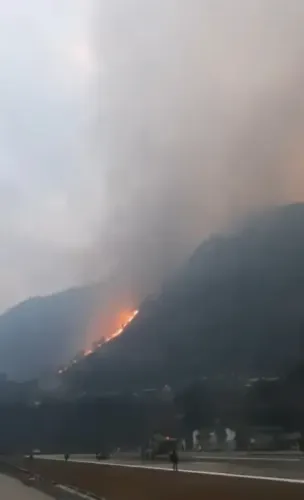
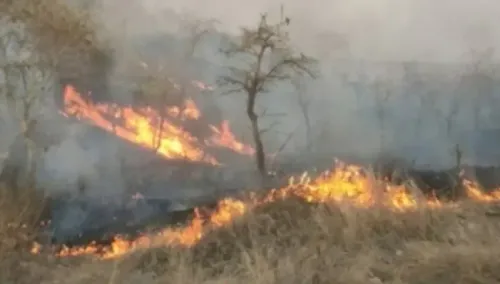
The forest fire, which ignited along the western ridge of the Lohit River in the Anjaw district, was effectively contained on Thursday through a well-coordinated operation that involved both Army personnel and the IAF.
In a message shared via his official X account, the Chief Minister remarked: “I am immensely grateful to the @IAF_MCC Indian Air Force for their prompt action in combating the forest fire in Lohit Valley.”
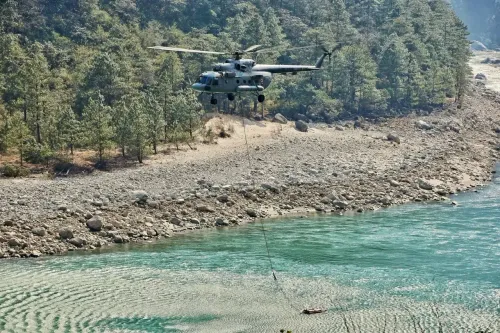
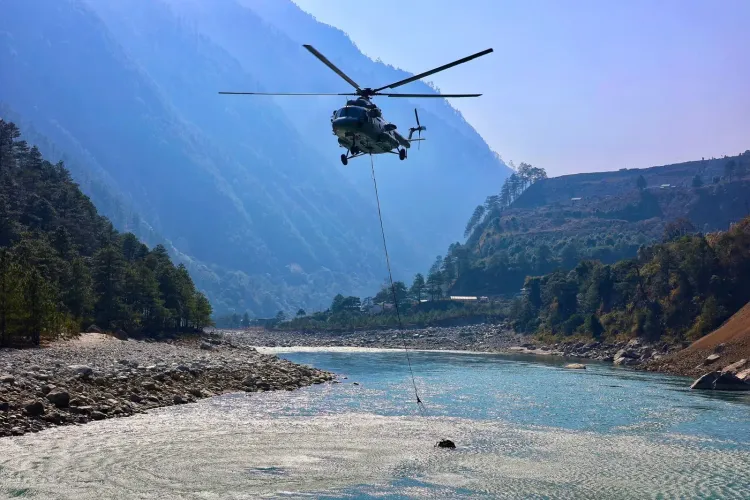
Senior forest officials reported that IAF Mi-17V5 helicopters executed aerial firefighting missions at altitudes nearing 9,500 feet, conducting multiple sorties and delivering over 12,000 liters of water to the affected areas.
This mission proved particularly arduous due to the steep and inaccessible ridges surrounding the Lohit River, which hampered ground-based firefighting initiatives. The fire was exacerbated by dry weather and strong winds, making swift inter-agency collaboration essential.
Officials have confirmed that there have been no casualties or damage to civilian properties reported thus far.
The IAF stated on X: “Engaging in forest fire combat at altitudes approaching 9,500 feet in Lohit Valley, Arunachal Pradesh. Our Mi-17V5 helicopters dropped 12,000 liters of water in the rarefied Himalayan atmosphere, demonstrating exceptional bravery, precision, and commitment to protecting lives and delicate ecosystems.”
The Spear Corps of the Indian Army also issued a statement noting that troops mobilized quickly alongside the IAF to manage the blaze, prioritizing the safety of civilians and their properties.
A senior forest official indicated that monitoring and containment operations are ongoing in the affected regions, adding that the true extent of forest loss will be evaluated upon the completion of a current assessment.
The cooperative efforts of ground troops and aircrews played a crucial role in controlling the fire before it could threaten nearby settlements.
Authorities emphasized that such collaborative operations are crucial for safeguarding vulnerable communities and the sensitive Himalayan ecosystem.
This operation underscored the preparedness, coordination, and professionalism of the Armed Forces in effectively responding to natural disasters in remote and environmentally sensitive areas.
The successful mission serves as a testament to the bravery and operational capabilities of the personnel involved, who operated under extreme conditions to protect lives, forests, and biodiversity.
Forest fires continue to pose an increasing threat to the ecologically delicate Northeast region. Recent studies have revealed a significant rise in fire intensity linked to climate variability, with approximately 80% of annual incidents occurring between March and April. Particularly high instances of forest fires were observed in the years 2006, 2007, 2009, and 2010, according to officials.
Point of View
It’s crucial to recognize the significance of this collaborative effort between the Indian Air Force and the Army in responding to natural disasters. The successful control of the forest fire in Arunachal Pradesh highlights the dedication and readiness of our armed forces, emphasizing the need for preparedness in safeguarding both lives and our environment. Such joint operations are vital in protecting vulnerable communities and preserving our ecological balance.
NationPress
27 Sept 2026
Frequently Asked Questions
What caused the forest fire in Arunachal Pradesh?
The forest fire was intensified by dry weather conditions and strong winds, which created a challenging environment for firefighting efforts.
How did the Indian Air Force respond to the fire?
The IAF deployed Mi-17V5 helicopters to conduct aerial firefighting operations, dropping over 12,000 liters of water on the fire-affected areas.
Were there any casualties reported from the fire?
Officials confirmed that no casualties or damage to civilian property have been reported so far.
What is the ecological impact of forest fires in Northeast India?
Forest fires pose a significant threat to the ecologically fragile Northeast region, with a recent study indicating a rise in fire intensity due to climate variability.
What measures are being taken to monitor the situation?
Monitoring and containment operations are ongoing, and the extent of forest loss will be assessed after a detailed evaluation.