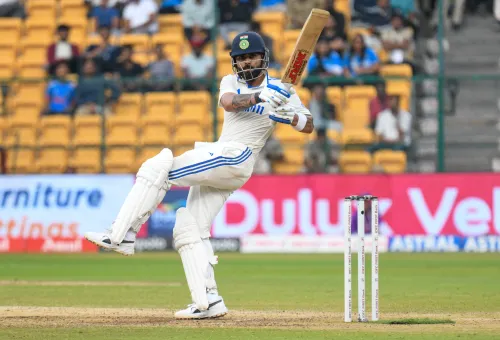
Kohli on India's Test captaincy: 'We were like a group of friends'
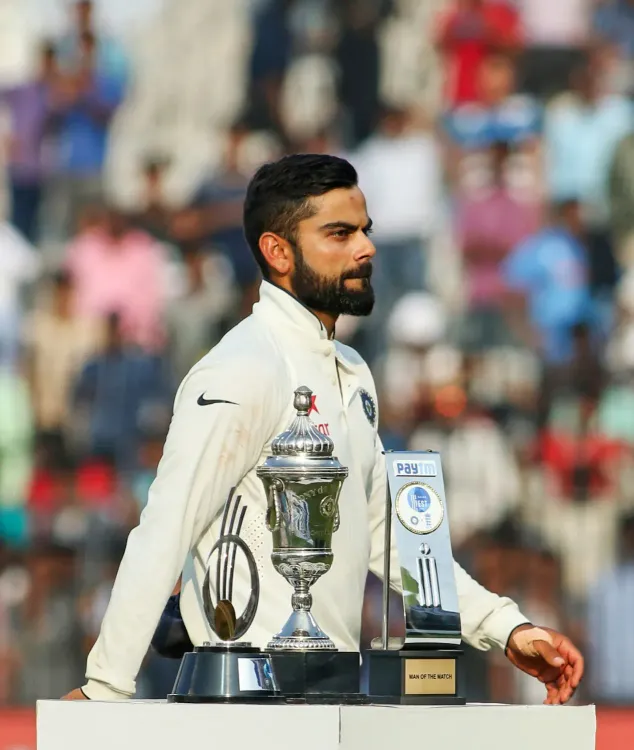
Synopsis
Kohli's 'golden era' framing is more than nostalgia — it is a blueprint. The former captain's account of a team where juniors felt no hesitation before seniors, and where every player owned the next six to eight years of Indian cricket, explains why that side won in Australia for the first time. It also quietly sets a standard that India's current Test group is being measured against.
Key Takeaways
Virat Kohli described his India Test captaincy as a 'golden era' built on friendship and shared responsibility, speaking on a Royal Challengers Bengaluru podcast.
He credited the narrow age gap among players — including Pujara , Rahane , Ashwin , Ishant , Shami , and Jadeja — for a free, united dressing-room culture.
Kohli led India in 68 Tests , winning 40 , making him India's most successful Test captain by victories.
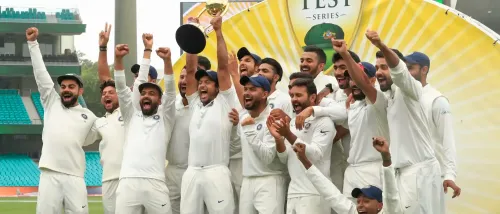
Under his captaincy, India won a Test series in Australia in 2018-19 for the first time, and recorded 7 Test wins across SENA nations — the most by any Asian captain.
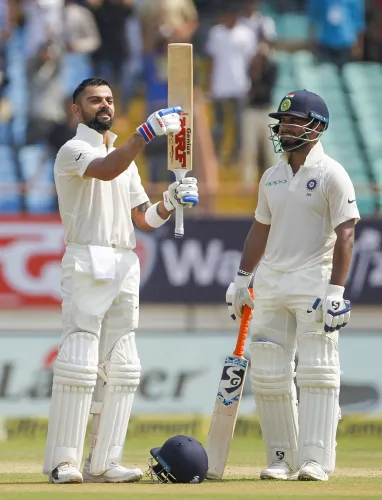
Kohli retired from Test cricket in 2025 with 9,230 runs at 46.85 , including 30 centuries , ranking fourth on India's all-time Test run-scorers list.
Former India Test captain Virat Kohli has looked back on his tenure leading the national side in the longest format, describing it as a 'golden era' defined by camaraderie, shared responsibility, and a core group of players who grew up together in the dressing room. Kohli made the remarks in a Royal Challengers Bengaluru podcast, offering a rare window into what drove one of India's most successful Test sides.
The Bond That Built a Team
Kohli credited the unusually narrow age gap among the squad's senior players as a key factor in creating a relaxed yet driven team environment. He noted that players such as Cheteshwar Pujara, Ajinkya Rahane, Ravichandran Ashwin, Ishant Sharma, Mohammed Shami, and Ravindra Jadeja were all in their twenties when they began featuring regularly for India.
'The most important thing was our average age. There was no hesitation between seniors and juniors. We were like a group of friends,' Kohli said. That comfort, he explained, encouraged every player to speak freely and contribute to the team's collective direction.
Shared Leadership, Not Top-Down Command
A central theme of Kohli's reflection was the distribution of leadership across the entire squad — not just the captain and support staff. He described a culture where every player felt personally invested in shaping the side's future.
'It was not like a few people would take care of everything. Everyone felt they had a role in building the team for the next six to eight years,' he said. According to Kohli, this collective ownership pushed individuals to hold themselves to higher standards, which in turn raised the bar for the whole group.
A Record-Breaking Captaincy Tenure
Kohli took charge of the Test side during the 2014 tour of Australia, stepping in after MS Dhoni stepped down from the format. He went on to lead India in 68 Tests, winning 40 — making him India's most successful Test captain by victories.
His tenure included a historic Test series win in Australia in 2018-19, India's first on Australian soil. He also oversaw seven Test wins across SENA countries — South Africa, England, New Zealand, and Australia — the most by any Asian captain. A potent fast-bowling attack anchored by Mohammed Shami and Ishant Sharma was central to India's overseas ambitions during this period.
Kohli's Test Legacy by the Numbers
Kohli retired from Test cricket in 2025 having accumulated 9,230 runs at an average of 46.85, including 30 centuries. He remains India's fourth-highest run-scorer in Test cricket. This comes amid a broader reassessment of Indian cricket's last decade, with the Kohli-era Test side increasingly cited as the benchmark against which current squads are measured.
Point of View
But it is really a structural argument: that the 2014-2022 Test side succeeded because accountability was horizontal, not vertical. That model — peers holding peers to standards — is harder to replicate when a generation turns over simultaneously, which is precisely the challenge facing Indian Test cricket now. The 40-win record will endure, but the more instructive legacy may be the cultural architecture Kohli describes, which current selectors have not yet demonstrably rebuilt.
NationPress
3 Oct 2026
Frequently Asked Questions
What did Virat Kohli say about his India Test captaincy?
Kohli called his Test captaincy stint a 'golden era,' saying the team functioned like a group of friends with no hesitation between seniors and juniors. He highlighted shared leadership and collective responsibility as the foundation of that side's success.
How many Tests did Virat Kohli win as India's captain?
Kohli won 40 of the 68 Tests he captained, making him India's most successful Test captain by number of victories. He took over the role in 2014 after MS Dhoni stepped down from the format.
What was Kohli's biggest achievement as Test captain?
Kohli led India to a historic Test series win in Australia in 2018-19 — the first by an Indian side on Australian soil. His tenure also produced seven Test wins across SENA countries, the most by any Asian captain.
When did Virat Kohli retire from Test cricket?
Kohli retired from Test cricket in 2025, finishing with 9,230 runs at an average of 46.85 and 30 centuries. He is India's fourth-highest run-scorer in the format.
Which players did Kohli name as part of India's core Test group?
Kohli specifically named Cheteshwar Pujara, Ajinkya Rahane, Ravichandran Ashwin, Ishant Sharma, Mohammed Shami, and Ravindra Jadeja as players who were all in their twenties when they began playing together regularly, forming the backbone of that era's Test side.