South Korea and EU Forge New Economic Partnership Amid Global Challenges
Synopsis
In a pivotal move, South Korea and the EU have announced a strategic economic partnership aimed at enhancing trade and economic security. This agreement comes amidst growing global uncertainties, marking a transformative step in their bilateral relations.
Key Takeaways
Strategic partnership formed between South Korea and the EU.
Focus on economic security and trade .
Collaboration in technology and supply chains .
Discussions on critical minerals and batteries .
Final draft of a digital trade agreement confirmed.
Seoul, April 17 (NationPress) - On Friday, South Korea and the European Union (EU) reached a consensus to establish a strategic economic partnership aimed at enhancing their bilateral relationships in trade and economic security amidst rising global uncertainties, as stated by Seoul's trade ministry.
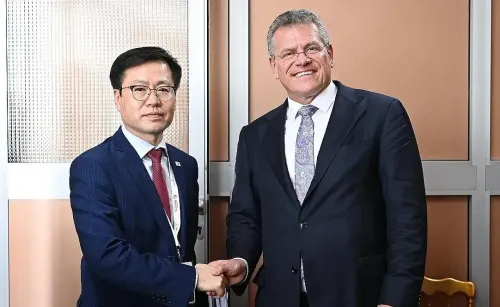
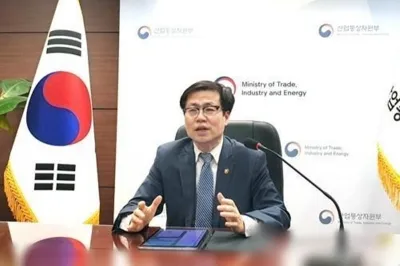
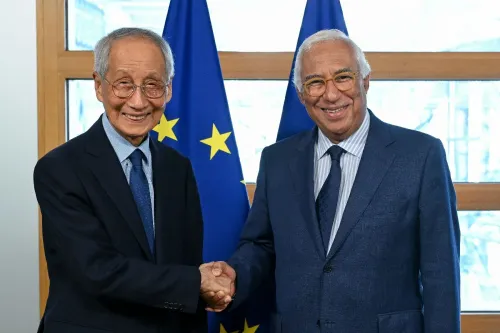
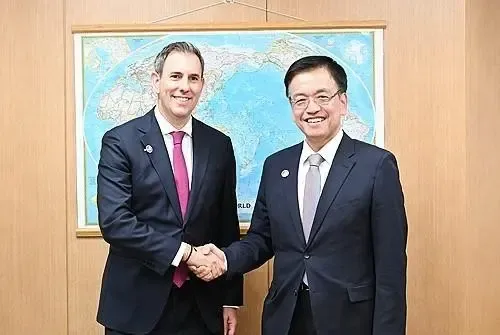
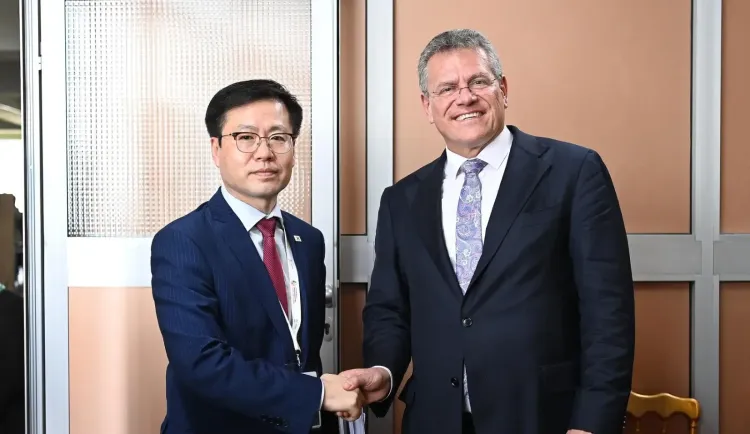
This agreement was finalized during the inaugural Korea-EU next-generation strategic dialogue held in Seoul, which focused on fostering deeper collaboration in trade, supply chains, and technology, according to the Ministry of Trade, Industry and Resources. The meeting was attended by South Korean Trade Minister Yeo Han-koo and the EU's Commissioner for Trade and Economic Security, Maros Sefcovic.
Minister Yeo stated in a press release, "This meeting has successfully transitioned South Korea and the EU into a next-generation strategic partnership that integrates economic security, supply chains, and advanced technologies within a framework that was previously focused predominantly on trade and commerce."
The ministry highlighted that the Korea-EU strategic economic partnership will act as a cooperative framework between the two economies, with plans to discuss its specifics in the future.
During Friday's discussions, Yeo and Sefcovic addressed collaboration in critical minerals, as both Korea and the EU face limitations in mineral production infrastructure, and they agreed to strengthen communications on this matter amid ongoing global supply chain challenges.
They also explored expanding partnerships in the semiconductor and battery industries, with Yeo urging the EU to acknowledge the contributions of South Korean companies in developing Europe's battery sector while advocating for the passage of the proposed Industrial Accelerator Act.
Additionally, the ministry noted that South Korea and the EU conducted their 13th free trade agreement (FTA) committee meeting on Friday, where they confirmed the final draft of a bilateral digital trade agreement aimed at enhancing cooperation in the digital economy, as reported by Yonhap news agency.
Furthermore, both parties reached an agreement to revise automobile-related regulations under their FTA to accommodate technological advancements and foster trade in this sector, while also establishing a communication channel to address concerns regarding cosmetics exports.
Other unresolved trade matters between the two economies, such as the EU's stringent steel safeguard measures and its carbon tax policy, were also on the agenda during the meeting.
Point of View
This partnership reflects a proactive approach in bolstering economic resilience and security. The collaboration between South Korea and the EU is essential not only for enhancing bilateral trade but also for addressing global supply chain challenges. The focus on advanced technologies and critical minerals indicates a forward-thinking strategy that prioritizes national interests.
NationPress
18 Sept 2026
Frequently Asked Questions
What is the significance of the Korea-EU strategic economic partnership?
The partnership enhances trade and economic security between South Korea and the EU, addressing global uncertainties and fostering cooperation in technology and supply chains.
Who are the key figures involved in the agreement?
South Korean Trade Minister Yeo Han-koo and EU Commissioner for Trade and Economic Security Maros Sefcovic were the key figures in the discussions.
What sectors will benefit from this partnership?
The partnership will benefit sectors like critical minerals, semiconductors, batteries, and the digital economy.
How will this agreement impact future trade relations?
It is expected to strengthen bilateral ties and create a framework for future discussions on trade matters.
What other trade issues were discussed?
Other issues included the EU's steel safeguard measures and its carbon tax policy.