Delhi L-G Saxena Urges Khalsa College Students: Lead Digital Change
Synopsis
Delhi Lt Governor V.K. Saxena addressed students at both Khalsa College and SRCC within 24 hours, urging values-driven digital innovation and character-building. His back-to-back appearances signal a focused outreach to Delhi's student community, tying youth potential directly to PM Modi's ViksitBharat vision.
Key Takeaways
Delhi Lt Governor V.K.
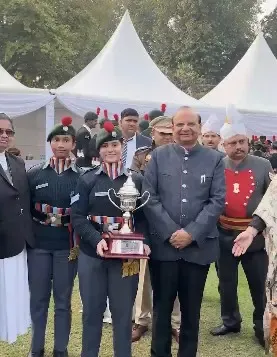
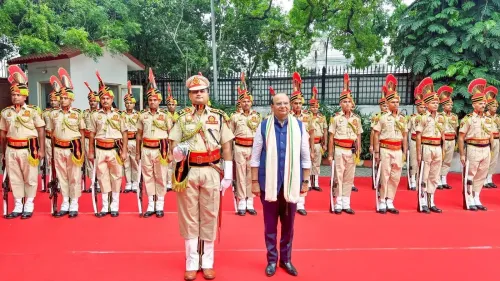
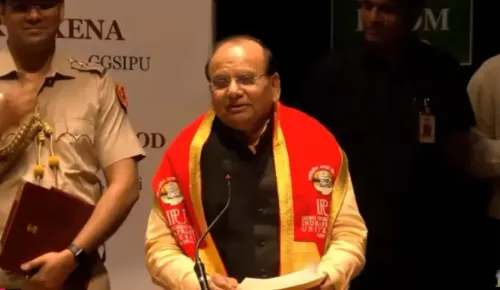
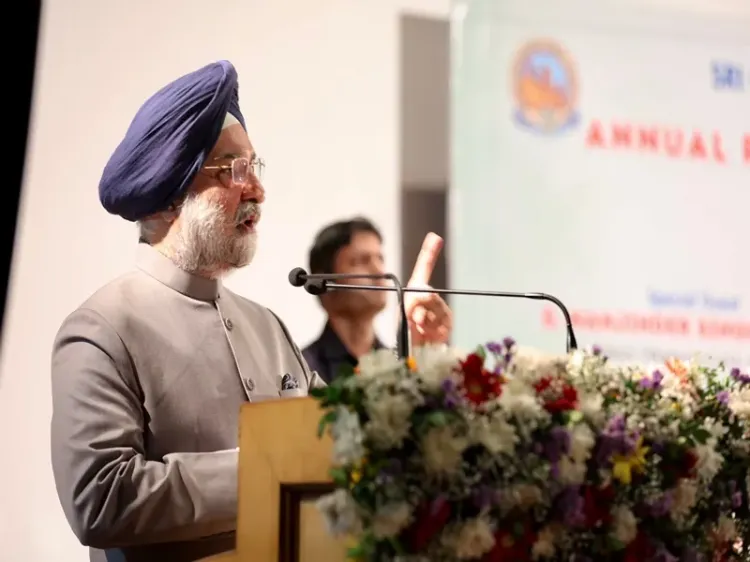
Saxena addressed the Annual Day of Sri Guru Tegh Bahadur Khalsa College, Delhi University on April 25, 2025 , calling students to lead digital-era change with strong values.
Saxena stressed that innovation in information technology must always be guided by ethical principles to create meaningful societal impact.
Just one day earlier, on April 24 , Saxena addressed the 100th Annual Day of Shri Ram College of Commerce (SRCC) , emphasizing character, creativity, and critical thinking.
The Lt Governor linked student aspirations to PM Narendra Modi's ViksitBharat and ViksitDelhi vision, urging graduates to contribute purposefully to national development.
Saxena highlighted emerging sectors — digital finance, entrepreneurship, data analytics, and global trade — as key opportunity areas for today's graduates.
His back-to-back university appearances within 24 hours signal a sustained focus on youth engagement and higher education outreach in Delhi .
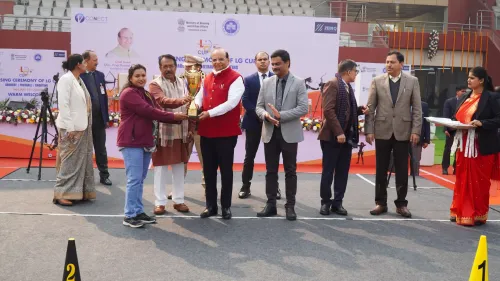
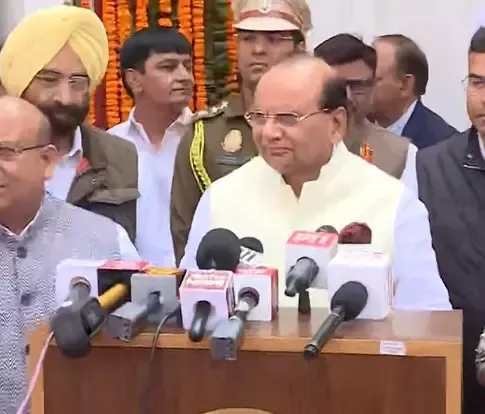
New Delhi, April 25: Delhi Lieutenant Governor V.K. Saxena on Friday, April 25, called upon students of Sri Guru Tegh Bahadur Khalsa College, Delhi University, to position themselves as genuine drivers of transformation in an age of accelerating digital disruption. Speaking at the college's Annual Day and Prize Distribution Function, Saxena emphasized that technological innovation must always be anchored in strong moral values to create meaningful societal impact.
Saxena's Message at Khalsa College Annual Day
Addressing the gathering, Lt Governor Saxena said, "In today's era of rapid digital transformation, I encourage students to become true enablers of change. While information technology offers immense potential to create meaningful impact, innovation must always be guided by strong values."
Sharing his experience on X (formerly Twitter), Saxena wrote that an institution is far more than a place of learning — it is a living reflection of values, discipline, and the collective aspirations of its students. He underscored that colleges rooted in legacies of seva (service), courage, resilience, and compassion play a vital role in shaping character alongside intellect.
The Lt Governor extended heartfelt congratulations to the college's leadership, faculty, and all award recipients, urging them to move forward with conviction and purpose in contributing to Prime Minister Narendra Modi's twin visions of #ViksitBharat and #ViksitDelhi.
Broader Vision: Education Beyond Academics
Just a day earlier, on Thursday, April 24, Saxena had addressed the landmark 100th Annual Day celebrations of Shri Ram College of Commerce (SRCC) — one of India's most prestigious commerce institutions. There, he reminded students and faculty alike that education must transcend academic achievement to foster character, creativity, and critical thinking.
"The strength of any institution lies in its people. The faculty, with their scholarship and dedication, have played a critical role in maintaining academic standards," he said at SRCC.
He stressed that institutions of higher education must not only transmit knowledge but also cultivate the capacity to think creatively, adapt to change, and act with integrity — qualities increasingly demanded by a volatile global environment.
Digital Economy and Emerging Opportunities
Saxena highlighted that new frontiers are rapidly opening up in areas such as digital finance, entrepreneurship, data analytics, and global trade. He noted that these opportunities come alongside complex, evolving global challenges that demand well-rounded graduates.
"The linkage between knowledge and practice becomes particularly important in fields such as commerce and economics, where theory must constantly engage with evolving realities," he said at SRCC.
He argued that preparing students for this environment requires a deliberate combination of academic depth, practical exposure, and ethical grounding — a three-pronged framework that institutions must consciously build into their curricula.
Context: L-G's Consistent Focus on Youth and Nation-Building
This is not the first time Lt Governor Saxena has used university platforms to advocate for values-led education and youth empowerment. His consecutive appearances at Khalsa College and SRCC within 24 hours signal a deliberate outreach strategy to Delhi's student community — particularly as Delhi University remains a significant political and intellectual battleground in the capital.
Notably, Saxena's emphasis on aligning youth potential with the ViksitBharat 2047 vision reflects the broader Central Government narrative of positioning India's demographic dividend as a core driver of national development. With over 600 million Indians under the age of 25, the stakes of this messaging extend well beyond ceremonial speeches.
Critics, however, have pointed out that while inspirational addresses at elite institutions like SRCC and Khalsa College resonate with a privileged student demographic, the larger challenge of equipping millions of first-generation college students across Delhi's less-resourced institutions with digital and vocational skills remains unaddressed in policy terms.
What Comes Next
As Delhi University heads into its summer academic cycle, Lt Governor Saxena's back-to-back engagements suggest continued high-level attention to the capital's higher education ecosystem. Stakeholders will watch whether these speeches translate into concrete policy measures — such as expanded digital infrastructure, industry-academia linkages, or updated curricula aligned with India's National Education Policy (NEP) 2020. The coming months will be critical in determining whether the vision articulated at these annual functions moves from rhetoric to reform.
Point of View
The irony is hard to miss: the most resource-rich institutions in Delhi are receiving the most high-profile attention, while the city's hundreds of under-equipped colleges struggle with basic infrastructure. True transformation requires policy follow-through, not just podium inspiration.
NationPress
16 Sept 2026
Frequently Asked Questions
What did Delhi L-G V.K. Saxena say at Khalsa College Annual Day 2025?
Delhi Lt Governor V.K. Saxena urged students at Sri Guru Tegh Bahadur Khalsa College, Delhi University, to become true enablers of change in the digital era. He emphasized that technological innovation must be guided by strong values to create meaningful societal impact.
Which college events did Delhi L-G Saxena attend in April 2025?
Lt Governor Saxena attended the Annual Day and Prize Distribution Function at Khalsa College, Delhi University on April 25, and the 100th Annual Day celebrations of Shri Ram College of Commerce (SRCC) on April 24, 2025.
What is the ViksitBharat vision mentioned by Delhi L-G Saxena?
ViksitBharat refers to Prime Minister Narendra Modi's vision of transforming India into a fully developed nation by 2047. Saxena invoked this vision to encourage students to contribute to national progress through education, innovation, and ethical leadership.
What did Saxena say about education at SRCC's 100th Annual Day?
At SRCC's 100th Annual Day, Saxena stated that education must go beyond academics to foster character, creativity, and critical thinking. He highlighted emerging opportunities in digital finance, entrepreneurship, data analytics, and global trade as areas students should prepare for.
Why is Delhi L-G Saxena focusing on student outreach at Delhi University colleges?
Lt Governor Saxena's repeated engagements at Delhi University institutions reflect a broader strategy to align youth energy with the Central Government's development agenda. His appearances also serve to reinforce his administrative presence in Delhi's influential academic and intellectual circles.