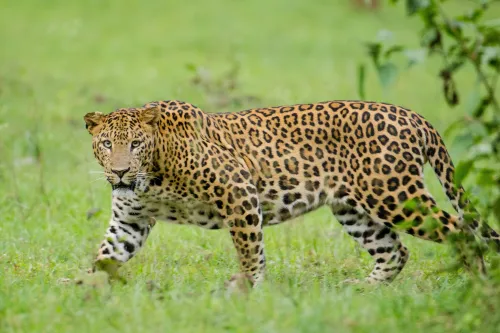
What Happened When a Leopard Attacked a Caretaker at Bannerghatta Biological Park?
Synopsis
In a shocking incident at Bannerghatta Biological Park, a caretaker was viciously attacked by a leopard while performing cleaning duties within the enclosure. This event raises critical concerns over animal safety protocols and the ongoing clash between wildlife and visitors in popular tourist destinations.
Key Takeaways
Leopard attacks caretaker at Bannerghatta Biological Park.
Serious injuries sustained by the caretaker.
Incident raises concerns over safety protocols .
Park attracts thousands of visitors annually.
Part of Bannerghatta National Park .
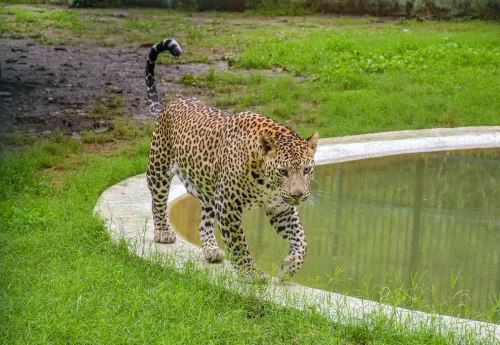
Bengaluru, Feb 13 (NationPress) A leopard launched an attack on a caretaker at the Bannerghatta Biological Park early Friday morning, resulting in severe injuries for the staff member.
Situated on the outskirts of Bengaluru, the Bannerghatta Biological Park attracts numerous visitors from the city.
The injured individual, known as Shantappa, was engaged in cleaning duties within the leopard's enclosure at approximately 8:30 a.m. The park is under the authority of the Bannerghatta police station.
Initial reports indicate that the leopard had been fed chicken and mutton the previous night as part of its standard dietary regimen. As is customary, the animals are relocated to a different enclosure in the morning to allow for cleaning of their primary habitats. Following the cleaning process, the animals are returned to their original enclosures.
Despite this procedure, officials reported that the leopard managed to slip through a narrow gap and attacked Shantappa during the cleaning operation.
Shantappa suffered serious injuries to his neck, face, and chest. He was quickly transported to a hospital in Jigani, located on the outskirts of Bengaluru, where he is currently receiving medical attention. According to hospital sources, he is on the path to recovery. Further updates are pending.
Recent occurrences at Bannerghatta Biological Park have raised alarms, including incidents where leopards attacked tourist buses, injuring a 56-year-old woman from Chennai in November 2025 and a 13-year-old boy in August 2025, when the big cats clawed at them through open windows or mesh. These incidents prompted a temporary suspension of non-AC safaris for safety assessments, alongside the reinforcement of mesh and stricter adherence to safety protocols to avert future mishaps.
These events in the leopard safari zone have ignited widespread concern regarding tourist safety and the ongoing human-wildlife conflict in one of Bengaluru's most frequented attractions.
Covering an area of 20 hectares, the Bannerghatta Biological Park features South India's first and the nation's largest leopard safari, drawing thousands of visitors annually. This park is part of the Bannerghatta National Park but functions as a separate entity, created to promote eco-recreation and eco-tourism.
Point of View
I believe that incidents like these highlight the urgent need for stricter safety measures in wildlife parks. While the conflict between humans and animals is a pressing issue, ensuring the safety of both visitors and animals is paramount. Our focus should be on enhancing protocols to prevent such occurrences in the future while maintaining our commitment to wildlife conservation.
NationPress
19 Sept 2026
Frequently Asked Questions
What happened at Bannerghatta Biological Park?
A caretaker was attacked by a leopard while cleaning its enclosure, resulting in serious injuries.
Is the caretaker recovering?
Yes, the caretaker, identified as Shantappa, is currently receiving treatment in a hospital and is reported to be recovering.
What safety measures are in place at the park?
The park follows standard procedures for animal handling and cleaning, but this incident has raised questions about their effectiveness.
Have there been other incidents at the park?
Yes, there have been previous incidents of leopards attacking tourists, leading to temporary safety reviews.
What is the significance of Bannerghatta Biological Park?
It is renowned for hosting the largest leopard safari in India and plays a vital role in eco-tourism.