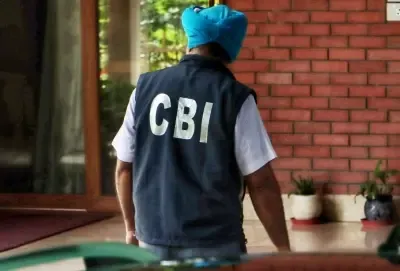
CBI court gives life term to 3 in 2002 Lucknow advocate murder

Synopsis
More than 24 years after advocate Inder Dev Singh was murdered in Lucknow, a Special CBI Court has handed life sentences to three convicts — while three of the original six accused died before the trial concluded. The case is a stark reminder of how long justice can take in India's criminal justice system.
Key Takeaways
A Special CBI Court in Lucknow sentenced Vikram Yadav alias Vikram Kalia , Brijesh Yadav alias Munna , and Panna Singh alias Paana to life imprisonment on 7 July 2026 .
The three were convicted for the 2002 murder of advocate Inder Dev Singh , with a combined fine of ₹1.5 lakh .
The case was originally registered at Police Station Kaisar Bagh, Lucknow on 8 August 2002 and transferred to the CBI on 4 September 2002 .
Trial proceedings against three of the original six accused — Manna Lal Verma , Ved Prakash Lohia , and Chhote Lal alias Chhotu Yadav — were abated due to their deaths.
In a separate case, a Special CBI Court in Pune sentenced two businessmen to three years' rigorous imprisonment for bank fraud exceeding ₹5.5 crore .
A Special CBI Court in Lucknow on 7 July 2026 sentenced three men to life imprisonment with a combined fine of ₹1.5 lakh for the murder of advocate Inder Dev Singh in 2002, according to a CBI official statement. The verdict closes a case that took over two decades to reach its conclusion through the courts.
The Conviction
The court convicted Vikram Yadav alias Vikram Kalia, Brijesh Yadav alias Munna, and Panna Singh alias Paana on 30 June 2026, before formally pronouncing the sentence on 7 July 2026. All three received life imprisonment terms alongside the financial penalty.
How the Case Reached the CBI
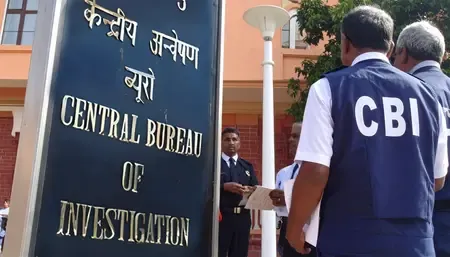
The murder was first reported at Police Station Kaisar Bagh, Lucknow, on 8 August 2002, following a written complaint filed by the wife of the deceased. The Uttar Pradesh government subsequently transferred the case to the Central Bureau of Investigation (CBI), which registered it on 4 September 2002 by taking over the original FIR.
After completing its investigation, the CBI filed a chargesheet on 7 August 2003 against six accused persons: Manna Lal Verma, Ved Prakash Lohia, Panna Singh, Vikram Singh, Chhote Lal alias Chhotu Yadav, and Brijesh Kumar Yadav. Trial proceedings against Manna Lal Verma, Ved Prakash Lohia, and Chhote Lal alias Chhotu Yadav were subsequently abated owing to their deaths during the pendency of the case.
Separate Pune Bank Fraud Verdict
In a separate ruling, a Special CBI Court in Pune convicted two proprietors of private companies for bank fraud causing a wrongful loss of more than ₹5.5 crore to the State Bank of Hyderabad. The court sentenced Chandrakant Lodha, proprietor of Chandrakant S. Lodha and Co., and Paresh Thakkar, proprietor of Thakkar and Sons, to three years' rigorous imprisonment. The judgment was pronounced on Monday, according to the CBI official.
What the Verdicts Signal
Both rulings reflect the CBI's pursuit of long-pending cases across crime categories — from violent crime to financial fraud. The Lucknow verdict, coming more than 24 years after the murder, underscores the prolonged timelines that characterise complex criminal trials in India, particularly those transferred between agencies. Notably, three of the original six accused did not live to see the verdict.
Point of View
Particularly those transferred from state police, routinely stretch across decades, and the death of three accused before sentencing means the full accountability the victim's family sought was never fully delivered. The parallel Pune bank fraud conviction on the same day is a reminder that the CBI's docket spans violent crime and white-collar fraud alike, yet the pace of justice in both categories remains a systemic concern that no single verdict can resolve.
NationPress
6 Oct 2026
Frequently Asked Questions
Who were convicted in the 2002 Lucknow advocate murder case?
Three men — Vikram Yadav alias Vikram Kalia, Brijesh Yadav alias Munna, and Panna Singh alias Paana — were convicted and sentenced to life imprisonment by a Special CBI Court in Lucknow on 7 July 2026 for the murder of advocate Inder Dev Singh in 2002.
What was the fine imposed on the convicts?
The Special CBI Court imposed a combined fine of ₹1.5 lakh on the three convicted persons alongside their life imprisonment sentences.
Why was the case transferred to the CBI?
The Uttar Pradesh government transferred the case to the CBI, which registered it on 4 September 2002 by taking over the original FIR filed at Police Station Kaisar Bagh, Lucknow. The reason for the transfer was not specified in the official statement.
What happened to the other accused in the chargesheet?
The CBI had filed a chargesheet against six accused in August 2003. Trial proceedings against three of them — Manna Lal Verma, Ved Prakash Lohia, and Chhote Lal alias Chhotu Yadav — were abated by the court due to their deaths during the pendency of the trial.
What was the separate Pune CBI verdict about?
A Special CBI Court in Pune sentenced Chandrakant Lodha and Paresh Thakkar to three years' rigorous imprisonment for bank fraud that caused a wrongful loss of more than ₹5.5 crore to the State Bank of Hyderabad. The judgment was pronounced on Monday.